
25 Bad Beach Habits That Annoy (and Infuriate) California Lifeguards

The beach should be relaxing with waves crashing, the sun shining, and maybe a good paperback in hand. But for California lifeguards, it’s often a far cry from serenity.
They’ve seen it all: people ignoring warning flags, blasting music like it’s a festival, and digging sand holes big enough to swallow a cooler.
From seagull feeders to wannabe pier jumpers, these are the bad beach habits that make lifeguards shake their heads, blow their whistles, and secretly dream of a “no nonsense” section of sand.
Ignoring the Flags
Those red, yellow, or purple flags aren’t there to brighten your Instagram background. They mean something.
Yet every summer, lifeguards watch people stroll straight into danger zones like they’re auditioning for a Darwin Award.
Purple means jellyfish. Red means “Stay out unless you’re part dolphin.” Yellow means “Caution.” But apparently, many Americans think it means “Take your toddler for a dip.”
Lifeguards have to sprint out there to drag people back while everyone else just watches like it’s live TV.
Blasting Music Like It’s Coachella
There’s nothing wrong with music at the beach. But there’s definitely something wrong with becoming the DJ of the coastline.
Nobody came to hear your Bluetooth speaker blasting Pitbull’s entire discography at 11 a.m.
Lifeguards have said it again and again: noise pollution means missed whistles and warning calls.
Also, if your playlist contains both “Sandstorm” and “Baby Shark,” the ocean might just rise up and claim your speaker.
Leaving Trash Behind
Few things irritate beach crews more than what people leave behind: bottles, food wrappers, and, somehow, a single flip-flop.
Lifeguards see it all, and they’re the ones who have to radio for cleanup when it gets bad.
Seagulls don’t need your leftover chips, and the sand doesn’t need your Capri Sun straw.
Leaving trash doesn’t make you a relaxed beachgoer. It makes you part of the reason for tomorrow’s “Beach Closed for Cleanup” sign.
Swimming Too Far “Just to See How Far You Can Go”
Every summer, at least one overconfident swimmer decides to test their limits. You can spot them easily: they start as a dot, and then become a smaller dot.
Lifeguards know that “I’m just swimming to that buoy!” translates to “You’ll be rescuing me in 12 minutes.”
The ocean doesn’t care about your CrossFit routine. And lifeguards definitely don’t care to paddle half a mile to prove that point.
Digging Giant Holes and Leaving Them
Kids love to dig holes. Parents think it’s cute. Lifeguards know it’s a nightmare waiting to happen.
Every year, someone steps in one, twists an ankle, or worse, holes cave in when kids crawl inside.
That’s why you’ll see lifeguards going around at sunset filling them up like unpaid groundskeepers.
It’s not that they hate fun. They just don’t want to add “sandpit rescue” to their already insane day.
Running on Wet Sand Near Others
You’d think after seeing a dozen wipeouts, people would slow down.
But no, every few minutes, someone sprints full speed past crowded towels like they’re training for the Olympic qualifiers.
Lifeguards hate it because those wipeouts lead to bloody knees and panicked parents.
Also, it’s nearly impossible to look heroic when you faceplant in front of everyone’s cooler.
Treating Lifeguard Chairs Like Selfie Props
Lifeguards are not influencers, and their towers are not backdrops. Yet somehow, people climb those stands to take selfies when the guard’s on a break.
It’s not just disrespectful. It’s dangerous.
Lifeguard towers are tall, often on uneven sand, and one wrong step turns your “cute pic” into a minor headline.
Want a great beach photo? Use the ocean. It’s already filtered.
Feeding the Seagulls
It always starts with one chip. Then suddenly, the sky turns gray with wings.
Lifeguards despise it when beachgoers start a seagull feeding frenzy because it leads to chaos, birds dive-bombing sandwiches, kids crying, and sunscreen bottles flying.
Once it starts, there’s no stopping it.
You might as well hand your entire lunch to the nearest gull and surrender.
Letting Kids Wander Too Far
Every lifeguard has had to play “find that kid” at least once. The problem? Parents underestimate how fast little feet move on sand.
It takes seconds for a child to vanish among umbrellas.
Then it’s full panic mode, parents shouting, whistles blowing, and a radio call no one wanted to make.
Lifeguards would rather scan for rip currents than locate a missing toddler in a SpongeBob swimsuit.
Ignoring Whistles Like They’re Background Noise
That sharp whistle isn’t random. It’s a warning.
But some people just glance over, nod, and continue whatever dangerous thing they were doing.
Whether it’s swimming out too far, boogie boarding into a no-surf zone, or tossing footballs near swimmers, ignoring whistles drives lifeguards insane.
If you hear a whistle, look up. You might be seconds from a rescue you didn’t plan on starring in.
Building Castles in the Path of Rescue Vehicles
Beachgoers love to set up elaborate sand villages, complete with moats and walls, right in front of the lifeguard path.
That path isn’t for decoration. It’s where emergency ATVs and trucks drive through when seconds matter.
So when your sandcastle gets crushed by a rescue vehicle, it’s not personal. It’s just bad beach planning.
Bringing Glass Bottles
Nothing ruins a barefoot stroll faster than broken glass. Yet every summer, someone brings beer or soda in glass bottles, because “it looks aesthetic.”
Lifeguards have to constantly report injuries from people stepping on shards.
It’s easily avoidable, but somehow keeps happening.
There’s nothing chill about making a barefoot toddler bleed because you wanted your Instagram picnic to sparkle.
Setting Up Too Close to the Lifeguard Tower
You’d think the safest place to set up your towel is near the lifeguard. It’s not. It’s actually one of the worst spots.
That area needs to be clear for emergency access and visibility.
When you park your whole family setup, tent, cooler, grill, right there, you’re blocking the view.
Imagine trying to scan for swimmers when someone’s canopy is in the way. That’s how rescues get delayed.
Tossing Frisbees in the Swim Zone
It’s all fun and games until a frisbee hits someone in the face mid-swim.
Lifeguards constantly yell “No throwing near the water!” because those flying discs are basically beach boomerangs of chaos.
There are designated areas for that stuff. But no, people love to “just toss one” in the surf.
If your game ends with a kid crying and a lifeguard glaring, maybe move down the beach.
Bringing Dogs to “No Pets” Areas
Dogs are adorable, but not every beach allows them. Some have strict rules because of wildlife protection or safety concerns.
Still, plenty of people sneak them in, thinking, “He’s small, it’s fine.” It’s not.
When your dog chases a seagull, digs up a turtle nest, or bolts into swimmers, guess who has to handle the chaos?
Hint: it’s not the person holding the leash.
Treating the Ocean Like a Pool
The ocean is unpredictable, currents shift, waves surprise, and depth changes fast.
But a lot of people treat it like their backyard pool, floating out on cheap inflatables and drifting far past safety zones.
Lifeguards know those unicorn floats might look fun, but they become rescue operations within minutes.
The ocean doesn’t care that it’s your bachelorette weekend.
Ignoring “No Swim” Areas Because “It Looks Calm”
Rip currents don’t look dangerous. That’s what makes them deadly. Lifeguards rope off certain sections for a reason, yet some people take that as a challenge.
When someone walks right past the sign, lifeguards can practically set their stopwatch. Within ten minutes, there’s a whistle and a sprint.
That false sense of calm is exactly why those signs exist.
Leaving Food Out Unattended
Lifeguards have seen more raccoons, seagulls, and curious crabs raid coolers than you’d believe. Leaving your snacks out is basically ringing the dinner bell for wildlife.
It also attracts ants, flies, and every scavenger in a three-mile radius.
Beach food safety tip: if you wouldn’t leave it on your front lawn, don’t leave it on the sand.
Also, raccoons have no respect for Dorito ownership.
Jumping Off Rocks or Piers “For Fun”
This one drives lifeguards absolutely wild. People love the thrill of leaping off piers or jetty rocks, until they realize how shallow or sharp it really is.
Lifeguards deal with these injuries constantly: cuts, broken ankles, or worse.
It’s not bravery; it’s recklessness with gravity. And it makes lifeguards question humanity every time.
Blocking Rescue Equipment with Your Stuff
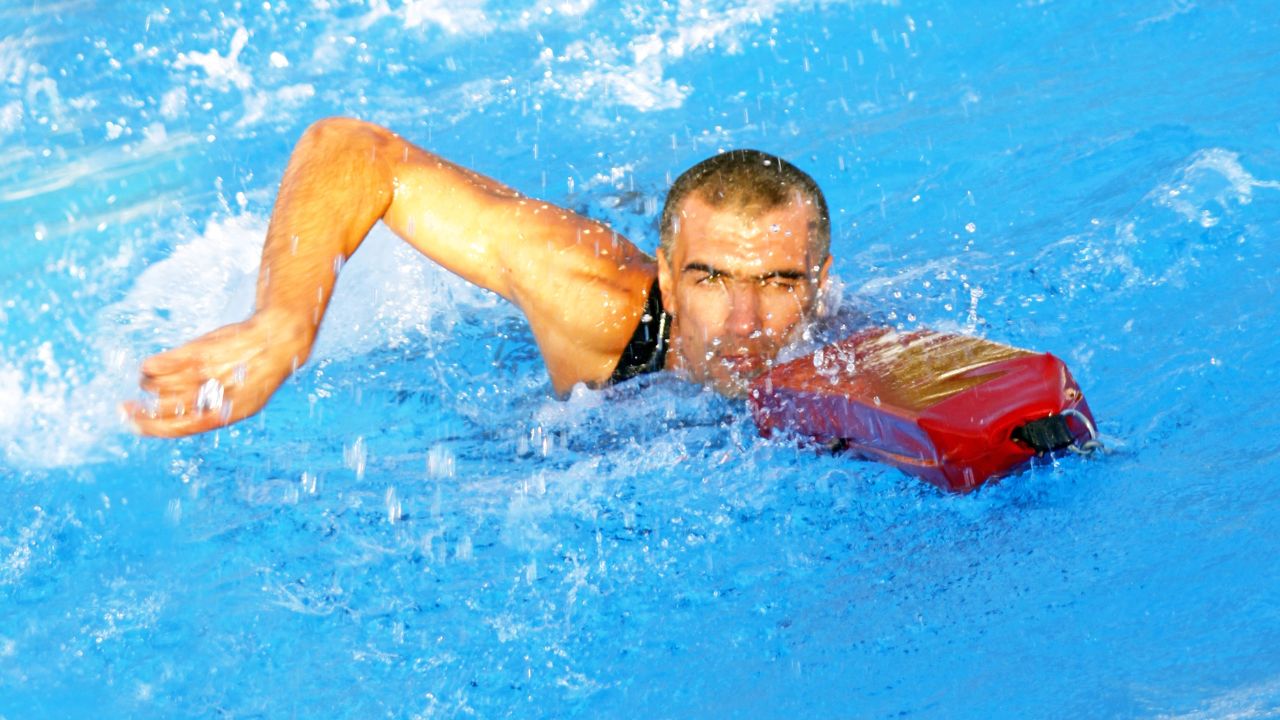
You know those red flotation devices and oxygen kits near the towers? They’re not decoration.
Yet people set up beach chairs and umbrellas right beside them, blocking access.
During an emergency, every second counts. Imagine having to move someone’s cooler to save a life. That happens.
Lifeguards shouldn’t have to fight through pool noodles to grab a rescue tube.
Using Floaties Instead of Life Jackets
Those inflatable armbands might look cute on kids, but they’re not safety gear.
Lifeguards constantly warn that floaties give a false sense of security.
If a wave flips a child or a float deflates, it turns dangerous fast. Real life jackets exist for a reason, yet people still choose cartoon fish over safety certification.
The ocean doesn’t do “cute.”
Overcrowding the Lifeguard When They’re Busy
Every time there’s a rescue or medical emergency, a crowd forms instantly.
People swarm to “see what’s happening,” often blocking access for emergency responders.
Lifeguards hate this because they need space to work, and the last thing they need is a wall of iPhones recording.
If you see a rescue, back up. Help by not being part of the obstacle course.
Leaving Umbrellas Unsecured
One gust of wind, and your beach umbrella becomes a deadly missile.
Lifeguards have seen them impale coolers, pierce sand, and nearly injure people.
Secure it deep or use an anchor.
A flying umbrella doesn’t make you memorable. It makes you a story told at the lifeguard station for weeks.
Not Knowing How to Signal for Help
It’s shocking how many people don’t know what to do when they’re in trouble.
Lifeguards always say: if you’re caught in a rip current, don’t fight it, float and wave for help.
But most people panic, splash wildly, or worse, stay silent. Lifeguards can spot distress fast, but clear signals make all the difference.
If you can wave calmly, you’re already helping them help you.
17 Life Hacks That Are Harder Than the Non-Hack

Life hacks are supposed to make your life easier, and sometimes they really do. However, the internet is rife with hacks that aren’t actually effective.
17 Life Hacks That Are Harder Than the Non-Hack
Weirdest Laws in Each State

Most Americans are clear on treating thy neighbor as they’d want to be treated to reduce the chance of fines and jail time. But did you know you could be breaking the law by carrying an ice cream cone in your pocket? These are the weirdest laws in each state, most of which courts (thankfully!) no longer enforce.
Weirdest Laws in Each State That’ll Make You Chuckle
Think You Belong in a Different Decade?
From big bands to big hair, our playful Decade DNA Quiz reveals which classic American era fits your personality best. It’s fast, fun, and full of vintage flair.
Meet Your Match. Discover Your Decade DNA. (Your Vintage Roots Are Showing)

