
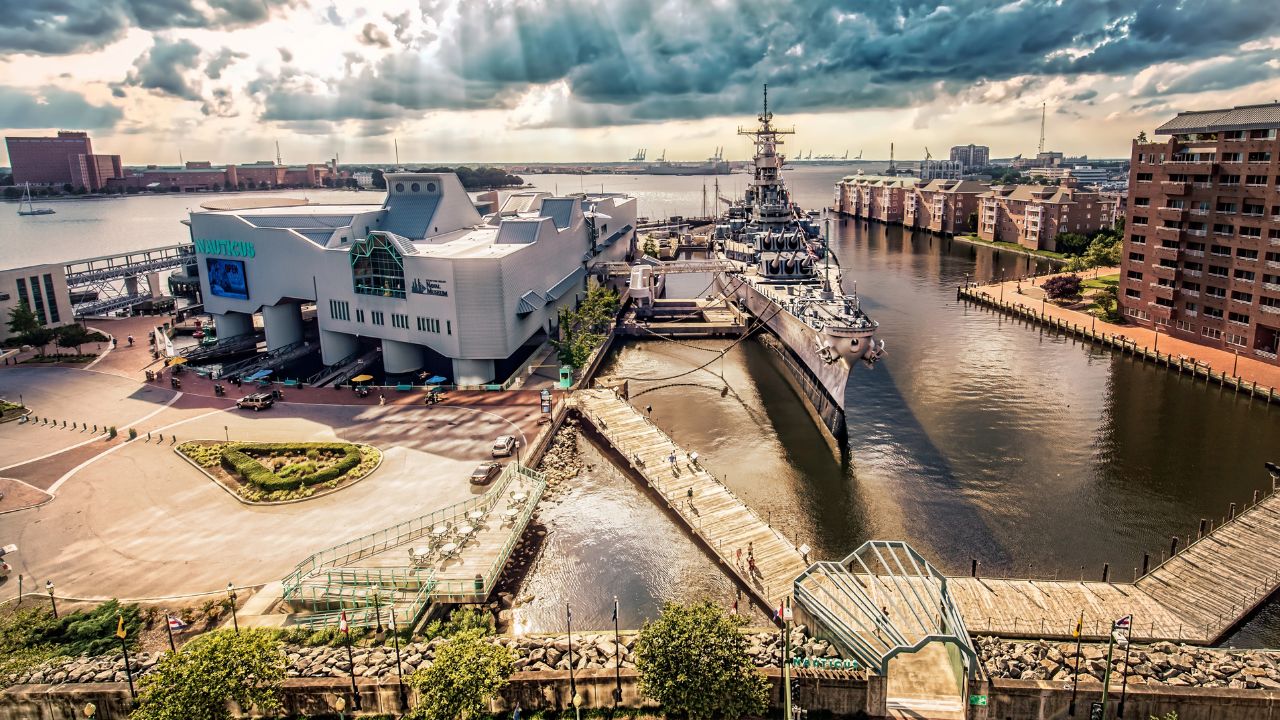
9 Things Virginia Newcomers to Hampton Roads Learn the Hard Way

Hampton Roads doesn’t come with a user manual, which is a shame for people who move to Virginia because it’s one of the more complicated metro areas to navigate.
The tunnels alone require a new mental framework.
Here are nine things newcomers to Hampton Roads learn the hard way.
1. The Tunnels Aren’t Optional
Hampton Roads has multiple water crossings that connect its cities, and they’re not just infrastructure. They’re a way of life you have to make peace with.
The Hampton Roads Bridge-Tunnel, the Downtown Tunnel, the Midtown Tunnel, and the Monitor-Merrimac Memorial Bridge-Tunnel.
Getting from one part of the region to another almost always involves one of them.
During rush hour, accidents, or when a ship is passing through, these tunnels can add significant time to any trip.
Newcomers learn to check traffic before leaving the house the way other people check the weather.
You don’t fight the tunnels. You plan around them.
2. “Norfolk Time” Is a Real Thing in Military Circles
Hampton Roads has the largest naval concentration in the world, with Naval Station Norfolk as its anchor.
This means the military and civilian cultures here are deeply intertwined in ways that affect everything from the local economy to bar hours near the base.
Military schedules, deployments, and installation events shape the rhythm of cities like Norfolk, Virginia Beach, and Portsmouth in ways that newcomers who don’t have a military background sometimes find surprising.
It’s worth understanding early that a significant portion of your neighbors, coworkers, and fellow parents at school pickup may be on an entirely different life timeline than the one you came from.
3. The Traffic Gets Personal Before 9am
Hampton Roads traffic has a particular personality, and it doesn’t apologize for itself.
The combination of military base traffic, port traffic, tourist traffic in summer, and the general bottleneck created by having bridges and tunnels as the only way between cities creates backups that newcomers find genuinely shocking the first time.
Anyone who moves from a rural area or a small town and expects a manageable morning commute learns the truth quickly and then learns which radio station gives the best traffic updates even faster.
4. The Seafood Situation Will Change Your Baseline Forever
Hampton Roads sits right on the Chesapeake Bay and the Atlantic, and the seafood supply chain here is about as short as it gets.
Blue crabs, oysters, flounder, and rockfish abound.
The quality and freshness available at local fish markets, waterfront restaurants, and even some grocery stores here is something newcomers from landlocked states genuinely aren’t prepared for.
Once you’ve had fresh-off-the-boat oysters from the Chesapeake Bay, the frozen ones at the chain restaurant you used to go back home start to feel like a different food entirely.
5. Every City Has Its Own Identity
Hampton Roads is made up of Norfolk, Virginia Beach, Chesapeake, Portsmouth, Hampton, Newport News, and Suffolk, plus York County and James City County.
These aren’t interchangeable places.
Norfolk is the urban core with a major arts scene.
Virginia Beach has the oceanfront and a distinctly different energy.
Chesapeake is sprawling and suburban.
Portsmouth has some of the most beautiful historic architecture in the region.
Newcomers who refer to everything as “Virginia Beach” when they actually live in Chesapeake will be gently and repeatedly corrected until they get it right.
6. The Cost of Living Isn’t So Bad
Compared to Northern Virginia, the D.C. suburbs, or most major East Coast metro areas, Hampton Roads is more affordable.
The housing market here offers space and quality at price points that people moving from the D.C. area, New York, or California find almost disorienting.
A house with a yard and a garage that would cost $900,000 in Fairfax County might run $350,000 in Chesapeake.
Newcomers who do the math usually have the same reaction: A moment of quiet, followed by looking up more listings.
7. Breweries and Wineries Are Popular
Virginia has become a serious wine and craft beer state, and Hampton Roads is one of the regions driving it.
The number of craft breweries, cideries, and nearby wineries within an easy drive has grown significantly over the last decade.
There’s a whole ecosystem of tasting rooms, outdoor seating, and weekend excursion options that newcomers stumble onto and then immediately start recommending to everyone they know.
It’s a very good surprise to have.
8. You Need a Rain Jacket More Than You Think
Hampton Roads gets real weather. Nor’easters in fall and winter, afternoon thunderstorms that materialize out of nowhere in summer, and the occasional tropical system that reminds you how close you are to the Atlantic.
The humidity in summer is genuine and persistent.
Anyone moving from the desert Southwest or the Mountain West gets a full sensory education in their first July.
The good news is that it doesn’t stay cold for long.
The winters are mild by mid-Atlantic standards, and the springs are beautiful.
9. History Is Everywhere, Literally
Hampton Roads has one of the densest concentrations of American history in the country, and it’s not behind velvet ropes.
It’s in the landscape.
The site of the first permanent English settlement in America is at Jamestown, about 45 minutes away.
Fort Monroe in Hampton is where formerly enslaved people fled to freedom during the Civil War and earned the designation “contraband.” The Monitor and Merrimac fought their famous Civil War naval battle in these very waters.
Newcomers sometimes discover all of this and realize they moved somewhere that most of the country is going out of its way to visit on a field trip.
That’s a good feeling.
Hampton Roads Gets Into You Slowly
For many people, Hampton Roads isn’t a love-at-first-sight city.
It’s the kind of place that reveals itself over time, through the waterfront sunsets and the fresh crabs and the neighborhoods that don’t look like anything until suddenly they look like everything.
Give it a year.
I-95 Facts Only Virginians Truly Understand

From massive daily traffic to sneaky shortcuts, Virginia’s portion of I-95 has a personality all its own.
Here are ten facts about I-95 that every Virginian who drives on it will recognize in a heartbeat.
10 I-95 Facts Only Virginians Truly Understand
21 Lies Virginians Accept as Truth But Shouldn’t

Dr. House said it best: Everybody lies. But what about the lies whole societies tell themselves?
Perhaps the next time you hear someone spew off one of these lies as a fact, you can kindly show them a different (ahem, truthful) point of view.
