
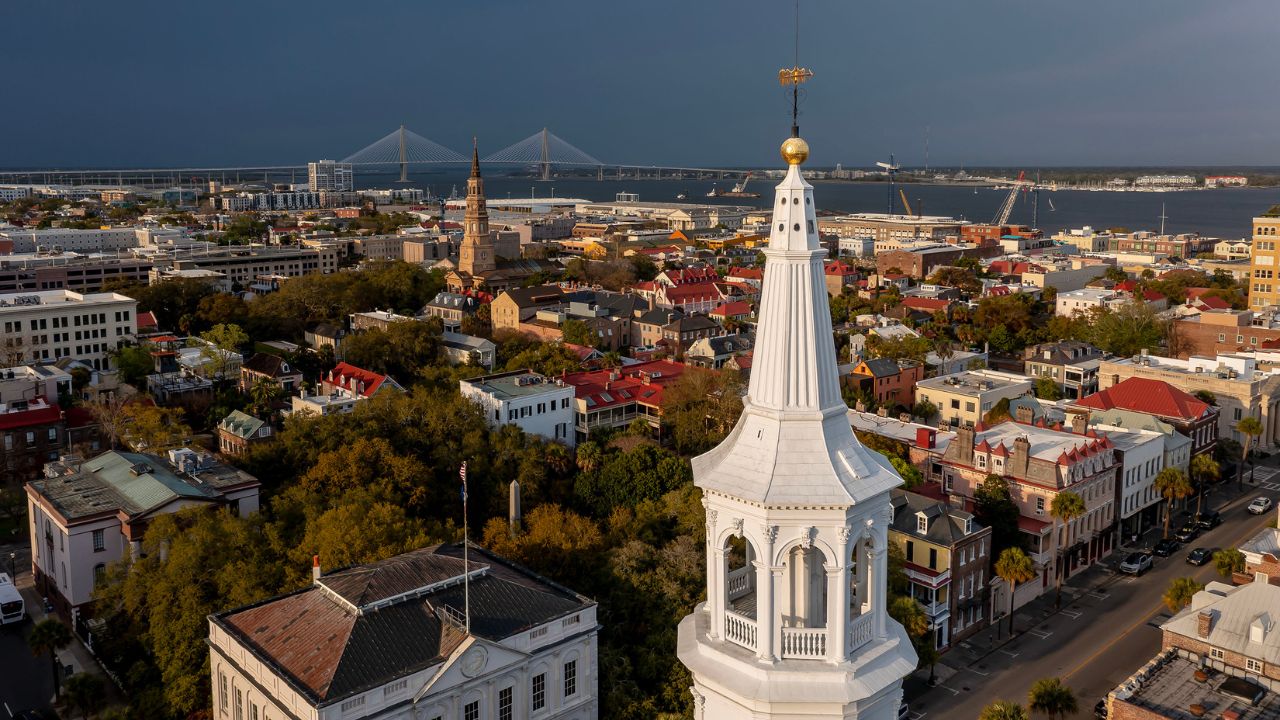
10 Things Only Charleston Locals Know About Living There

Charleston was founded in 1670, which means it was doing things its own way for more than 100 years before the United States became a country.
It’s got cobblestone streets, antebellum architecture, one of the best food scenes on the East Coast, and a mild coastal climate that turns tourists into residents.
But Charleston also has its own rhythm, its own local knowledge, and its own specific code that takes time to absorb.
Here are 10 things only South Carolinians really know about living in Charleston.
1. Flooding Is Normal
Charleston sits on a low-lying peninsula bounded by the Ashley and Cooper Rivers and the Atlantic.
The combination of storm surge, heavy rain, and high tides means flooding is a regular feature of life here, not an emergency event.
Locals know which streets flood first. They know the difference between a passing shower flood and a serious flood. They check the tidal charts in a way that most Americans only check the weather forecast.
King Street flooding during a heavy rain isn’t news here.
It’s just a reason to take a different route and maybe move your car.
2. The Buildings Can’t Be Taller Than the Tallest Steeple
Charleston has a skyline ordinance that limits building heights to prevent new construction from towering over the city’s historic architecture.
The tallest structure in the skyline is Saint Matthew’s Lutheran Church steeple, and that isn’t a coincidence.
This is why Charleston looks the way it does from the water.
It’s by design, enforced by law, and one of the reasons the historic district feels like it exists in a different relationship with time than most American cities.
3. “Chucktown” Is Acceptable, but “The Holy City” Means Something
Charleston has multiple nicknames, but The Holy City is the one that carries weight.
It refers to the skyline full of church steeples visible from the harbor, the product of that same height restriction combined with hundreds of years of church construction.
Locals use The Holy City seriously, not ironically. It’s a point of genuine pride about what the city looks like and what it has preserved.
Newcomers who use it without understanding where it comes from get corrected politely.
Charleston has patience for people who are learning. It just has standards.
4. Rainbow Row Wasn’t Always Rainbow Colored
Rainbow Row, the stretch of colorful Georgian townhouses on East Bay Street, is one of the most photographed spots in Charleston and looks like it was designed by a very cheerful city planner.
It wasn’t.
The color scheme traces back to 1935, when a judge’s wife painted her home a vivid pink. Her neighbors followed, and the colors spread down the row.
The whole thing was essentially an aesthetic trend that became permanent.
Locals know this story and appreciate it because it’s very Charleston: a seemingly formal historic place that got its most famous visual feature from a single person’s decision that everyone else just went along with.
5. The Tourists Peak on Weekends and Locals Plan Around It
Charleston draws enormous tourist traffic, and the downtown historic district on a Saturday in April or October is a fundamentally different experience from that same street on a Tuesday morning.
Locals develop a detailed mental map of when and where to avoid tourist concentration.
King Street shopping on a Sunday afternoon, no.
King Street on a Wednesday morning, yes.
The City Market on a summer weekend, considered and passed on.
The farmer’s market in Marion Square on Sunday morning, still worth it because the locals have decided it is.
The tourist economy funds a lot of what makes Charleston great. Locals make their peace with sharing the city while becoming very efficient at navigating around the crowds.
6. Shrimp and Grits Is a Part of Life
Shrimp and grits is Charleston’s native dish in the most genuine sense.
It originated in the Lowcountry as a coastal breakfast staple, made with local shrimp and stone-ground grits, and it appears on restaurant menus across every price point and preparation style in the city.
Every Charleston restaurant has a version. Locals have strong opinions about whose is best.
The conversation about whose shrimp and grits is the definitive version is ongoing and has no sign of reaching consensus.
Visitors who order shrimp and grits expecting a generic Southern dish and receive something made with serious craft and fresh local shrimp understand why the argument keeps going.
7. Bill Murray Lives Here, and Locals Are Casual About It
Bill Murray co-owns the Charleston RiverDogs minor league baseball team, holds the title of Director of Fun, and is a genuine fixture around Charleston.
He turns up at local restaurants, at Lowcountry events, and at the ballpark in ways that have normalized him into the fabric of Charleston to the point where locals barely react.
Visitors have celebrity sighting moments.
Locals say, “Yeah, that’s Bill,” and go back to their food.
It’s one of the more endearing things about how Charleston handles its notable residents. The city has been around long enough that even Bill Murray is just someone who lives here now.
8. Spoleto Isn’t Optional
Spoleto Festival USA is an annual performing arts festival that runs for seventeen days every May and June, filling theaters, churches, and outdoor spaces across Charleston with opera, theater, dance, and music from around the world.
It’s one of the most significant performing arts festivals in the United States, and it happens in a city of roughly 150,000 people.
Locals who’ve lived through Spoleto develop the kind of devotion to it that people develop toward beloved annual rituals.
It’s on the calendar before the year starts. Plans don’t conflict with it.
It takes over the city for two and a half weeks in the way that everyone agrees is completely worth it.
9. The Single Houses Have a Reason for That Design
Charleston’s single houses, the long, narrow homes with doors on the side and double-decker porches running the length of the building, look distinctive and slightly unusual by American standards.
They weren’t designed that way by accident.
The narrow street-facing facade minimized the taxable frontage under colonial-era tax laws.
The side-facing piazzas, running north-south, catch the coastal breeze and make the humidity survivable before air conditioning was an option.
Locals who learn this stop seeing the single house as quirky architecture and start seeing it as an elegant solution to a very specific set of problems.
It’s a building style designed specifically for Charleston’s climate, tax structure, and street grid, and it worked well enough that the city is full of them.
10. Angel Oak Is Worth the Drive Every Single Time
The Angel Oak is a Southern live oak tree on Johns Island, about 20 minutes from downtown, that’s estimated to be 400 to 500 years old.
That makes it one of the oldest living organisms east of the Mississippi River.
Its canopy spreads across nearly 17,000 square feet.
Visiting Angel Oak for the first time does something to people that’s hard to explain.
Standing under a tree that was alive during the Renaissance, that was already centuries old when the first colonists arrived in the Carolinas, recalibrates your sense of time in a way that stays with you.
Charleston Doesn’t Need to Explain Itself
The city has 350-plus years of history, a food scene that keeps winning national recognition, a performing arts festival that rivals anything in the country, and a steeple-height ordinance that proves it knows exactly what it’s worth preserving.
Locals understand all of this. The rest of the world is catching up.
17 Decor Items That’ll Make Your Home Look Cheap

No one wants to hear their home looks cheap. But sometimes, a cheap-looking home doesn’t reflect what you spent on it. It reflects the decor you chose.
17 Decor Items That’ll Make Your Home Look Cheap
17 Life Hacks That Are Harder Than the Non-Hack

Life hacks are supposed to make your life easier, and sometimes they really do. However, the internet is rife with hacks that aren’t actually effective.
