
13 Things Every President Since Kennedy Has Had to Do on Inauguration Day. Can You Name Them, Floridians?

For most Floridians, Inauguration Day is a TV event.
The new president takes the oath, the crowd cheers, and the parade rolls down Pennsylvania Avenue.
But for the incoming president, it’s a 14-hour gauntlet.
Behind the scenes, there’s a tight schedule of meetings, rituals, sign-offs, and ceremonies that hasn’t changed much since Kennedy’s day.
Here are 13 things every U.S. president since Kennedy has had to do on Inauguration Day.
Attend a Morning Worship Service
Every president since Kennedy has started Inauguration Day at a religious service.
Most have gone to St. John’s Episcopal Church on Lafayette Square, the so-called “Church of the Presidents” right across from the White House.
The pre-inaugural prayer service tradition started with Franklin Roosevelt in 1933.
Kennedy, the country’s first Catholic president, went to a Catholic Mass that morning instead. Every president since has continued the church-service tradition in some form, either at St. John’s or another house of worship.
It’s how the day starts. Before the oath, before the parade, before anything else.
Take Tea or Coffee at the White House With the Outgoing President
The incoming and outgoing presidents meet at the White House for a brief reception.
Tea, coffee, and sometimes a light pastry are served. There are twenty or thirty minutes of small talk.
It’s awkward. It’s sometimes a bit tense. And it’s always part of the script.
Carter sat with Ford. Reagan sat with Carter. Obama sat with Bush. Biden sat with Trump in 2021 only by phone, not in person, since Trump skipped the ceremony.
The reception is short, but it’s the symbolic handoff before the public one happens at the Capitol.
Ride to the Capitol With the Outgoing President
The motorcade from the White House to the U.S. Capitol carries both presidents in the same vehicle.
The Beast, the armored presidential limo, rolls down Pennsylvania Avenue with the outgoing president and the president-elect sitting side by side.
This is one of the most televised images of the day.
The two men, sometimes from opposite parties, riding together to a ceremony where one’s job ends and the other’s begins.
It’s a Kennedy-era image of presidential continuity, and it’s repeated every four to eight years.
Take the Oath of Office at Noon
This is the only part of the day required by the Constitution.
Article II, Section One, Clause 8 sets the words. The 20th Amendment sets the time: noon Eastern on January 20.
The Chief Justice of the Supreme Court administers the oath. The new president repeats:
“I do solemnly swear that I will faithfully execute the Office of President of the United States, and will to the best of my ability, preserve, protect and defend the Constitution of the United States.”
Thirty-five words.
The moment the new president finishes, the presidency officially changes hands.
Place a Hand on a Bible (or Another Book)
Every president since Kennedy has placed a hand on something during the oath.
Most use a Bible. Many use a family Bible passed down through generations. Some use two.
Kennedy used his family’s Catholic Bible. Reagan used his mother’s Bible. Obama used Lincoln’s Bible. Biden used a 5-inch-thick Biden family Bible that’s been passed through his family since 1893.
Trump used two Bibles in 2017 and one in 2025.
There’s no constitutional requirement to use a Bible at all.
John Quincy Adams used a book of law. Theodore Roosevelt didn’t use a book at all.
But every modern president from Kennedy on has placed a hand on a Bible.
Deliver an Inaugural Address
Right after the oath, the new president delivers an inaugural address.
Kennedy’s “Ask not what your country can do for you” speech is the most famous one of the modern era. It clocked in at 1,355 words and is the speech every president since has been measured against.
Inaugural addresses since Kennedy have ranged from about 1,400 to 2,400 words.
Carter’s was the shortest at around 1,200.
Clinton’s first was tighter at about 1,600.
The speech is supposed to unify, not divide. To inspire, not provoke.
Every president since 1961 has tried to deliver one that holds up to Kennedy’s bar.
Watch the Outgoing President Leave
After the oath, the outgoing president and first lady leave the Capitol immediately.
Helicopter Marine One lifts off from the East Plaza of the Capitol, carrying them away from the city as private citizens.
The image is part of the choreography.
The new president stands and watches. The country watches with them.
Kennedy watched Eisenhower leave. Trump watched Biden depart in 2025.
It’s the visual end of one presidency and the visual start of another.
Sign Official Documents in the President’s Room
The first official act of every modern president happens in the President’s Room, a small ceremonial space just off the Senate Chamber at the Capitol.
The new president sits at a desk, surrounded by aides and members of Congress, and signs nominations, proclamations, and sometimes the first executive orders of the new administration.
Cameras are allowed, and the signing is usually televised.
It’s the first time the new president puts pen to paper as the head of the executive branch, and it’s been part of every Inauguration Day since Kennedy.
Attend the Joint Congressional Luncheon
Since 1953, every newly sworn-in president has attended a luncheon hosted by the Joint Congressional Committee on Inaugural Ceremonies.
It’s held in Statuary Hall at the Capitol. Members of Congress from both parties attend. The president and vice president are the guests of honor.
The menu is themed around the new president’s home state. The Senate’s pastry chef builds a custom cake.
The 2021 luncheon was cancelled because of COVID-19, the only break in the tradition since 1953.
Every other president from Kennedy through Trump has sat down to that lunch.
Review the Military Troops
After lunch, the new president walks to the East Front steps of the Capitol for a military review.
Members of every branch of the U.S. Armed Forces stand in formation. The president, as the new Commander in Chief, reviews them.
It’s a short, formal moment.
Salutes are exchanged, and bands play.
It’s also the first time the new president stands in front of the military as their leader, and it’s been part of every Inauguration Day since the early 20th century.
Lead the Inaugural Parade Down Pennsylvania Avenue
After the military review, the parade begins.
The new president travels from the Capitol back to the White House along Pennsylvania Avenue, escorted by military bands, ceremonial regiments, marching bands from across the country, and floats.
Since Jimmy Carter walked part of the route in 1977, every new president has gotten out of the limo to walk at least a short stretch.
The Carter walk in 1977 was over a mile. Reagan, Bush, Clinton, and others walked shorter sections.
Trump walked part of his 2017 parade route, then again in 2025.
The walk is a tradition the modern crowd expects.
Review the Parade From the White House Reviewing Stand
When the parade reaches the White House, the new president, first family, and senior officials watch the rest of it from an enclosed reviewing stand on the North Lawn.
The custom started with James Garfield in 1881. It’s been part of every Inauguration Day since.
The reviewing stand is heated and enclosed because Inauguration Day weather in Washington is often brutal.
Kennedy’s 1961 inauguration happened with eight inches of snow on the ground.
The new president watches dozens of marching bands, military units, and state floats roll by. It’s a long afternoon.
Attend the Inaugural Balls
The day ends with inaugural balls.
The tradition started with Dolley Madison in 1809. By the modern era, presidents attend multiple official balls in one evening, dancing with the first lady at each one before moving on.
Bill Clinton’s 1997 inauguration holds the modern record at 14 balls in one night.
Reagan attended 10 balls in 1981 and 9 in 1985. Obama attended 10 in 2009. George W. Bush attended 8 in 2001 and 9 in 2005. Trump scaled it back to 3 in 2017 and 2025.
The balls are official, sponsored by the Presidential Inaugural Committee.
Tickets are sold to donors, dignitaries, and supporters.
Every president since Kennedy has done at least one ball before heading back to the White House for their first night as president.
Inauguration Day Is the Job Starting in Real Time
Inauguration Day is the only day in American politics that runs on a script written 64 years ago and never thrown out.
The morning prayer service. The motorcade with the outgoing president. The oath at noon. The address. The luncheon. The parade. The balls.
Every modern president from John F. Kennedy in 1961 to Donald Trump in 2025 has walked through the same sequence, on the same day, in the same city, before sitting down at the Resolute Desk for the first time as the President of the United States.
By midnight, the script ends and the job begins.
10 Things U.S. Presidents Have to Pay for on Their Own That Americans Are Clueless About
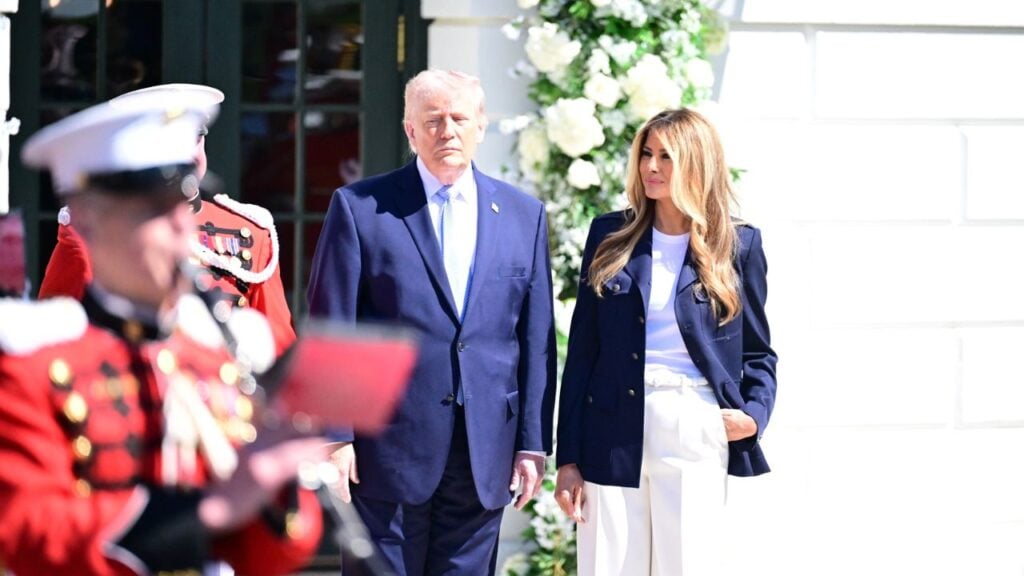
Living at 1600 Pennsylvania Avenue has obvious perks.
But the president of the United States still receives a monthly bill from the White House usher’s office, and what’s on that bill catches many Americans off guard.
10 Things U.S. Presidents Have to Pay for on Their Own That Americans Are Clueless About
12 Things Secret Service Agents Do That Aren’t What You Think
The real job of a Secret Service agent is way more complicated than the movies let on, and a lot of what agents actually do has nothing to do with jumping in front of bullets.
12 Things Secret Service Agents Do That Aren’t What You Think
