
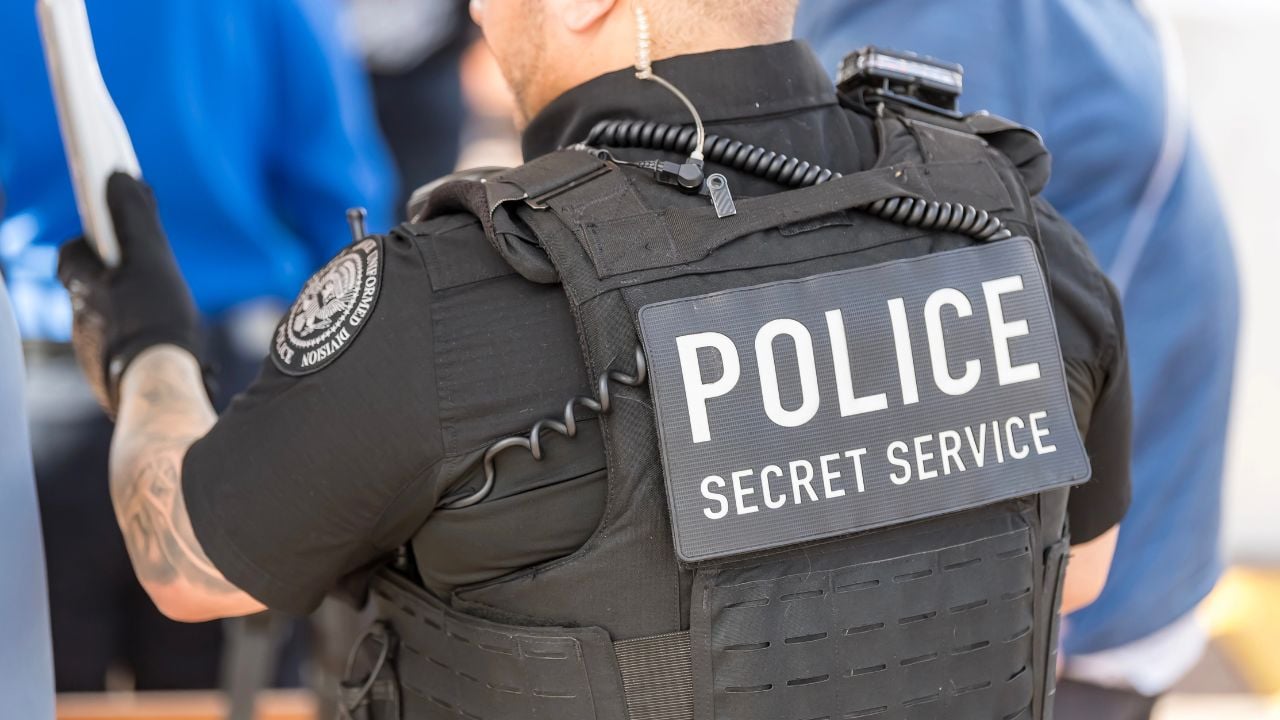
13 Secret Service Costs Taxpayers Cover That Few Virginians Realize

You probably know the U.S. Secret Service protects the president. You probably also know it costs a lot of money.
But the full bill is bigger than most Americans realize.
The Secret Service’s annual budget hit $3 billion in fiscal year 2024, and that number doesn’t include the additional costs absorbed by other federal agencies for presidential security, travel, and logistics.
Here are 13 Secret Service costs that taxpayers cover, and few Virginians know about them.
The Annual Secret Service Budget Is $3 Billion
The Secret Service’s annual budget hit roughly $3 billion in fiscal year 2024.
About 87% of that, or $2.7 billion, goes to operations and support. The Protective Operations division, which covers the president, vice president, and their families, runs $1.2 billion a year on its own.
The agency employs about 8,300 people total, with around 3,671 of them assigned to Protective Operations.
The remaining $400 million covers procurement, IT, construction, and research and development.
Most Americans see “Secret Service” and think of a few agents in dark suits. The reality is one of the most expensive security operations in the federal government.
Lifetime Protection for Former Presidents and Their Spouses
Lifetime Secret Service protection for former presidents and their spouses was restored by the Former Presidents Protection Act of 2012, signed into law by President Obama.
Before 2012, the law had been changed in 1994 to limit former presidents to 10 years of protection after leaving office.
The 2012 law brought lifetime protection back.
The cost per former president runs into the millions per year, though exact figures are classified for security reasons. The protection ends if the former first lady remarries.
There are currently four living former presidents (Bill Clinton, George W. Bush, Barack Obama, and Joe Biden), each with their own full-time Secret Service detail funded by taxpayers.
The sitting president, Donald Trump, has his own active presidential protection detail as well, which is a much larger operation than the lifetime detail given to former presidents.
The Beast Costs $1.5 Million Per Vehicle
The current presidential limousine, nicknamed “The Beast,” costs roughly $1.5 million per vehicle.
The Secret Service commissioned about 12 of them from General Motors under a $15.8 million contract in 2014.
The current Beast made its debut in September 2018, replacing the 2009 Cadillac One.
Each Beast weighs roughly 22,000 pounds. The doors weigh as much as those on a Boeing 757. The plating runs 8 inches thick (aluminum, ceramic, and steel composite). The bulletproof windows are 5 inches thick.
The next generation of Beast is already in development under a $14.8 million contract awarded to GM in September 2024, with a potential total value of $40.8 million through 2029.
Travel Costs for Every Presidential Trip
Every presidential trip requires a massive Secret Service operation.
A 2019 GAO report estimated that federal agencies spent $13.6 million on just four of President Trump’s trips to Mar-a-Lago between February and March 2017.
The Secret Service alone spent about $1.6 million on those four trips.
Trump made hundreds of visits to his private properties during his first term. Joe Biden traveled to Delaware and Camp David hundreds of times during his term.
Each trip requires the Secret Service to send an advance team days or weeks in advance, deploy a protective detail, secure the route, and coordinate with state and local law enforcement.
The bill lands with the taxpayer every time.
Advance Teams That Sweep Locations Days in Advance
The Secret Service deploys advance teams to every location a protected person will visit, often days or weeks in advance.
The advance team includes agents, technicians, communications specialists, and counter-surveillance personnel.
They sweep the location for threats, identify entry and exit routes, coordinate with local police, secure rooftops and high vantage points, and prepare contingency plans.
For a single overnight presidential trip, the advance team alone can include 50 to 100 agents and support staff.
The advance team often travels to the destination 7 to 14 days ahead of the visit, with the agents staying in hotels and incurring per diem and travel costs paid by the taxpayer.
Protection of Presidential Children Up to Age 16
Secret Service protection for a sitting president’s children continues automatically until they turn 16.
After 16, the protection is optional and requires a presidential directive.
During the Trump administration, his adult children and their spouses also received Secret Service protection at the president’s direction.
From 2017 to 2019, Trump family members took more than 4,500 trips that required Secret Service coverage, costing tens of millions of taxpayer dollars.
The cost extends to international trips.
The GAO reported that the Secret Service spent about $396,000 protecting Donald Trump Jr., Eric Trump, and their spouses on three international trips in early 2017 alone.
Protection of Major Presidential Candidates
The Secret Service protects major presidential and vice presidential candidates during the general election.
The cost to protect a single presidential candidate runs about $38,000 per day, according to congressional testimony.
The 2024 election cycle budget for candidate protection was $73.3 million.
Candidates qualify for Secret Service protection by meeting specific criteria, including polling thresholds, fundraising minimums, and other measures.
Once they qualify, the Secret Service builds a full protective detail, including advance teams, motorcade vehicles, and counter-surveillance.
Even candidates who suspend their campaigns continue to receive protection in some cases, with taxpayers covering the cost.
Protection for Foreign Heads of State on U.S. Soil
When a foreign leader visits the United States, the Secret Service takes over their security.
The agency provides protection for visiting heads of state and government, foreign dignitaries, and their accompanying spouses during official visits.
For the United Nations General Assembly each September in New York City, the Secret Service protects dozens of foreign leaders simultaneously, requiring hundreds of agents to be deployed to Manhattan for the duration of the event.
The agency coordinates with the NYPD and other agencies for the largest annual security operation in the country, with most of the cost falling on federal taxpayers.
Cabinet Members and National Security Officials
Certain Cabinet members and former White House officials receive Secret Service protection when active threats are identified.
After leaving office in 2021, the Trump administration directed the Secret Service to extend protection to former National Security Advisers John Bolton and Robert O’Brien, plus former Chief of Staff Mark Meadows and former Treasury Secretary Steven Mnuchin.
Documents obtained by CBS News showed the Secret Service paid more than $12 million in a single year to protect Bolton and O’Brien from Iranian threats.
Mnuchin, Meadows, and O’Brien combined cost taxpayers $6.2 million over six months ending July 20, 2021.
The protection continues as long as the threat persists and the sitting president authorizes it.
Secret Service Stays at Trump Properties
During Trump’s first term, the Secret Service paid Trump’s businesses for the right to protect him at his own properties.
CREW’s analysis of government records showed the Secret Service spent nearly $2 million at Trump properties during his first term, sometimes paying above government rate limits to stay at Trump hotels and resorts during presidential visits.
The pattern continued into Trump’s second term, with nearly $1 million in Secret Service spending at Trump properties reported by early 2026.
When the president visits his own resort, the Secret Service has to book rooms, coordinate space for command posts, and pay for everything the operation requires.
The Trump Organization charges for those services, and the taxpayer pays the bill.
Air Force One Support and the C-17 That Carries the Beast
The Secret Service doesn’t operate Air Force One, but the protective operations around presidential air travel are extensive and expensive.
When the president travels, a C-17 Globemaster transport aircraft typically hauls the Beast, a second backup limousine, and a separate armored Chevrolet Suburban communications vehicle nicknamed “Roadrunner” to the destination.
The C-17 flights cost thousands of dollars per hour in fuel and operating costs, paid by the Department of Defense.
For overseas presidential trips, the support fleet can include multiple C-17 flights and additional cargo planes carrying motorcade vehicles, secure communications gear, and counter-assault team equipment.
Counter-Sniper, Counter-Surveillance, and Counter-Assault Teams
The Secret Service maintains specialized tactical units that go far beyond basic protection details.
The Counter-Sniper Team provides long-range observation and rifle support at high-risk events.
The Counter-Surveillance Unit identifies hostile surveillance threats around protected persons.
The Counter-Assault Team is a heavily armed tactical group that responds to attacks on motorcades.
Each unit requires extensive training, specialized equipment, and constant deployment to wherever the president is traveling.
The 2024 assassination attempt on Donald Trump in Butler, Pennsylvania prompted congressional hearings into the Secret Service’s protective operations and questions about whether the agency had enough resources deployed at the rally.
Communications, Cyber, and Technical Operations
The Secret Service runs a massive technical infrastructure to support presidential protection.
Secure communications systems, cyber threat monitoring, fingerprint and biometric verification at events, drone detection and counter-drone systems, threat assessment databases, and intelligence coordination with the FBI, CIA, and Department of Homeland Security.
The agency’s procurement budget runs about $400 million annually, much of it going to communications and cyber infrastructure that protects the president from electronic and digital threats.
Every White House visitor, every motorcade route, every advance team operation generates data that has to be collected, secured, and analyzed.
The taxpayer covers the entire technology stack behind presidential protection.
12 Things Secret Service Agents Do That Aren’t What You Think
The real job of a Secret Service agent is way more complicated than the movies let on, and a lot of what agents actually do has nothing to do with jumping in front of bullets.
12 Things Secret Service Agents Do That Aren’t What You Think
10 Things U.S. Presidents Have to Pay for on Their Own That Americans Are Clueless About
Living at 1600 Pennsylvania Avenue has obvious perks.
But the president of the United States still receives a monthly bill from the White House usher’s office, and what’s on that bill catches many Americans off guard.
10 Things U.S. Presidents Have to Pay for on Their Own That Americans Are Clueless About
