
17 Old Sayings Georgia Grandmas Used That Are Disappearing

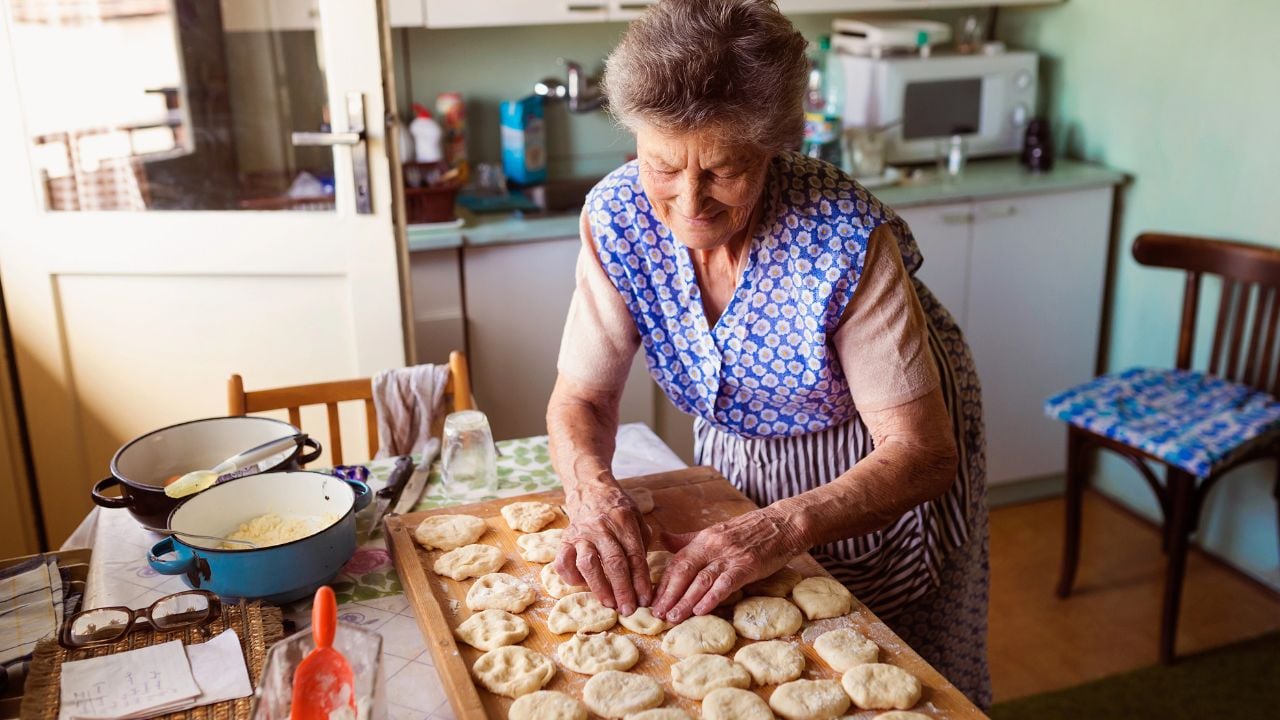
If you grew up at a grandmother’s kitchen table in Georgia, you heard a whole language that didn’t exist anywhere else.
The phrases came with the cornbread.
These sayings were how Georgia grandmas told you to slow down, mind your manners, stop arguing with your sister, and finish your peas.
Younger generations don’t use most of them anymore, which means a whole way of talking is slowly slipping out of Georgia kitchens.
Here are the old sayings Georgia grandmas used that are disappearing.
“Heavens to Betsy”
Nobody knows who Betsy is. Georgia grandmas didn’t care.
The phrase came out with a gasp, wide eyes, and the kind of dramatic pause that let you know something shocking had happened.
The phrase dates back to at least the mid-1800s and was a polite way to express shock or surprise without taking the Lord’s name in vain.
Your grandma might have said it when you tracked mud into the kitchen. Or when you announced you were dropping out of college. Or when she opened a power bill in August.
It meant “I cannot believe what I’m hearing right now,” but in a way that wouldn’t get her in trouble at church.
“My Land”
This one ran together when a Georgia grandma said it.
“Myyyyyland.”
The gasp came first. Then the slow shake of the head. Then the eye contact that said, “Honey, I cannot believe what you just told me.”
It meant “I cannot believe it” or “this is terrible,” depending on the tone.
Younger Southerners have largely replaced it with “Oh my God,” which would have earned you a swat with a dish towel in 1965.
“Lord Have Mercy”
This phrase is the bedrock of Southern grandma language.
It worked for everything.
Your grandma stubbed her toe? Lord have mercy. The grandbaby spilled grape juice on the new rug? Lord have mercy. Aunt Patty announced she was getting divorced for the third time? Lord have mercy.
It worked as an exclamation, a prayer, a sigh, and a polite expression of disbelief all at once.
You still hear it from older Georgians, but the younger generation has mostly traded it for “OMG” or “Are you kidding me?”
“Bless Your Heart”
Outsiders think this one is sweet. Georgia grandmas knew better.
“Bless your heart” can mean genuine sympathy (“Bless her heart, she lost her husband last month”).
It can mean someone is a sweet fool (“He tried to fix the dishwasher himself, bless his heart”).
It can mean someone is an outright idiot, depending on the tone (“She wore white to her sister’s wedding, bless her heart”).
A Georgia grandma could cut you down with a “Bless your heart,” and you wouldn’t even know you’d been insulted until you got home.
This one is still around, but younger Southerners use it more for irony than its original full range.
“I’ll Be a Monkey’s Uncle”
When something genuinely surprised your grandma, this was the phrase.
The expression dates back to at least 1917, with its earliest known appearance in an El Paso newspaper ad.
It became widely popular around the 1925 Scopes Monkey Trial in Tennessee, where a high school teacher was prosecuted for teaching evolution, and it stuck in Southern speech for nearly a century.
It meant “I can’t believe this is true” or “I’m utterly astonished.”
Your Georgia grandma probably said it when she found out her neighbor had remarried at 78. Or when one of her grandkids actually called to thank her for the birthday card. Or when a Bulldogs football game went into overtime.
You don’t hear it much from anyone under 40 anymore.
“Rode Hard and Put Up Wet”
This one comes from horse country, and Georgia grandmas used it often.
A horse rode hard during the day was supposed to be cooled down and walked around before being put back in the stable.
A horse rode hard and put up wet (still sweaty, not walked off) looked terrible the next morning.
Georgia grandmas applied it to people who looked exhausted, hungover, or generally rough around the edges.
If your grandma said you looked rode hard and put up wet, you needed a nap, a shower, and probably some water.
“Drunk as Cooter Brown”
The phrase refers to Cooter Brown, a folkloric character who reportedly drank himself stupid to avoid being drafted into the Civil War.
He lived in the South near the Mason-Dixon Line and didn’t want to fight for either side, so he stayed perpetually drunk.
Georgia grandmas used the phrase to describe anyone who’d had too much to drink.
“Honey, he came to the church picnic drunk as Cooter Brown.”
The phrase is fading because younger generations don’t know who Cooter Brown is.
“Hold Your Horses”
Georgia grandmas used this every time a grandchild got impatient.
The phrase goes back to the days when horses were the primary transportation, and “holding” them meant pulling the reins to slow them down.
In a Georgia kitchen, it meant “wait a minute, the cornbread isn’t ready yet.”
You’ll still hear it from older folks, but younger Southerners have replaced it with “chill” or “hang on.”
“Goin’ to Hell in a Handbasket”
When something was falling apart fast, Georgia grandmas reached for this one.
The country was going to hell in a handbasket. The kids these days were going to hell in a handbasket. The price of eggs was going to hell in a handbasket.
The phrase dates back to the 1700s and describes something headed for ruin at a rapid pace.
A handbasket was a small basket carried by hand, suggesting that the journey to disaster was easy and quick.
You still hear it from grandmothers across Georgia, but it’s rare in younger speech.
“I’m Gonna Snatch You Baldheaded”
When you were misbehaving in public, this was the warning.
A Georgia grandma would lean down, lower her voice to a whisper, and say, “If you don’t sit still right this minute, I’m gonna snatch you baldheaded.”
The threat was theatrical. Nobody was actually getting snatched baldheaded. But the warning carried the full force of grandmotherly authority.
You don’t hear this one from younger parents and grandparents. Modern child-rearing has moved past pulling hair as a metaphor.
“Stout as Mustard Gas”
A Georgia grandma might use this to describe someone tough, sturdy, brave, or determined.
The phrase came from World War I, when mustard gas was a terrifyingly powerful chemical weapon.
Saying someone was “stout as mustard gas” meant they were unstoppable.
Former Texas Governor Ann Richards used to use this expression. Georgia grandmas of the same generation used it the same way.
The phrase is essentially gone from modern speech.
“Hitch in My Giddy-Up”
When a Georgia grandma had a physical ache or wasn’t moving as fast as usual, she had a “hitch in her giddy-up.”
The phrase comes from horse country, where “giddy-up” was the command to get moving and a “hitch” referred to a limp or slow step.
In a Georgia kitchen, it meant your grandma’s knee was bothering her, or her back hurt, or arthritis was acting up.
You still hear it from older Southerners, but younger generations just say “I’m sore.”
“Conniption”
A conniption was a level above a hissy fit, usually involving hand gestures and raised voices.
A Georgia grandma might describe Aunt Carol as “having an absolute conniption” when she found out her son was marrying a Yankee.
The word dates back to the 1830s in American English and is uniquely Southern in its current usage.
Younger Southerners have mostly replaced it with “meltdown” or “freaking out.”
“Pretty as a Peach”
Georgia, the Peach State, naturally produced this compliment.
A Georgia grandma would compliment a granddaughter’s complexion, smile, or general appearance by saying she was “pretty as a peach.”
It worked best for girls with a fresh complexion and rosy cheeks, like the prettiest peaches plucked off the tree.
The phrase is still around in Georgia, but it’s slipping out of younger conversations.
“Cattywampus”
Something cattywampus was askew, crooked, or not lined up right.
A picture frame hanging cattywampus on the wall. A button sewn cattywampus on a shirt. Aunt Mary’s lipstick applied cattywampus before church.
The word is uniquely Southern American English, dating back to the mid-1800s.
Younger generations say “crooked” or “off-center” and the word cattywampus is fading from regular speech.
“Knee-High to a Grasshopper”
A Georgia grandma used this to describe how small a grandchild was when she last saw them.
“Honey, I haven’t seen you since you were knee-high to a grasshopper!”
The phrase dates back to the early 1800s and is uniquely American Southern.
It’s still in use among older Georgians, but younger Southerners more often say “since you were a kid.”
“Madder Than a Wet Hen”
If a Georgia grandma described someone as madder than a wet hen, you knew that person was furious.
The phrase comes from the fact that hens hate being wet. A drenched chicken will flap, squawk, and run around in a state of agitation.
Your grandma might have used it to describe Granddaddy after the Falcons lost a close game. Or Aunt Rita after she caught the neighbor’s cat in her flowerbed.
The phrase has held on better than some of the others, but it’s still fading from younger Southern speech.
15 Once-Popular 1950s Baby Names Rarely Heard Today

Have you ever wondered what happened to some of the most popular baby names from the 1950s?
Travel down memory lane with us and reminisce about the classic names from the ’50s that you hardly hear anymore.
15 Once-Popular 1950s Baby Names Rarely Heard Today
18 All-American Traditions Every Baby Boomer Used to Have

From church on Sundays to dinner at the table every night, there was a rhythm to daily life for kids back in the ’50s and ’60s.
These are some of the boomer traditions that once defined what it meant to be American.
