
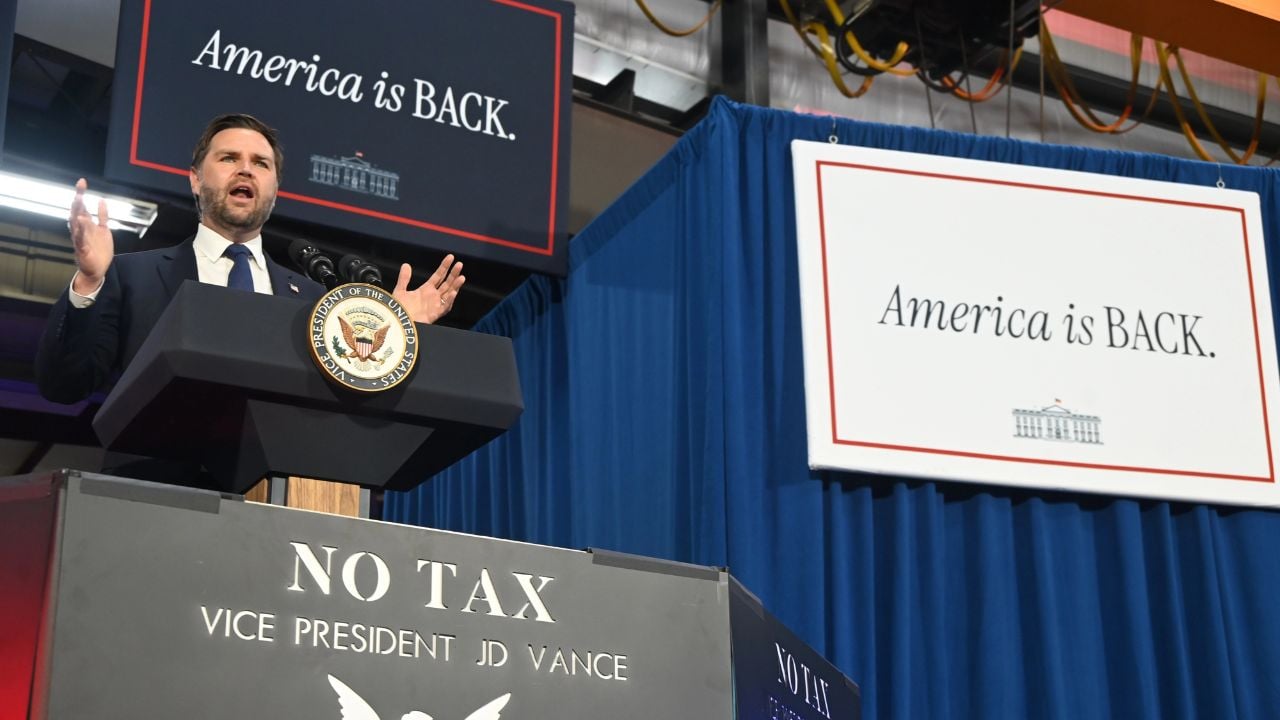
10 Perks U.S. Vice Presidents Get That No Pennsylvanian Talks About

Everyone knows the president lives in the White House and flies around on Air Force One. As for the vice president?
Many Pennsylvanians couldn’t tell you a single thing about what perks the job comes with.
But the second-in-command does pretty well for someone few people pay attention to.
Here are ten perks of being vice president that almost nobody talks about.
A 33-Room Victorian Mansion
The president gets the White House. The vice president gets a 33-room Queen Anne mansion that many Americans don’t know exists.
Number One Observatory Circle sits on the grounds of the U.S. Naval Observatory in Washington, about two and a half miles from the White House.
It’s tucked behind so much shrubbery and greenery that it’s hidden from public view, and there are no public tours.
You could drive past it your whole life and never spot it.
Built in 1893 for a price of $20,000, the home has housed every vice president since Walter Mondale moved in back in 1977.
Before that, VPs had to live in their own homes or in hotels.
So why the change?
It came down to money.
Securing each new vice president’s private house cost so much that Congress decided one permanent, protected residence made more sense.
The mansion was a security decision that turned into one of the best home addresses in the country.
A Private Jet With Its Own Call Sign
You’ve heard of Air Force One. Meet its lesser-known sibling, Air Force Two.
The vice president gets access to a dedicated military aircraft for official and diplomatic travel, with all domestic and international trip expenses covered by taxpayers.
No TSA lines, no middle seats, no fighting for overhead bin space.
It’s the same idea behind the president’s plane, just with a different number and a lot less press coverage.
When the VP travels, this is how they go.
For a job people barely think about, flying private at the country’s expense is a perk that rivals any Fortune 500 CEO’s travel setup.
A Salary That Keeps Climbing
Here’s where it gets interesting for anyone who likes numbers. The vice president’s official salary in 2026 sits at $292,300 on the books.
But the amount that lands in the bank is $235,100.
How does that work? Federal law ties the VP’s salary to an automatic formula based on the Employment Cost Index, a Labor Department measure of private-sector wage growth.
So, the official figure keeps rising every year.
But Congress has repeatedly frozen the amount that gets paid out, first capping it back in 2014.
That means the paper salary and the real salary have drifted apart, with the gap widening each year the freeze holds.
For comparison, the president’s pay is capped at $400,000 flat.
The Constitution said nothing about what the vice president should earn, which is why the VP’s salary formula ended up so much more fluid.
A $20,000 Spending Allowance
On top of their salary, the vice president gets a $20,000 annual expense allowance to cover the costs of official duties.
The kicker?
They don’t have to explain how they spend a dime of it.
There’s no requirement to account for where the money goes, with one exception: it counts as taxable income, so it has to show up on their federal tax return.
Congress made it taxable back in 1951.
Most workers can’t expense a coffee without a receipt and a form in triplicate.
The VP gets twenty grand a year on something close to the honor system.
A Backyard Pool, Hot Tub, and Putting Green
The vice president’s mansion has picked up some fun additions over the years, courtesy of the families who lived there.
Dan Quayle, VP under George H.W. Bush, was the home’s biggest renovator on the recreation front.
In 1989, he added a putting green for his golf game, and in 1991, he put in a swimming pool, a hot tub, and a pool house.
Other VPs left their own marks. Joe Biden added a tree swing for his wife, Jill, in 2010. Karen Pence, wife of Mike Pence, installed a beehive on the grounds as a nod to the role bees play in agriculture.
So the residence isn’t just a stuffy historic house.
It’s a lived-in home with a pool out back, the kind of backyard setup any suburban family would envy.
Living on the Grounds of a Working Observatory
The vice president’s address comes with an unusual neighbor: actual astronomers.
Number One Observatory Circle sits on the grounds of the U.S. Naval Observatory, which keeps right on doing its scientific work while the VP lives next door.
Scientists there observe the sun, moon, planets, and stars, measure time with extreme precision, and publish the astronomical data used for navigation.
It means the second family falls asleep each night a short walk from one of the most important timekeeping operations in the country.
The setting is a forest-like pocket of lush greenery and wildlife, footsteps from the heavy traffic on Massachusetts Avenue.
Yet it feels worlds away from the bustle of the capital.
Four Different Offices Scattered Around Washington
Most people are lucky to have one decent office. The vice president has access to at least four.
The primary workspace is in the Eisenhower Executive Office Building, right next to the White House.
There’s also the VP’s office in the West Wing, a ceremonial office, and the Vice President’s Room in the Senate wing of the Capitol, since the VP serves as president of the Senate.
There’s even another office inside the official residence itself, for when the commute across town feels like too much.
Having a foot in both the executive branch and the Senate is built into the job, and the spread of offices reflects how the role straddles two worlds in a way no other position does.
A Small Army of Staff on the Public Dime
The vice president doesn’t run the show alone. The office comes with a sizable team funded by taxpayers.
In recent years, the VP has had a staff of around 26 people in the executive branch, plus another 50 or so on the Senate side.
The White House provides roughly $6 million for staff and related expenses, and the Senate kicks in about $3 million more.
On top of that, the executive branch budget sets aside around $321,000 just for the residence, covering personnel, entertainment, and upkeep.
That’s a lot of support for a role people love to dismiss as ceremonial.
Behind the scenes, the vice presidency runs like a midsize organization.
Round-the-Clock Secret Service Protection
The Secret Service guards the vice president and their family 24 hours a day, seven days a week, with a security detail that rivals what’s offered to heads of state around the world.
And the protection doesn’t vanish the moment the term ends.
Former vice presidents remain eligible for Secret Service coverage for a period after leaving office.
This level of security was the original reason the official residence came to be.
The cost of fortifying each new VP’s private home kept climbing, so a single protected mansion became the cheaper, safer answer.
For the families who move in, it means privacy and safety on a scale almost no one else in America experiences.
A Pension That Outlasts the Job
The vice presidency pays well while you’re in it. But the financial story doesn’t end on the last day.
Former VPs are eligible for a federal pension, though the way it’s calculated is a quirk worth knowing.
The pension isn’t based on the vice presidential office itself. It’s tied to the person’s role as president of the Senate and their total years of federal service.
Then there’s the after-life of the office, where the real money often shows up.
Former vice presidents routinely land speaking engagements that can pay six figures a pop, plus book deals that have reached seven-figure advances.
Add in advisory roles, corporate board seats, and university positions, and the years after the vice presidency can dwarf the salary the job ever paid.
For a position nobody talks about, it sets people up for a very comfortable rest of their lives.
10 Things U.S. Presidents Have to Pay for on Their Own That Americans Are Clueless About
Living at 1600 Pennsylvania Avenue has obvious perks.
But the president of the United States still receives a monthly bill from the White House usher’s office, and what’s on that bill catches many Americans off guard.
10 Things U.S. Presidents Have to Pay for on Their Own That Americans Are Clueless About
13 Government Benefits You May Qualify for Without Knowing
Federal and state benefit programs are notoriously bad at promoting what they offer.
These are the government benefits that many Americans qualify for without even realizing it.
