
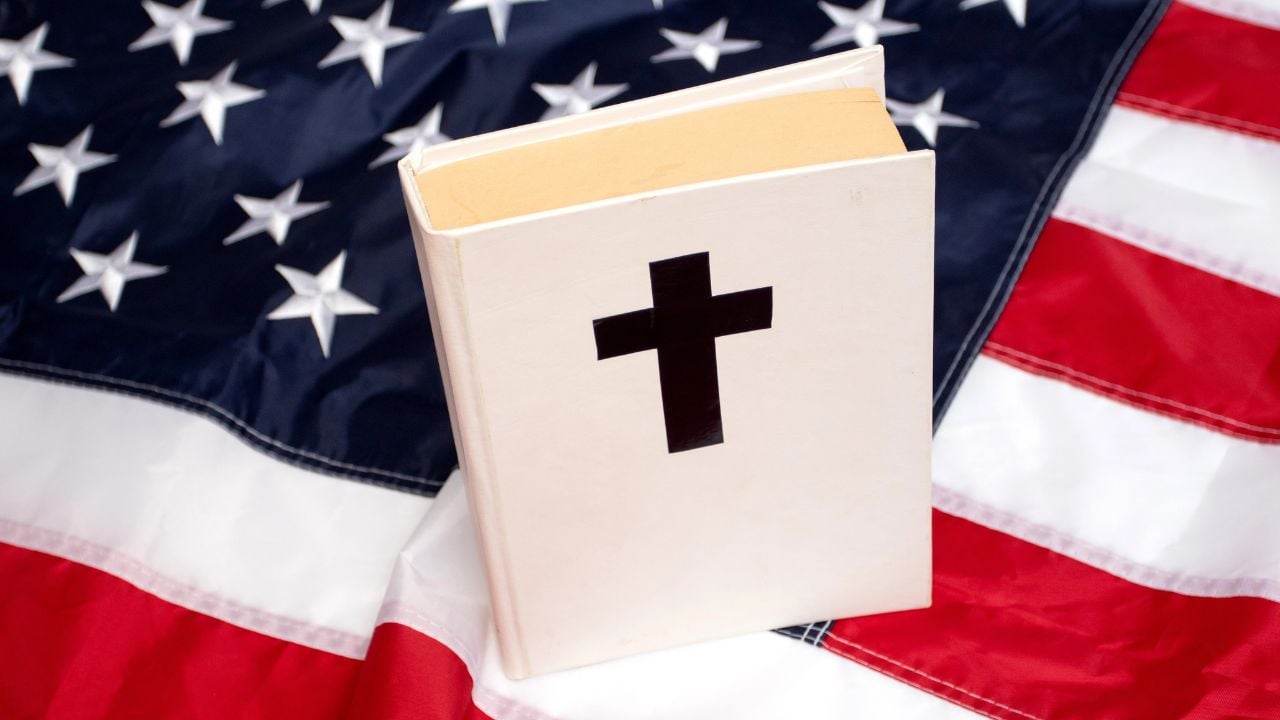
9 Religious Firsts in Presidential History That Georgians Have Forgotten

The presidency comes wrapped in religious tradition, from the hand on the Bible to the “so help me God” that closes the oath.
But almost none of that is required by law, and the history is full of surprising firsts that have slipped out of public memory.
Here are the religious firsts in presidential history that most Georgians and Americans across the country have forgotten or never knew.
John Quincy Adams Skipped the Bible in 1825
Just a few presidents in, one broke from Washington’s tradition in a way that still surprises people.
When John Quincy Adams was inaugurated in 1825, he took the oath of office on a book of law rather than a Bible.
The choice is often read as a nod to his swearing loyalty to the Constitution rather than to scripture, a deliberate separation of the civil oath from religious text.
He was the first president to forgo the Bible entirely.
For a country that assumes the Bible has always been central to the ceremony, the fact that it happened this early, with the son of a Founding Father no less, catches the modern-day American off guard.
Franklin Pierce Affirmed Instead of Swearing in 1853
Here’s a first hiding in plain sight in the Constitution itself, which offers the option to “swear or affirm.”
One president took the second path.
In 1853, Franklin Pierce became the first and only president to use the word “affirm” rather than “swear” when taking the oath of office. He also placed his hand on a book of law rather than a Bible.
Pierce was reportedly grieving the recent death of his young son and wrestling with his faith at the time.
The affirmation option exists for those whose beliefs discourage swearing oaths.
Pierce remains the rare president to choose it, a small but striking religious first that almost nobody remembers today.
James Garfield Was the First Preacher-President
One president didn’t just attend church. He preached from the pulpit before reaching the White House.
James Garfield, inaugurated in 1881, had been a lay preacher and church elder in the Disciples of Christ before entering politics.
He’s the only ordained-minister-level clergyman, by way of his preaching role, to become president, regularly delivering sermons earlier in his life.
His faith shaped his public positions too.
Garfield spoke about the separation of church and state in his inaugural address, an interesting stance from a man who had once stood at the front of a congregation himself.
Theodore Roosevelt Used No Book at All in 1901
When tragedy struck in 1901, the nation got a presidential first nobody planned for.
After President William McKinley was assassinated, Theodore Roosevelt was hastily sworn in at a friend’s home in Buffalo, New York.
In the rushed, somber ceremony, Roosevelt took the oath of office without placing his hand on any book at all, no Bible, nothing.
It remains one of the only inaugurations with no sacred or legal text involved.
The circumstances were grim and the ceremony improvised, which is exactly why this religious first has been largely forgotten outside of trivia circles.
Herbert Hoover Was the First Quaker President in 1929
Long before the country debated electing a Catholic, it had already crossed another religious milestone with barely a ripple.
Herbert Hoover, inaugurated in 1929, was the first Quaker to become president. A lifelong and devout member of the Religious Society of Friends, Hoover even helped build a Quaker meeting house during his lifetime.
As a Quaker, he affirmed rather than swore part of his connection to the tradition.
Richard Nixon would later become the second and last Quaker president.
The fact that a member of a small pacifist religious minority reached the White House in the 1920s, with little of the uproar that would later greet Kennedy, is a piece of history most Americans have lost track of.
Dwight Eisenhower Was Baptized While in Office in 1953
A sitting president underwent a religious initiation after taking the oath.
Dwight D. Eisenhower was baptized as a Presbyterian on February 1, 1953, just days after his first inauguration, making him the first and only president to be baptized while in office.
He’d been raised in a religious household but had never formally been baptized before reaching the White House.
Eisenhower brought a strong religious emphasis to the presidency.
He pushed to add “under God” to the Pledge of Allegiance and helped make “In God We Trust” the national motto, but the baptism itself stands as his most unusual religious first.
Lyndon Johnson Took the Oath on a Catholic Missal in 1963
In the chaos following an assassination, a religious first happened almost by accident aboard an airplane.
When John F. Kennedy was killed in 1963, Lyndon B. Johnson was sworn in aboard Air Force One.
There was no Bible on the plane, so the oath was administered using a Roman Catholic missal, a prayer book, found among Kennedy’s belongings on board.
It marked the first time a president took the oath on a Catholic religious text.
The detail is poignant, Johnson, a member of the Disciples of Christ, taking the oath on the late Catholic president’s own missal, and it’s one of the most overlooked moments of that traumatic day.
Joe Biden Became the Second Catholic President in 2021
The most recent religious first closed a 60-year gap.
When Joe Biden was inaugurated on January 20, 2021, he became only the second Catholic president in American history, exactly six decades to the day after Kennedy took the same oath in 1961.
Biden took the oath on a 127-year-old family Bible he’d used throughout his career.
For 60 years, Kennedy stood alone as the only Catholic to hold the office.
Biden’s election ended that singular distinction, making “the only Catholic president” a fact that had to be updated after generations of being true.
10 Things U.S. Presidents Have to Pay for on Their Own That Americans Are Clueless About
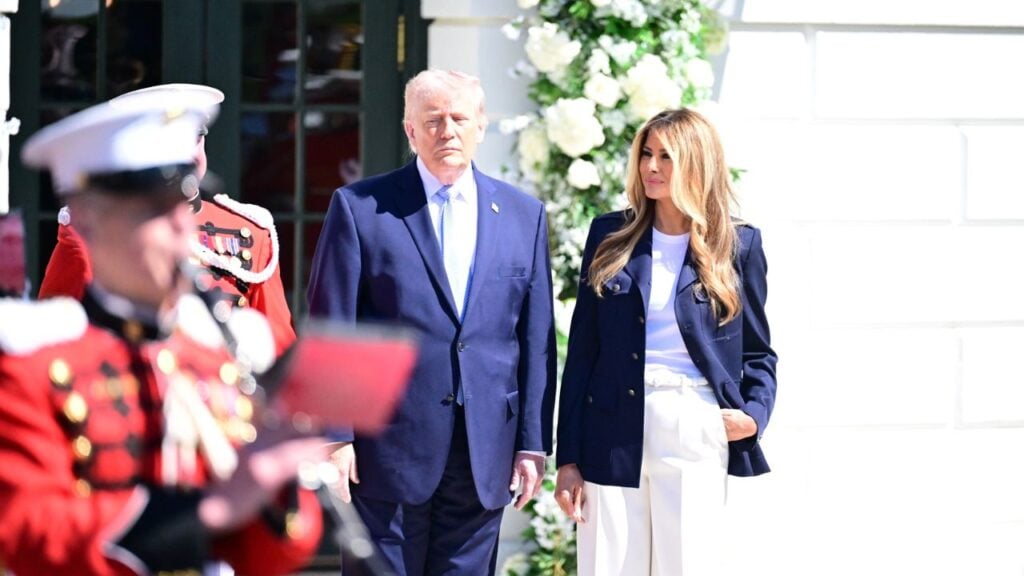
Living at 1600 Pennsylvania Avenue has obvious perks.
But the president of the United States still receives a monthly bill from the White House usher’s office, and what’s on that bill catches many Americans off guard.
10 Things U.S. Presidents Have to Pay for on Their Own That Americans Are Clueless About
12 Things Secret Service Agents Do That Aren’t What You Think
The real job of a Secret Service agent is way more complicated than the movies let on, and a lot of what agents actually do has nothing to do with jumping in front of bullets.
12 Things Secret Service Agents Do That Aren’t What You Think
