
13 Florida Driving Habits That Terrify Every New Transplant

Florida sells itself on warm winters and no state income tax.
The fine print should mention the traffic.
Transplants show up expecting a relaxing drive to the beach. Then they merge onto I-4 and understand why their insurance quote looked so high.
These are the driving habits that turn a calm Florida transplant into a nervous wreck.
Camping in the Left Lane
The left lane is for passing. Somebody forgot to tell half of Florida.
You’ll find a sedan doing 45 in the fast lane, cruise control locked, driver serene.
Traffic stacks up behind them like the deli line at Publix on a Sunday.
Honk and you get nothing. Flash your lights and you get less.
They’ve reached a level of calm no amount of road rage can pierce.
Florida transplants spend their first month trying to pass on the right and slowly accepting their new reality.
Turn Signals Are Decorative
Florida drivers treat the blinker like a mysterious factory option they never figured out.
Lane changes happen by vibes.
A car drifts toward your bumper with zero warning, and you’re left guessing whether it’s a merge, a swerve, or a sneeze.
The flip side is just as confusing. A retiree two miles ahead has had the left signal on since Tuesday, and nobody knows if a turn is ever coming.
Either way, you learn to assume everyone around you is about to do something.
They usually are.
The U-Turn Lifestyle
Florida built its roads around the U-turn, and locals use them.
Big grassy medians mean you can’t turn left into half the businesses.
So you drive past your destination, hang a U-turn at the next light, and double back like you meant to.
Newcomers miss the Wawa, panic, and end up three miles away. Veterans flip a casual U-turn across four lanes without spilling their coffee.
It looks reckless from the passenger seat, but it’s how the whole system runs.
Running Reds in Bulk
A yellow light in Florida is a dare for many.
A fresh red light means two or three more cars are still coming.
Sit at an intersection the instant your light turns green, and you’ll watch a minivan blow through the cross traffic like the rules expired.
Locals know this.
They double-check nothing’s coming before they go, every time, out of survival instinct.
Transplants who trust the green light learn fast… the hard way, sometimes.
Ninety or Nine, Nothing Between
Florida traffic runs at two speeds.
There’s the snowbird gliding along at 9 under, and the lifted truck doing 90 in a school zone.
Almost nobody drives the posted limit.
You’re either getting passed like you’re parked or stuck behind a Buick with a “Retired and Loving It” frame on the plate.
This makes I-4 between Tampa and Orlando particularly scary for transplants who aren’t used to it. It gets ranked the deadliest interstate in the country on the regular.
Pick a lane and commit. The middle is where the negotiation happens.
Golf Carts on Real Roads
In much of Florida, the golf cart is a legitimate vehicle, and it’s sharing your road.
The Villages runs on them. Beach towns let them roll right alongside traffic. You’ll be cruising a 35 zone and come up on grandpa and three friends putting along at 18 with a cooler strapped to the back.
It’s charming until you’re late for work behind one.
Then it’s a slow-motion test of your patience.
Transplants do a double take the first time. Then many buy one.
Flooring It Through a Monsoon
Summer afternoons in Florida bring a wall of rain that drops visibility to about one car length.
Many Florida drivers don’t slow down as much as transplants expect.
They flip the wipers to maximum and keep up the pace like the road isn’t a river.
Then there’s the other camp, the folks who stop dead under an overpass and wait it out, creating a fresh hazard for everybody behind them.
Newcomers learn the storms last twenty minutes and pass like nothing happened.
The puddles, the chaos, and the steam rising off the asphalt are all routine.
Brake-Checking for Disney
The road to the theme parks is its own ecosystem of fear.
Rental cars wander across three lanes of I-4 the second a sign for Magic Kingdom appears.
Brake lights flash for no reason. A whole family cranes their necks looking for the exit while doing 60.
Tourists treat the interstate like the parking lot at Epcot. Slow, confused, and stopping wherever the mood strikes.
Locals give the rentals a wide berth.
You can spot them by the sunburn and the GPS suction cup on the windshield.
Merging Is a Suggestion
The on-ramp is where Florida’s driving philosophy gets tested.
Some folks floor it and dive into 70-mph traffic without a glance. Others reach the end of the ramp, come to a full stop, and wait for an opening that politeness will never provide.
Both moves terrify the person already on the highway.
There’s no telling which one you’ll get until you’re committed.
The merge that’s supposed to be a graceful zipper turns into a game of chicken with a Camry.
The Flip-Flop Pedal Technique
Half of Florida drives in flip-flops, and the footwear has opinions about your brakes.
A loose sandal slides under the pedal at the worst moment. Crocs in sport mode aren’t much better.
Bare feet show up more than you’d think.
It’s a state where shoes feel optional, and the gas pedal sometimes pays the price.
Transplants notice the driver next to them is barefoot at a red light and rethink everything.
Stopping for Wildlife
Florida roads come with wildlife, and the braking is sudden.
A gator decides to cross a two-lane road, and traffic locks up like a parade rolled through.
Turtles get a full-stop escort.
During a cold snap, iguanas drop out of trees, and folks have to swerve around them.
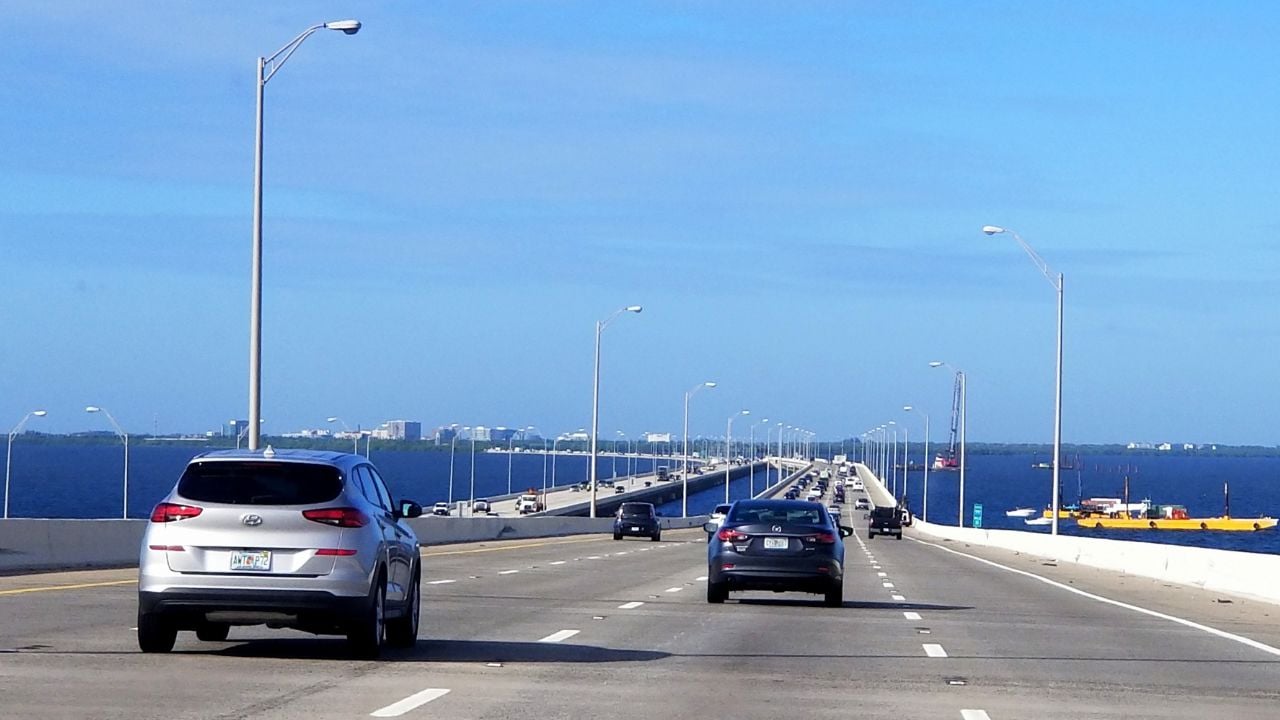
Then there are the bridges and causeways, where someone hits the brakes for no animal at all, and a phantom traffic wave ripples back a half mile.
Newcomers don’t expect their commute to involve dodging reptiles. It inevitably will.
Tailgating With a Free Hand
Personal space evaporates on a Florida highway.
The car behind you will often ride your bumper close enough to read your registration.
The driver usually has a phone in one hand and a gas-station Big Gulp in the other, steering with a knee and blind luck.
Tap your brakes to make a point, and they swerve around you, offended that you exist. Then they tailgate the next car.
It feels personal, but it’s just the local following distance, measured in inches.
The Last-Second Toll Swerve
Florida loves a toll road, and the lanes sort drivers into the prepared and the panicked.
SunPass holders cruise through at speed while cash payers realize too late they’re in the wrong lane.
Cue the desperate four-lane swerve across solid lines at the last possible second.
Get a transponder, and the tolls become invisible, billed while you sail past.
Skip it, and you join the bumper-car routine at every plaza.
Nothing says “I just moved here” like slamming to a stop at an open-road tolling gantry that doesn’t take cash anyway.

You left out the “roundabouts”. Virtually no one here knows how to use them. If you want a cheap thrill, park where you can watch one and count the near misses. If you’re lucky you might even witness a crash. As one policeman being interviewed for a new one said, “if you like accidents you’ll love roundabouts”. WTF (Welcome to Florida).