

12 Things Floridians Say That the Rest of America Doesn’t Understand

Florida has its own language, and nobody hands you a dictionary at the state line.
Visitors smile and nod through entire conversations. Half the words sound like English. The meanings went somewhere tropical.
Here’s the Florida phrasebook, translated for everyone north of the Georgia border.
Pub Sub
To the rest of America, it sounds like a sandwich shop near a bar.
To Floridians, the Pub Sub is the Publix deli sub, and it needs no further explanation.
Ordering one is a rite. Eating one in the parking lot, still in the bag, is a tradition.
Tell a Floridian you’ve never had a Pub Sub and watch them physically wince. Then watch them offer to drive you to the nearest deli counter, because this can’t stand.
The chicken tender sub on sale week has arguably caused more lunch detours than any billboard in state history.
The Cone
In June, Floridians start talking about “the cone” like it’s a neighbor everyone’s keeping an eye on.
“Are we in the cone?”
“The cone shifted east.”
“I’m not buying plywood until we’re in the cone.”
It’s the hurricane forecast cone, the shaded blob on every TV map from June to November.
Out-of-staters hear an ice cream order. Floridians hear a question about whether the patio furniture comes inside this weekend.
Spaghetti Models
No pasta involved.
Spaghetti models are the tangle of colored storm-track lines meteorologists throw on the screen, each one a different computer’s guess.
Floridians read them like racing forms.
“The European model has it turning north.” Every Floridian has said this sentence with total confidence and no meteorology degree.
When Jim Cantore shows up at your beach, the models have spoken. Pack accordingly.
No-See-Ums
The rest of America hears baby talk. Floridians hear a warning.
No-see-ums are biting bugs so small they’re practically invisible, and they swarm at dawn and dusk near the water.
The name is the whole description: You don’t see ‘um, but you feel ‘um.
Screens can’t always stop them. Bug spray negotiates at best.
Visitors scratch their ankles and ask what’s biting them. The answer sounds made up.
It never is.
Snowbird
Up north, a snowbird is a little white bird.
In Florida, it’s the retiree from Michigan who arrives in October, stays through Easter, and drives 12 under the speed limit.
The word carries no malice.
Floridians say it the way farmers talk about weather, a seasonal fact of life with its own traffic patterns.
The snowbirds even use it on themselves, usually on a license plate frame, usually proudly.
It’s Season
A Floridian sighs, looks at the packed restaurant, and says two words: “It’s season.”
No other state treats “season” as a complete sentence.
Down here, it means the winter months when the population swells, the roads clog, and the early-bird wait hits 40 minutes.
There’s no “tourist” in front of it. No “snowbird” either.
Just Season, capital S, like it’s a visiting relative.
The follow-up phrase arrives in May, with a contented exhale: “Season’s over.”
Wet Season and Dry Season
Ask a Floridian about the four seasons, and they’ll gently correct you. There are two.
The wet season runs roughly from May through October, when it rains every afternoon at three. The dry season covers the rest, when it mostly doesn’t.
That’s the whole calendar.
Fall is a rumor. Winter is a long weekend.
Out-of-staters keep waiting for the leaves to change. The leaves decline.
Florida Cracker
Visitors flinch at this one, and Floridians enjoy explaining it.
A Florida Cracker is a point of pride: the old families who worked cattle here generations back, named for the crack of their cow whips across the scrub.
Real Cracker heritage comes with Cracker houses, Cracker horses, and Cracker cattle, all official terms.
Call a fifth-generation Floridian a Cracker, and they may thank you.
Context, as always, is everything in Florida.
Hammock
In 49 states, a hammock is where you nap between two trees.
In Florida, a hammock IS the trees. The word means a shady stand of hardwood forest rising out of the wetlands, and it’s on half the park signs in the state.
Royal Palm Hammock.
Mahogany Hammock.
No napping equipment provided.
Tourists arrive at the trailhead with a pillow and leave with a vocabulary lesson.
A1A
Tell a Floridian to take A1A, and they know exactly where they are: The beachfront highway running the Atlantic coast.
It’s a road, a landmark, and a lifestyle in three characters.
Jimmy Buffett put it in a song. Every coastal town treats its stretch like Main Street.
Out-of-staters hear a steak sauce or a battery size.
Floridians hear salt air and a speed limit nobody takes personally.
The proper way to drive it involves the windows down, the radio on, and no particular destination. Some roads exist to get you somewhere.
A1A exists for the Sunday drive.
Cold Front
When a Floridian announces a cold front, the rest of America braces for snow.
The front arrives. It’s 64 degrees.
Out come the parkas, the boots, the scarves bought for one trip to Tennessee.
Restaurants close their patios. Somebody lights the fireplace they’ve used twice.
Laugh all you want, northern friends. Floridians earned this softness through six months of August.
The thermostat owes them.
Palmetto Bug
The politest lie in the Florida dictionary.
A palmetto bug is a cockroach the size of a thumb that can fly. The name exists so Floridians can mention one without screaming.
“Saw a palmetto bug in the garage” sounds manageable.
The truth would clear the room.
Every state has roaches. Only Florida gave them a beach name.
The rest of America can keep calling them what they are. Floridians prefer the diplomacy.
12 Florida Tax Breaks That Have Nothing to Do With Your Age

The Golden Girls made Florida look like a place you retire to and finally relax.
But the tax perks down here aren’t waiting for you to hit a certain age. Some of the biggest breaks land the second you become a resident, whether you’re chasing a pension or a promotion.
12 Florida Tax Breaks That Have Nothing to Do With Your Age
7 Seafood Spots Tourists Flock To in Florida (and 7 Locals Keep Secret)
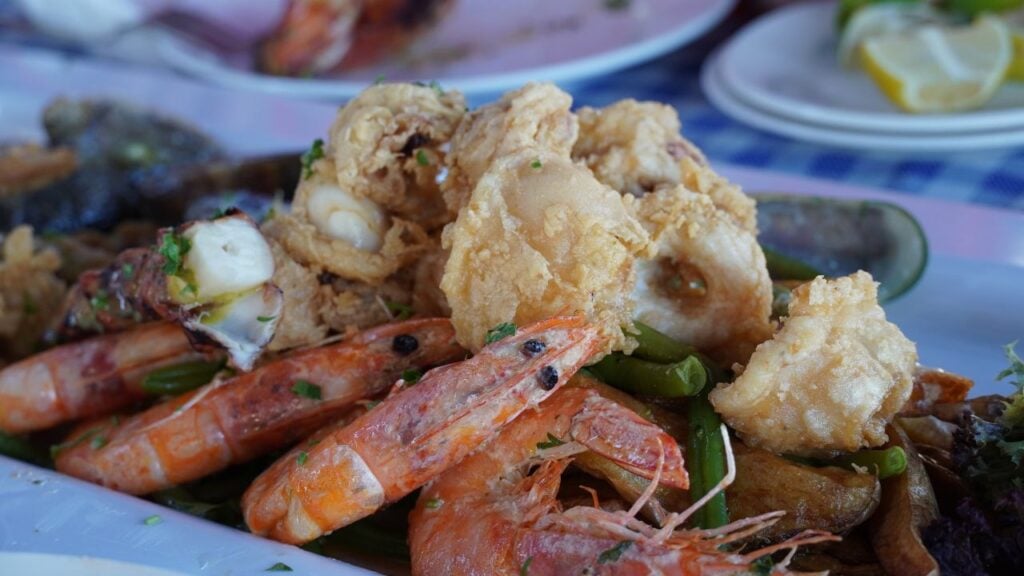
The best seafood in Florida lives at two very different addresses.
One has a valet line, a famous name, and a wait that practically stretches into the next time zone.pu
The other has a screen door, a hand-painted sign, and regulars who’ve been coming since the early 70s.
7 Seafood Spots Tourists Flock To in Florida (and 7 Locals Keep Secret)
