

15 HOA Rules Florida Homeowners Can’t Believe Are Legal

The letter shows up in the mail on a Tuesday.
Your mailbox, it says, is the wrong shade of black. You have thirty days to repaint it, or the fines start.
Welcome to life under a Florida homeowners association, where the rules reach places you never imagined, and a surprising number of them hold up in court.
These are the HOA rules that Florida homeowners can’t believe are legal.
Note: This is general information, not legal advice. HOA powers and Florida law vary by community and change often, so check your documents and consult an attorney if needed.
They Can Foreclose on Your Home
Let’s start with the big one.
If you fall behind on your HOA dues, the association can place a lien on your property and, eventually, foreclose on it.
As in, take your home.
Florida law, under Chapter 720, grants this power for unpaid assessments. There are notice steps and waiting periods built in, but the endpoint is real.
People have lost six-figure homes over a few thousand dollars in missed dues.
The lien attaches first. The foreclosure can follow.
They Can Fine You $100 a Day
Break a rule and leave it unfixed, and the meter runs.
Florida HOAs can charge up to $100 a day per violation, up to a total of $1,000, and even higher when the governing documents allow it.
Leave your garbage can out too long, park where you shouldn’t, let your grass grow, and the daily fines stack.
They do have to give you written notice and a hearing first.
But once that’s done, the dollars add up fast.
They Can Bill You Thousands Overnight
This one shows up with no warning and no vote you remember casting.
When a community needs a new roof, road, or seawall and the reserves fall short, the HOA can levy a special assessment, a one-time charge split among every owner.
We’re talking hundreds, sometimes many thousands of dollars, due by a deadline.
Underfunded reserves are the usual culprit.
You can’t opt out, and you can’t push it off just because the timing is rough.
You Can’t Quit the HOA
Here’s the part that catches new buyers off guard.
Once you buy a home in an HOA community, membership is mandatory. You can’t resign, you can’t stop paying dues, and you can’t vote the whole thing out of existence.
The obligation runs with the property, not with you.
It stays attached to the home through every owner, year after year, for as long as the community exists.
Buying in means signing up, whether you read the fine print or not.
They Decide Your Paint Color
Want to repaint your house, add a fence, or swap your roof? \
Ask first.
Most Florida HOAs run an architectural review committee, and you need its written approval before you change anything visible from outside.
Paint colors, fence styles, roof materials, and even new landscaping can all require a green light.
Do the work without sign-off, and they can fine you and order you to tear it out.
Your house, their palette.
They Can Cap How Many Pets You Have
Florida HOAs can put real limits on your pets.
They can limit the number per home, set weight cutoffs, and even ban certain dog breeds.
Service animals and emotional support animals are protected under fair housing law, so those rules can’t touch them.
But your third cat or your over-the-limit Labrador? The HOA can say no.
Check the pet rules before you fall in love with a puppy.
They Can Lock Out Anyone Under 55
That “55 and older” label has real legal force behind it.
Federal law lets age-restricted communities turn away younger buyers, as long as at least 80 percent of homes have a resident who’s 55 or older.
It’s one of the few times the law allows housing to discriminate by age, carved out by the Housing for Older Persons Act.
So a 50-year-old can be told no, flatly and legally.
The clipboard at the clubhouse isn’t bluffing.
They Can Stop You From Renting It Out
Thinking of renting your Florida place on the side? Your HOA might forbid it.
Associations can restrict leasing, banning rentals shorter than six months, capping how many times a year you can rent, and requiring board approval of your tenants.
These rules are how communities keep out short-term vacation renters.
Newer rental restrictions generally bind only owners who bought after the rule passed or agreed to it.
But if you’re under one, your income property isn’t yours to rent however you please.
They Can Fine You for Your Tenant’s Mistakes
Rent your home out, and you’re still on the hook.
When a tenant breaks the rules, the HOA fines the owner of record, not the renter.
Your tenant leaves the trash out or parks on the lawn, and the violation lands on you.
You can chase reimbursement through your lease, but as far as the HOA is concerned, the buck stops with the homeowner.
Pick your renters carefully. Their slip-ups become your bills.
They Control Anything the Neighbors Can See
The HOA’s reach stops at your front door, but stretches across everything outside it.
Anything visible from the street or common areas is theirs to regulate: your lawn, your mailbox, your holiday decorations, the basketball hoop in the driveway.
Your interior, generally, is your own business.
But that garden gnome collection out front, the boat by the garage, the flag on the porch? All within their authority.
If they can see it, they can probably rule on it.
They Charge You a Fee Just to Sell
Selling your home? The HOA wants paid on the way out.
Before closing, your buyer’s team needs an estoppel certificate, an official statement of what you owe the association.
Florida lets the HOA charge an estoppel fee for it, capped at around $299 when you’re current, with add-ons if you’re behind or in a hurry.
It’s a small fee next to a home sale.
But it’s one more toll the association collects, simply for letting you leave.
They Can Fine You Over Holiday Lights
Yes, your Christmas lights have a deadline.
A 2024 law reined in some pettier fines, but HOAs can still penalize you for holiday decorations left up more than a week after they send notice, or trash cans left at the curb more than 24 hours.
Leave the inflatable Santa up until February, and the letter comes.
The new rules added a grace period.
They didn’t remove the power to fine you once it runs out.
They Can Make Your Tenant Pay Them Directly
Fall behind on dues while renting your place out, and the HOA can go straight to your tenant.
Florida law lets an association demand that your renter pay rent to the HOA instead of to you, until your debt is cleared.
Your tenant, by law, has to comply.
So the rent you were counting on can get rerouted to the association before it ever reaches your account.
It’s a collection tool with real teeth.
They Can Bar You From the Pool
Get behind on what you owe, and the perks vanish.
Florida HOAs can suspend your right to use common amenities, the pool, the gym, and the clubhouse, once you’re more than 90 days delinquent on dues.
They can also suspend your voting rights in the community.
You’ll still owe the dues, and you’ll still live there. You just can’t swim.
It’s a squeeze meant to get you to pay up, and it’s written into the statute.
They Can Charge You to Move In
The fees can start before you’ve unpacked a box.
Many Florida HOAs collect a one-time capital contribution, sometimes called a start-up fee, from new buyers at closing.
It’s meant to seed the community’s reserves, and it sits on top of your regular dues.
Unlike condos, which face limits on transfer fees, HOAs have more room to charge these.
So your first bill can land before your first night’s sleep in the house.
What Your HOA Can’t Do Anymore
Here’s the good news, because Florida did push back.
A 2024 law called HB 1203, the Homeowners’ Association Bill of Rights, stripped HOAs of some of their pettier powers.
They can no longer ban your pickup truck or personal work vehicle from your own driveway.
They can’t stop you from putting up a vegetable garden or clothesline out of public view.
They can’t prohibit solar panels, and they can’t deny your renovation request without telling you, in writing, exactly which rule you’d be breaking.
Board members who hide records or take kickbacks now face criminal charges.
It doesn’t strip the HOA of its real power.
But for Florida homeowners, it’s more protection than they had a few years ago.
6 States Snowbirds Are Picking Instead of Florida
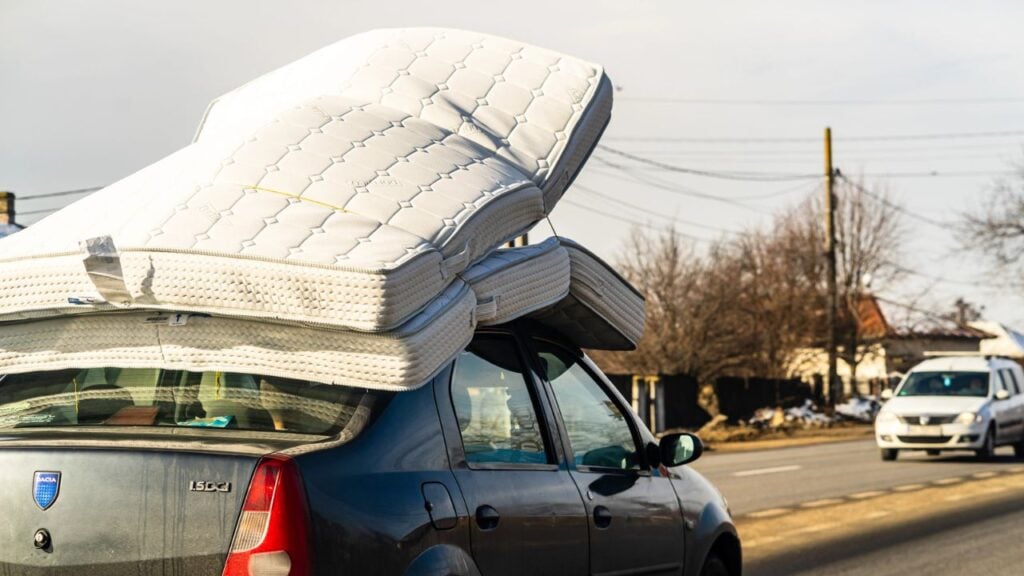
Florida still wears the snowbird crown, but the grip is loosening.
So where are snowbirds going instead?
The moving data tells the story, and these states keep coming up.
The Moving Trucks Don’t Lie: 6 States Snowbirds Are Picking Instead of Florida
6 Florida Towns Where $2,071 a Month Is Enough to Retire Well

Everyone says you can’t retire on Social Security by itself anymore, with the average Social Security retirement check coming to $2,071 a month in 2026.
That’s not entirely true in Florida.
Here’s where the math still works in the Sunshine State.
6 Florida Towns Where $2,071 a Month Is Enough to Retire Well
