
12 Things Locals Wish Snowbirds Understood About Driving in Florida

A sedan with Michigan plates drifts toward the toll gantry on Florida’s Turnpike outside Wildwood, then hits the brakes to a near-stop.
There’s nothing to stop for.
The cameras read the plate at 70, and the line of cars behind them backs up for no reason at all.
These are the things Floridians wish snowbirds knew before pulling out of their home driveway.
1. Left Lane Camping
The left lane in Florida has a job, and slow cruising isn’t it.
State law backs this up.
Florida makes it a moving violation to sit in the far left lane while faster traffic tries to pass, unless you’re setting up a left turn.
The left lane is for passing, then getting back over to the right.
The trouble starts when a visitor settles into that lane and stays for twenty miles, turning an open highway into a rolling parking lot.
Everyone behind them has to slow down.
Move right when you’re done passing, and a good share of the gripes on this list never happen.
2. Sudden Slowdowns
Few things rattle a Florida commuter faster than brake lights on a clear, dry morning.
The cause is usually a missed exit.
A winter visitor catches the sign for the outlet mall too late, slows across two lanes, and everyone behind stands on the pedal.
Coffee goes flying.
On I-95 and I-4, one hesitation can back up taillights for a mile.
Miss your exit there, and it’s no crisis.
Take the next exit, loop back, and nobody gets hurt.
3. Toll Lane Roulette
Toll roads confuse many first-timers in Florida, and the confusion shows up as brake lights at the gantry.
Here’s the part that trips visitors up: In most toll lanes, you never have to stop.
A SunPass transponder reads your car at highway speed.
No booth, no coins, nothing to dig out of the cupholder.
Skip the transponder, and a camera photographs your plate, and the bill arrives in the mail for you or your rental company.
Florida’s system even works with the northern passes now, so an E-ZPass or Georgia’s Peach Pass gets you through the Turnpike.
So keep rolling.
4. U-Turn Country
Road design in Florida leans on the U-turn more than most newcomers have ever seen.
Instead of turning left across oncoming traffic, you pass your street, slide into a median opening, and loop back the other way.
It feels backward for about a week.
Then it clicks.
At first it throws newcomers, who stop dead in a through lane to force a left the road isn’t built for.
The median U-turn keeps the whole intersection moving once you trust it.
5. Roundabout Panic
Roundabouts keep popping up across Florida, and they undo some visitors completely.
The rule is short: Yield to whoever is already in the circle, then go.
You don’t stop when the circle is empty.
Ease in and keep rolling when it’s clear.
Many visitors freeze at the entrance instead, waiting for a gap the yield already gave them, while the cars behind pile up.
That’s the opposite of the idea.
Yield, merge, flow.
6. Driving in the Downpour
Those afternoon storms roll in on a schedule most visitors never see coming, and Florida gets them almost daily all summer.
The corridor between Tampa and Orlando draws the most lightning of anywhere in the country, and the rain can turn heavy in seconds.
Gone in twenty minutes.
Locals ease off the gas, switch on their headlights, and hold their lane.
Spooked by the downpour, a visitor will pull onto the shoulder of I-4, which is far more dangerous than the water on the road.
One caveat catches people: Florida only allows hazard lights on a moving car in extreme low visibility, and only on roads posted 55 mph or higher.
Anywhere slower, flashers on a rolling car just rattle the driver behind you.
Psst! How much do you know about Florida’s roads, bridges, and beaches? Take our quiz and see how many you can get right.
Quiz
Florida Road Trivia
Answer these questions on Florida’s roads, bridges, and beaches. We bet you can’t get them all right. Prove us wrong?
You can legally drive your own car right onto the sand at which famous Florida beach?
7. A1A Isn't a Parade
A1A hugs the Atlantic coast, and that ocean view is exactly the trouble.
A visitor coasts along at 25 in a 40, phone up at every dune, in no hurry at all.
Meanwhile, a nurse behind them is trying to clock in.
The scenery isn't going anywhere.
Pull into one of the free beach lots, grab your photo, and let the people with somewhere to be slip past.
A slow Sunday cruise on A1A is a joy.
The same crawl on a Tuesday commute leaves a line of locals stuck behind you.
8. Florida's Move Over Law
Move Over is a law Florida takes seriously, and many winter drivers have never heard of it.
Spot a stopped vehicle with flashing lights on the shoulder, and you owe it space.
Move over.
If the next lane is blocked, drop to 20 mph below the speed limit and creep past instead.
Since 2025, the law covers any disabled car with its hazards on, not just police cruisers and tow trucks.
That fender-bender on the median counts too.
Fly past at full speed, and you're looking at a real ticket.
9. Right on Red
A right turn on red is legal across Florida unless a posted sign says otherwise, and locals expect you to take it.
Drivers from stricter states often sit and wait for the green anyway.
So the light cycles, the road stays empty, and the cars behind wait for nothing.
Full stop, quick look, go.
No posted sign against it means the turn is yours to make.
Sit at a clear red too long, and you'll earn a friendly honk.
10. Season Has a Schedule
Snowbird season runs on a calendar every Floridian knows by heart.
The traffic thickens around October and won't ease up until spring.
Roughly October to May.
Restaurants fill, beach lots overflow, and I-75 south of the state line turns into a slow conveyor of loaded SUVs.
None of it surprises a local.
New to Florida?
Plan your errands around it: Early mornings and midweek stay calmer, while Saturday afternoons on any beach route get rough.
The same rhythm returns every single year.
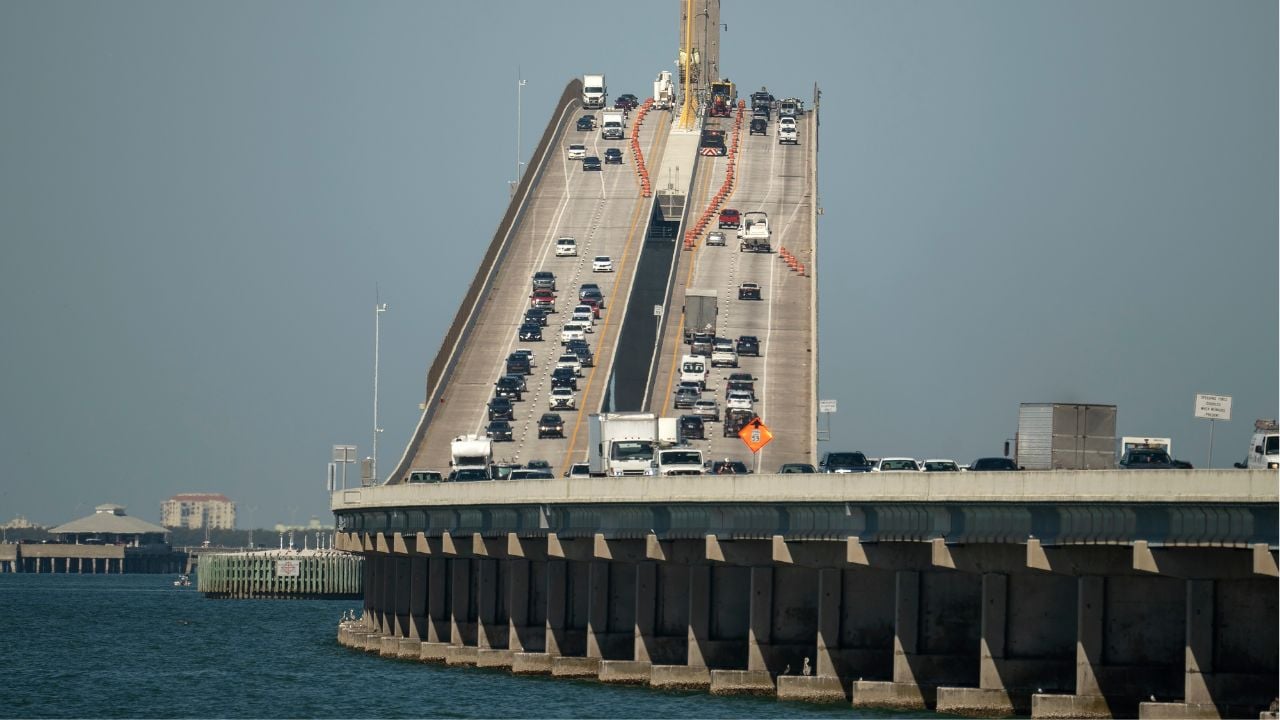
11. Bridges and Causeways
Bridges and causeways give some visitors a fresh reason to tap the brakes down here.
A tall span over open water looks like a big deal from below, but it's just a road with a view.
The height gets to some drivers, who slow to a crawl at the top of a drawbridge or a high causeway.
The tires hold fine.
Drawbridges do open for boat traffic, so a red light and a rising roadway are routine here, not an emergency.
When the gates come down, you wait, the boat slides through, and the span settles back into place.
Keep pace with traffic and cross it like any other stretch of road.
12. Wipers On, Lights On
Rain and headlights are a package deal in Florida, and the pairing is written into the law.
State law requires your headlights on during any rain, fog, or smoke, whatever the hour.
Wipers on, lights on.
The shorthand is easy to keep, and it keeps your car visible when the sky opens up in the afternoon.
Run your wipers through a Florida downpour with no lights, and you turn a gray sedan into a ghost on I-95.
Daytime running lights fool many drivers, since the front end glows while the taillights stay dark, so the driver behind you never sees your brake lights.
Snap the full headlights on the second the rain starts, and every driver in your mirror can see you again.
11 Ways You Can Spot a Floridian at the Beach in 5 Seconds
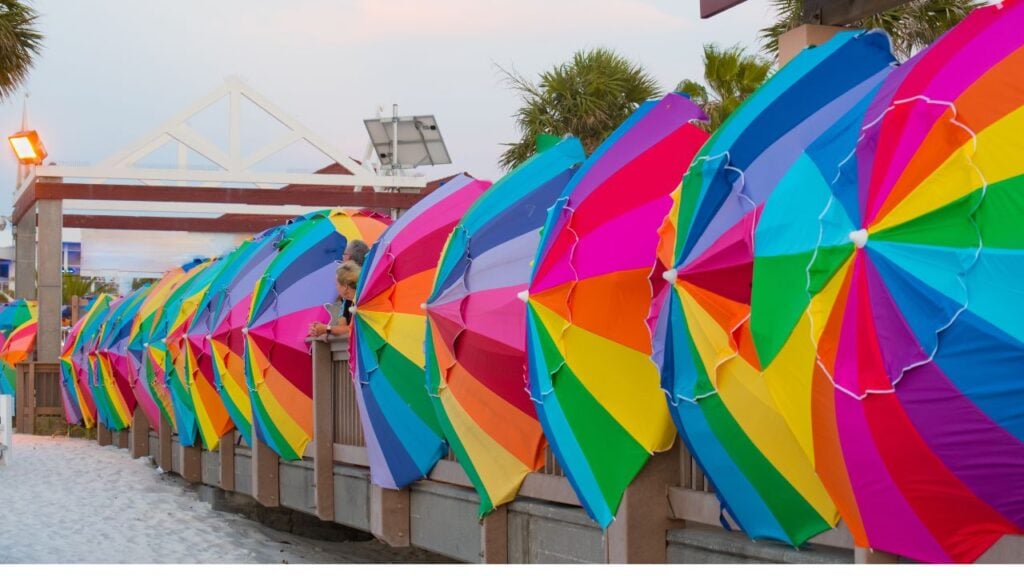
Put a lifelong Floridian and a first-week visitor on the same stretch of sand, and the difference shows in seconds.
One of them already knows how the morning will go, and the other is about to learn the hard way.
11 Ways You Can Spot a Floridian at the Beach in 5 Seconds
7 Florida Gas Stations Locals Avoid (and 3 They Go Out of Their Way For)
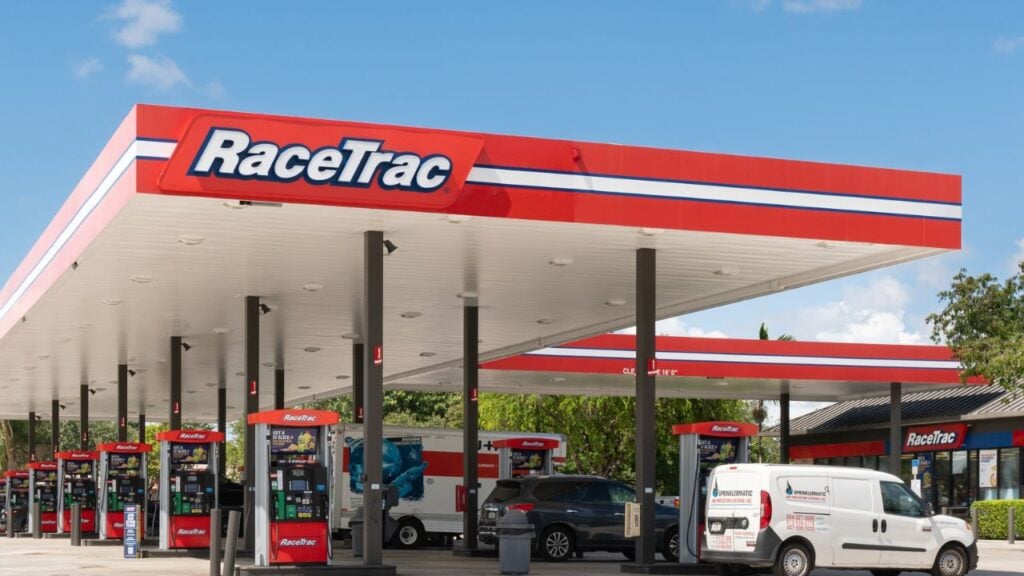
Ask a Floridian where to fill up on a road trip, and watch their face do the math.
Some names get a shrug, and a couple get a hard no before you even finish the question.
7 Florida Gas Stations Locals Avoid (and 3 They Go Out of Their Way For)
