
The Cheapest Places to Retire in Virginia in 2026

The cheapest places to retire in Virginia are small cities in the state’s Southside and far southwest, where a comfortable house still sells for well under $200,000.
Martinsville is the cheapest of them all, with Danville, Bristol, Pulaski, and Roanoke close behind.
A house in any of them costs less than half what the same money buys in a Fairfax County cul-de-sac.
That money buys twice as much house.
The Commonwealth never taxes a dollar of your Social Security, either.
But here’s the part that catches new arrivals: Virginia still taxes most of your other retirement income, so where you settle and how you draw your savings both change what you owe.
Note: This is general information, not financial or tax advice. Tax rules and dollar amounts are subject to change, so confirm the current details with a professional.
Where Virginia Stays Cheap
The ranking here leans on Houzeo’s 2026 cost-of-living analysis, which pairs median home values from the University of Virginia’s Weldon Cooper Center with C2ER price data on housing, groceries, utilities, and healthcare.
These are old furniture and textile towns that lost their plants decades ago, and homes there stayed cheap even as prices near Washington kept rising.
That’s the opening.
Martinsville leads on price, with a median home near $117,500, roughly a third of the statewide figure.
Every place below sits well under what a house costs across most of the state.
1. Martinsville
Martinsville sits deep in Southside Virginia, an old furniture-making city wrapped around the Smith River.
Nothing on this list is cheaper.
A newcomer trades big-city nightlife for a walkable uptown, a Saturday farmers market, and a hospital, Sovah Health, minutes from most neighborhoods.
Race weekends bring the crowds, when Martinsville Speedway packs in fans of the NASCAR stock-car circuit and the winner drives home with a grandfather clock instead of a trophy.
The rest of the year stays calm.
Groceries, gas, and property taxes all run below the state average, which is the whole reason a retiree looks at a place like this.
2. Danville
Danville, an hour east of Martinsville on Route 58, ran on tobacco and textiles for a century before both left town.
What’s left is a comeback.
The old Dan River mills along the water hold apartments and offices now, and the revived River District downtown fills with restaurants, a museum of fine arts, and the Riverwalk Trail that traces the Dan River.
By the same cost analysis, a typical Danville home sells for about $149,000.
That’s roughly a fifth of what a comparable house runs in Arlington.
The prices stay low, but the downtown no longer feels empty.
Psst! How much do you know about Virginia beyond the price tags? Take our quiz and see if you can ace it.
Quiz
Old Dominion IQ
Ten questions on the Old Dominion. See how many you can ace.
Virginia is nicknamed the “Mother of” what?
3. Bristol
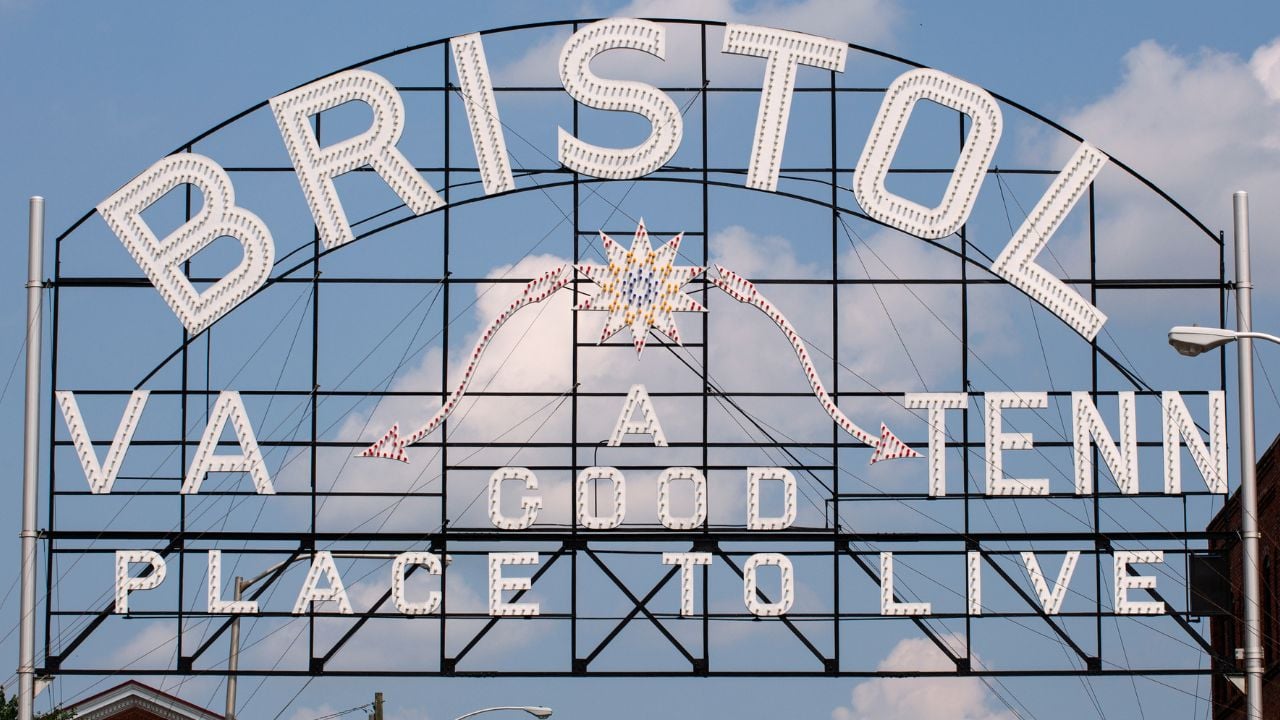
Bristol sits at the far southwestern tip of Virginia, right where the state meets Tennessee.
State Street splits the two.
One sidewalk is Virginia, the other is Tennessee, and a retiree can cross the road into a state with no income tax at all.
On the Virginia side, the Birthplace of Country Music Museum marks the 1927 Bristol Sessions, the recordings that gave country music its start.
Houzeo pegs the typical Bristol home around $205,000, and the lakes and ridges of the Virginia Highlands sit a few exits down I-81.
It's about the cheapest corner of the state after Martinsville and Danville.
4. Pulaski
Pulaski anchors the New River Valley, tucked in the hills between Wytheville and Blacksburg.
It's a small, green town.
The New River Trail State Park starts nearby, a rail-trail for walking and biking that follows an old railroad line past the village of Draper.
Homes around Pulaski County run in the low $200,000s, and many sit on an acre or more.
Blacksburg and Virginia Tech are 30 minutes up the road, which puts big-hospital care and a college-town calendar close without the college-town rent.
The Blue Ridge starts right outside the door.
5. Roanoke
Roanoke is the biggest city on this list, home to about 100,000 people in the Blue Ridge, and it still costs less than most of Virginia.
It's the region's hub.
A typical Roanoke home runs around $230,000, more than the towns down south but far below the Washington suburbs.
What the extra money buys is a full-size city: Carilion Roanoke Memorial Hospital, a downtown farmers market, and the greenway along the Roanoke River.
The Roanoke Star lights up Mill Mountain above it all, the Blue Ridge Parkway runs past the edge of town, and Virginia's wine country spreads north up the valley.
For retirees who want hospitals and highways nearby, the trade-up still runs cheaper than Richmond.
How Virginia Taxes Retirees
The sticker price gets you in the door, but how much you keep depends on Virginia's tax rules.
Start with the good news: Virginia doesn't tax Social Security at all, and it lets you subtract any part the federal government taxed right back out on your state return.
After that, most retirement income is fair game.
Pensions, and withdrawals from a 401(k) or an individual retirement account (IRA), get taxed like a paycheck, at rates topping out at 5.75%.
There's one break built for older filers: Virginians 65 and up can subtract up to $12,000 of income, though that age deduction shrinks by a dollar for every dollar your federal income tops $50,000 single or $75,000 married.
So a couple living mostly on Social Security and a modest pension may owe the state almost nothing, while a couple pulling six figures from an IRA loses the deduction and pays the full rate.
Draw more from taxable accounts, and the town's low prices matter even more.
A few Virginia money moves can trim that bill before the year ends.
Psst! Think you know what Virginia costs a retiree? Take our quiz and see how you score.
Quiz
Virginia Money IQ
Eight questions on what Virginia costs a retiree. See if you can ace every one.
In 2023, Virginia scrapped its statewide sales tax on what?
FAQ
Quick answers to what people ask most about retiring cheaply in Virginia.
What is the cheapest place to retire in Virginia?
Martinsville, in Southside Virginia, has the lowest home prices in the state, with a median near $117,500. Danville and Bristol run close behind.
Does Virginia tax retirement income?
Virginia doesn't tax Social Security, but it does tax pensions and 401(k) or IRA withdrawals at rates up to 5.75%. Filers 65 and older can subtract up to $12,000, subject to income limits.
Is Virginia tax-friendly for retirees?
Fairly. Social Security is exempt and there's no estate or inheritance tax, though pensions and retirement-account withdrawals are taxable.
What are the cheapest regions to retire in Virginia?
The Southside along the North Carolina line and the far southwest around the New River Valley have the lowest home prices and cost of living.
Is southwest Virginia a good place to retire?
For many retirees, yes. Towns like Bristol, Pulaski, and Roanoke offer mountains, low costs, and hospital access, with fewer big-city amenities than Northern Virginia.
Virginia has no statewide property tax, so what you owe depends entirely on the county or city you land in.
Localities set their own rates, and the statewide average sits around 0.71% of a home's value, below the national mark, so a cheaper house in Danville or Pulaski carries a smaller tax bill each year, too.
Does Virginia Tax Social Security? What Retirees Pay in 2026
Everybody moving to Virginia asks the same question about their monthly benefit check.
The answer is simpler than the rumors, and it changes how much of your other income you get to keep.
Does Virginia Tax Social Security? What Retirees Pay in 2026
6 Virginia Mountain Towns Locals Love (and 3 Tourists Overrun)

The prettiest corners of the Blue Ridge aren't the exits everyone already knows.
A few high-country towns stay off the tourist maps on purpose, and locals would just as soon keep the crowded towns for the visitors.
6 Virginia Mountain Towns Locals Love (and 3 Tourists Overrun)
