
9 Hidden Costs of Living in California Nobody Warns You About

Think California’s wildfire bills only land on the people who lost homes?
They land on you too.
Insurers are allowed to split a billion-dollar shortfall from the January fires with their customers this year, and the fee shows up where almost nobody looks.
These are the hidden costs of living in California that nobody warns you about.
Note: This is general information, not financial or tax advice. Rates, fees, and dollar amounts are subject to change.
1. Mello-Roos on Newer Homes
House hunters comparing the newer subdivisions run into a hidden charge with a strange name on the property tax bill.
It’s called Mello-Roos, a special tax that pays for the streets, sewers, schools, and parks a new development needs.
The tax isn’t tied to your home’s value.
Districts set it by square footage or even the number of bedrooms, and it shows up as an extra line when your property taxes come due.
It transfers with the deed.
In Elk Grove’s East Franklin district, the facilities tax alone can run up to $840 a year on a single-family home.
The arrangement dates to 1982, after Proposition 13 limited what cities could collect through regular property taxes, and many of the newer master-planned neighborhoods carry it.
Ask for the exact amount before you fall for a floor plan because the charge can run for decades.
2. Wildfire Fee on Your Insurance
Your homeowners insurance renewal may carry a fee this year that traces back to fires you only watched on the news.
The FAIR Plan, the state’s insurer of last resort, came up short on cash after the Eaton and Palisades fires and levied a $1 billion assessment on insurers that write home and property coverage in the state.
Insurance Commissioner Ricardo Lara then allowed those insurers to collect half of the assessment back from their own customers as a temporary fee on renewals.
CalMatters reports most home insurance customers in the state will see the temporary fees.
Fire or no fire.
So read your renewal line by line before you pay it.
3. Flat Fee on Electricity
Pacific Gas and Electric (PG&E) now charges you before you switch on a single light.
The utility added a Base Services Charge of about $24 a month to residential electric bills in March 2026, and state regulators approved the same flat-fee-plus-cheaper-kilowatt setup for Southern California Edison and San Diego Gas & Electric.
The trade-off is a lower price per kilowatt-hour.
Heavy users can come out even.
Light users won’t.
A small apartment with modest usage pays the same flat charge as a big house with two air conditioners running all August.
Households on the California Alternate Rates for Energy (CARE) discount pay about $6 a month instead, per PG&E’s own explainer.
4. City Tax on Your Utilities
Once that power bill arrives, many cities take a cut of the total for themselves.
The name on the books is the utility users tax, a percentage added to what you pay for electricity, gas, and phone service.
Los Angeles sets its residential electricity rate at 10%, so about $20 of a $200 electric bill goes to City Hall.
Unincorporated pockets of Los Angeles County pay 4.5% on communication, electric, and gas charges instead, and rates differ city to city across the state.
Renters pay it too.
The line sits between the delivery charges and the state fees on your bill, which makes it easy to skim past.
5. Paycheck Tax With No Cap
Almost every worker in the state gives up a slice of each paycheck to State Disability Insurance (SDI), the program that pays you during a disability or family leave, and the rules behind that slice changed in 2024.
The rate for 2026 is 1.3%, per the Employment Development Department (EDD).
Lawmakers removed the wage cap that year, so the deduction now applies to your entire salary.
Every dollar of it.
An engineer earning $400,000 sends $5,200 a year to SDI, where the old cap would have cut the bill off partway through the year.
Someone earning $50,000 pays $650 toward the same program.
Psst! How much do you know about what things cost in the Golden State, then and now? Take our quiz and see if you can ace it.
Quiz
Golden State Money IQ
Answer these questions on California prices, paychecks, and history. We bet you can’t get them all right. Prove us wrong?
During the Gold Rush, a dozen eggs in San Francisco could cost the equivalent of how much in today’s money?
6. DMV Renewal Add-Ons
The yearly registration notice from the Department of Motor Vehicles (DMV) works like several bills sharing one envelope.
The base registration fee runs $76.
A Highway Patrol fee adds another $34 before your county tacks on charges of its own.
Then the value-based fees start.
A Transportation Improvement Fee scales from $33 up to $231 depending on what your car is worth, per the DMV's own fee table.
Electric car owners pay extra.
A Road Improvement Fee adds $121 at renewal for zero-emission cars from model year 2020 on because their drivers skip gas taxes at the pump.
7. Double-Digit Sales Tax
Some cities now collect more than a dime in sales tax on every dollar you spend.
Shoppers in Lancaster and Palmdale pay 11.25%, the highest combined sales tax rate in the state.
The statewide base is 7.25%, per the California Department of Tax and Fee Administration (CDTFA).
The rest is local.
Everything stacked above that base came from local ballot measures, approved a quarter point at a time.
A dozen cities, Oakland and Compton among them, sit at 10.75%.
Buy a $2,000 sofa in Palmdale, and you pay $225 in tax on top of the price tag.
8. Tolls That Rise on Schedule
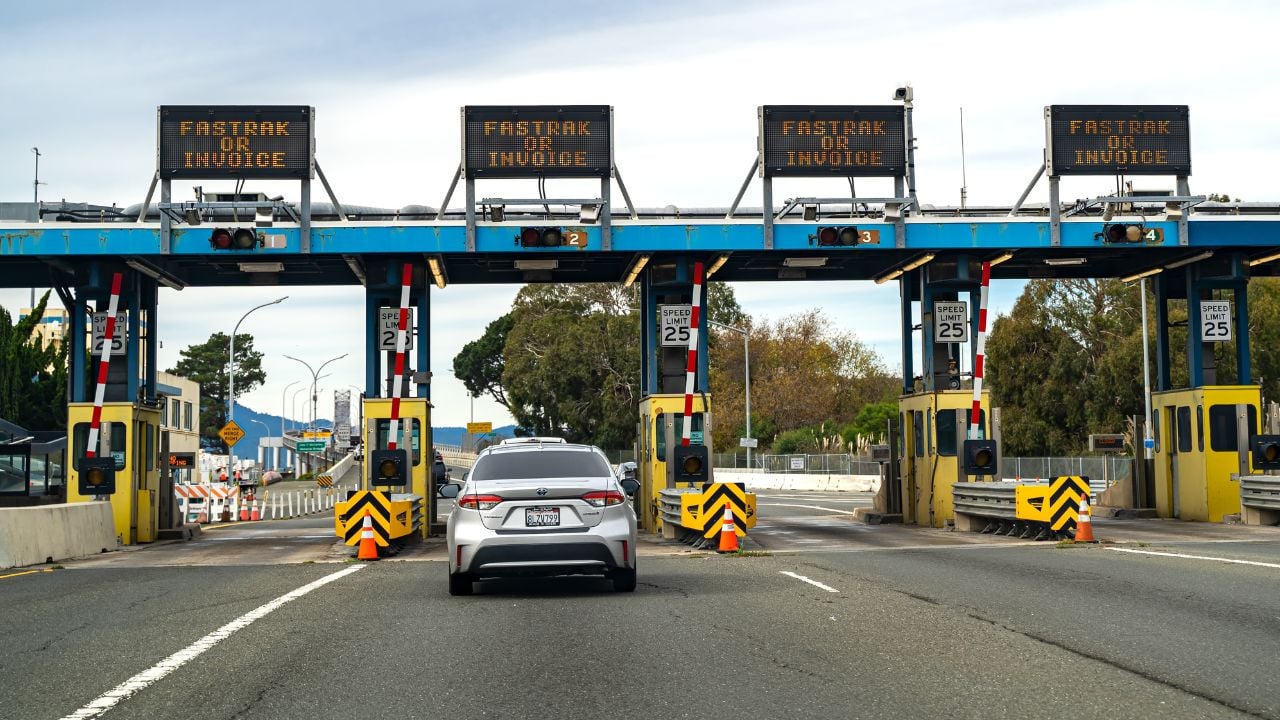
Driving across the water costs more every January now.
Crossing any of the seven state-owned bridges around the Bay, the Bay Bridge included, costs $8.50 after a 50-cent increase on January 1.
This is the cheap year.
The Bay Area Toll Authority approved a 50-cent increase for every year through 2030, when a FasTrak crossing reaches $10.50.
Drivers who wait for an invoice in the mail will pay $11.50 by then because paper billing costs the toll authority more to process.
The premium for paying by license plate starts in 2027, so drivers with a FasTrak tag in the windshield will pay a dollar less per crossing.
Psst! How does your income tax stack up against the other 49 states? Sort the numbers below and see where your state lands.
9. Penalty for Going Uninsured
Skipping health insurance for a year comes with its own bill at tax time.
The federal penalty went to zero years ago.
But California kept a version of its own, which the Franchise Tax Board collects with your state return.
An uninsured adult owes at least $950 for the 2025 tax year, per Covered California, and each uninsured child adds at least $450.
That's per person.
Your state return asks about coverage directly, so you can't skip the question at filing time.
The flat amounts stack by household, so bigger families owe bigger penalties.
A family of four that goes uncovered all year files in April and finds at least $2,800 added to their state tax bill.
10 Things People Get Wrong About Living in California
A cousin visits for one week and flies home an expert on the whole state.
They saw a beach, a freeway, and none of what daily life there looks like.
10 Things People Get Wrong About Living in California
10 Things Californians Are Tired of Explaining to the Rest of Us
No, not everybody surfs.
The questions start the second someone hears where you're from, and the answers haven't changed in years.
10 Things Californians Are Tired of Explaining to the Rest of Us
