

9 Money Mistakes Texas Retirees Make in Their First Year

A Texas retiree signs the closing papers on a paid-off house and figures the hard part is over.
It isn’t.
Skipping income tax shifts the cost onto the county tax office and the electric meter, and a first-year retiree pays for the surprise.
These are the money mistakes Texas retirees make in their first year.
Note: This is general information, not financial or tax advice. Tax rules and dollar amounts are subject to change.
1. Not Filing Your Homestead Exemption
The Texas homestead exemption is one of the biggest tax breaks a homeowner can claim, and the state doesn’t sign you up for it.
You have to file.
For 2025, voters raised the school-tax homestead exemption to $140,000, up from $100,000, which carves that much off your primary home’s value before the school rate ever touches it.
You send Form 50-114 to your county appraisal district, and you can apply the same year you move in.
It works on your school taxes first, the biggest slice of most Texas tax bills.
Miss the usual April 30 deadline, and you can still file up to two years late, though you wait on the refund.
2. Skipping the Over-65 Freeze
Turning 65 in Texas unlocks a second, bigger break, and many new retirees never claim it.
Once you qualify, your school-district taxes freeze at that year’s amount, so a rising appraisal can’t push the school portion any higher.
That’s your ceiling.
The 2025 changes lifted the total school exemption for owners 65 and up to $200,000.
County and city taxes keep rising with your appraisal, though, since the freeze covers only the school slice.
You claim it the year you turn 65, on the same homestead form, and if you move to another Texas home later you can carry the percentage of that frozen ceiling with you.
3. Never Protesting Your Appraisal
A retiree who accepts the first appraisal notice without a word usually overpays in Texas.
Every spring, your county appraisal district mails a proposed value, and you get until May 15, or 30 days after the notice, to protest it.
Comparable sales, photos of a dated kitchen, or a bid for foundation repair can all knock the number down.
Protesting is free.
Many first-year owners never open that envelope, and the value just sticks.
On a bill that runs into the thousands, an afternoon of paperwork pays better than almost anything else you do that week.
4. Passing on the Tax Deferral
House-rich, cash-poor Texans 65 and older have an option almost nobody uses: They can defer their property taxes entirely.
File a deferral affidavit, and the county stops collection on your homestead for as long as you live there.
The taxes don’t vanish.
They pile up at 5% interest a year, and the balance comes due when the home sells or passes to your heirs.
The same deferral is open to homeowners with a qualifying disability, at any age.
It’s a lifeline for a tight year, not a free pass.
5. Getting Stuck on a Bad Power Plan
Most of Texas runs on a deregulated electricity market, which trips up retirees coming from a place with one utility.
You pick your own retail provider, plan, and rate through the state’s Power to Choose marketplace.
Do nothing, and you can land on a pricey month-to-month rate right when you’re running the air conditioner nonstop in Texas’ July heat.
Read the fine print.
A teaser rate built around 1,000 kilowatt-hours can jump if your summer usage lands somewhere else, so match the plan to how much a retiree home pulls all day.
Cities like Austin and San Antonio run their own municipal utilities and sit outside that marketplace, but most of the state doesn’t.
Psst! How much do you know about Texas taxes and the cost of living? Take our quiz and see if you can ace it.
Quiz
Texas Money IQ
Answer these questions on Texas taxes, retirement, and the cost of living. We bet you can’t get them all right. Prove us wrong?
Texas is one of how many U.S. states with no personal income tax?
6. Buying Into a MUD Blind
Many retirees chase a brand-new house in a master-planned community and never ask about the municipal utility district (MUD).
A MUD is a separate taxing entity that repays the bonds for the water, sewer, and drainage lines under a fresh subdivision.
That's a fourth line item.
It stacks on top of your county, city, and school taxes.
On a $400,000 home, a $1 MUD rate adds about $4,000 a year, which is how two identical houses end up with very different tax bills.
Older districts charge less as they pay the bonds off, so a settled neighborhood can beat a shiny new subdivision at the tax office.
Ask for the full tax rate before you sign.
7. Blowing the New-Resident Deadline
Moving to Texas starts a countdown on the car in your driveway.
You get 30 days to register it, and the state charges a flat $90 new-resident tax to bring your own paid-off vehicle onto its rolls.
That fee surprises everybody.
The driver license clock runs 90 days.
Texas dropped the yearly safety inspection for most cars in 2025, though you still owe a $7.50 inspection program replacement fee at registration.
The big metro counties still tack on an emissions test.
You handle the title and registration at the county tax assessor-collector's office, not the license branch.
Miss a deadline, and the late fees stack on top of all of it.
8. Thinking No Income Tax Means No Tax
No state income tax is the reason many retirees pick Texas, and it lulls a few of them into forgetting April altogether.
The Internal Revenue Service (IRS) still wants its cut of pensions, individual retirement account (IRA) withdrawals, and even part of your Social Security.
Nobody withholds it now.
Once you hit 73, required minimum distributions (RMDs) force taxable money out of your traditional accounts whether you need it or not.
So turn on voluntary withholding, or send the IRS quarterly payments.
Skip that, and you owe an underpayment penalty on top of the tax.
9. Skipping Windstorm Coverage on the Coast
Retirees who settle on the Texas coast often assume one homeowners policy covers everything, and near the water it usually doesn't.
Insurers carve wind out.
Standard coastal policies commonly exclude wind and hail, the exact damage a hurricane brings ashore.
That coverage comes separately, through the Texas Windstorm Insurance Association (TWIA), which writes wind and hail policies across 14 counties from Galveston down to the Rio Grande Valley.
Flood is a third policy again, through the National Flood Insurance Program, so a coastal retiree who buys in June doesn't want to learn where the gaps are when the first named storm spins up in September.
10 Texas Laws That Catch New Residents off Guard
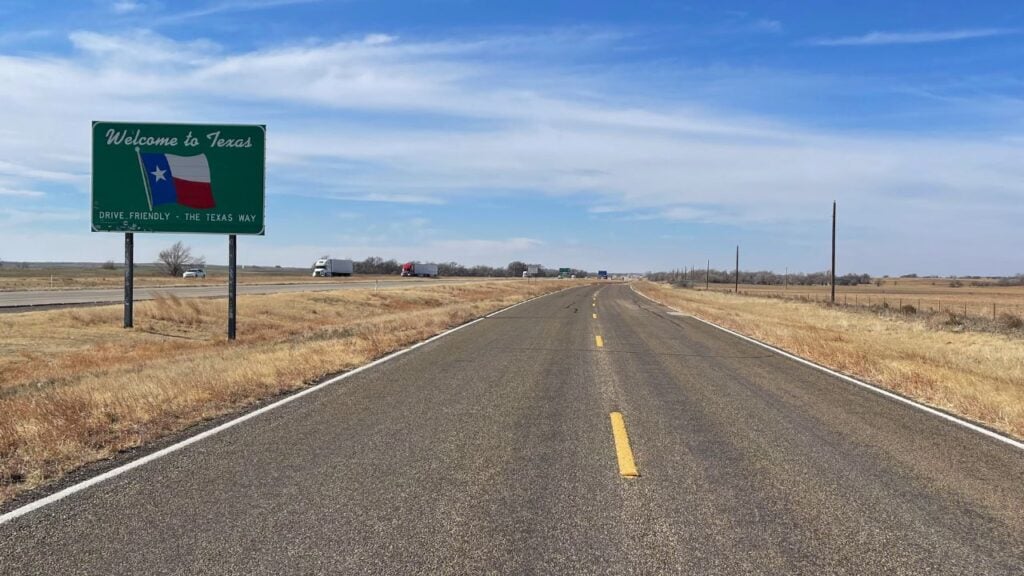
Texas does plenty its own way, and some of its rules trip up newcomers the very week they unpack.
From what you can legally carry to what you can do in your own front yard, a few of them will surprise you.
10 Texas Laws That Catch New Residents Off Guard
8 Texas Road Trip Stops Locals Swear By

The interstate gets you across Texas fast, but the stops worth the trip sit just off it.
Locals know which roadside detours earn the brake lights, and which crowded photo stops to skip.
8 Texas Road Trip Stops Locals Swear By (and 3 Tourist Traps to Skip)
