
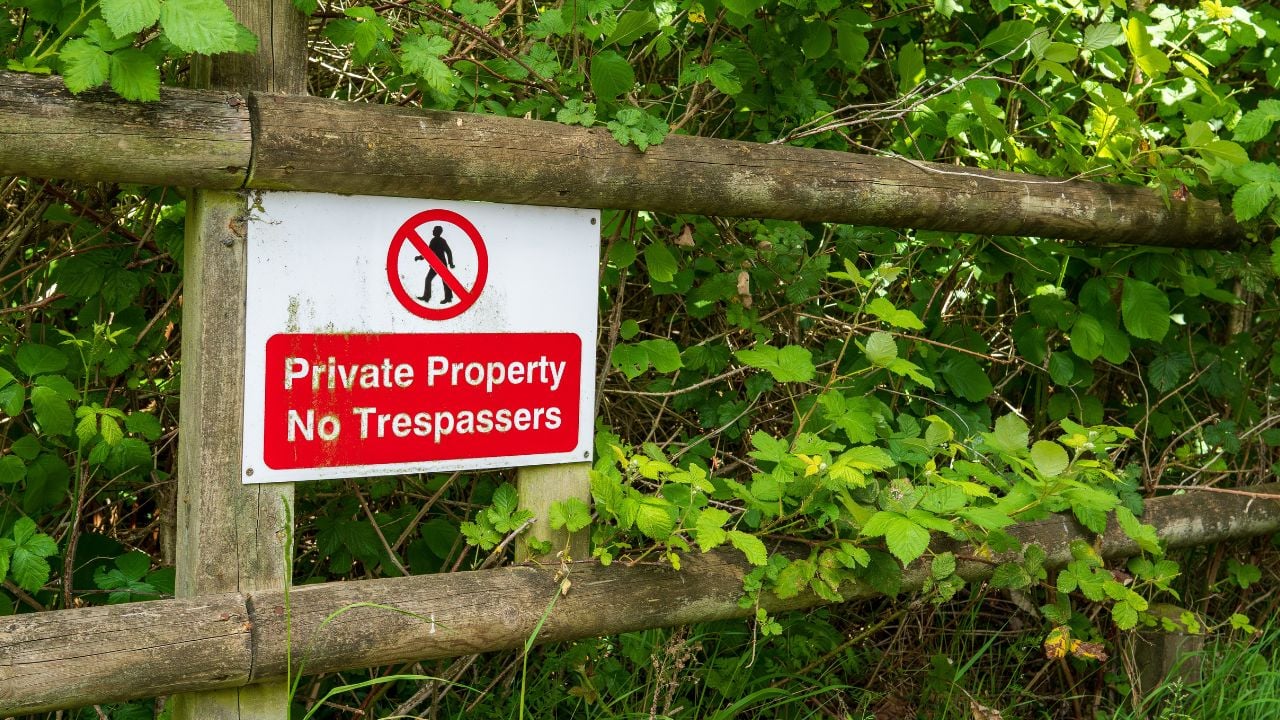
11 South Carolina Squatter Laws Every Homeowner Should Understand

South Carolina rewrote its squatter laws this summer, and many homeowners haven’t read a word of it.
The changes reach every landlord, snowbird, and family sitting on an empty lot.
These are the property laws worth knowing before your vacant house turns into a courtroom fight.
Note: This is general information, not legal advice. Property laws and court procedures are subject to change, so confirm the current rules with a South Carolina attorney.
1. The Ten-Year Rule
South Carolina recognizes adverse possession, the old rule that can turn a long-running trespass into ownership.
Hold someone else’s land out in the open, without permission, for ten years, and the deed can shift to the trespasser.
Ten years.
That’s a shorter wait than next door, where Georgia and North Carolina both make a claimant sit for twenty years.
The properties at risk are the places nobody watches: A back acre off a dirt road in Colleton County, an inherited lot near Spartanburg gone to weeds, a rental you stopped driving past after you moved.
Nobody’s looking.
Leave a place unwatched for a decade, and a stranger can build a claim on it while you assume it’s still yours.
2. Hostile Doesn’t Mean Angry
A squatter can’t simply camp out and win the deed because the possession has to clear six boxes, and the wording throws people off.
It has to be actual, open, notorious, hostile, exclusive, and continuous.
Hostile is the word that sounds like a brawl.
It isn’t.
In property law, hostile only means the person is on your land without your permission, nothing more.
No anger needed.
A homeowner outside Greer who fences in a slice of the neighbor’s yard, mows it for years, and swears it’s theirs still counts as hostile.
Miss even one of those six for even part of the ten years, and the whole claim falls apart.
3. The Proof Sits on the Trespasser
Adverse possession sounds terrifying until you see how hard the claim is to prove for the person making it.
By default, the titleholder still owns the place, and that means you.
The trespasser carries the entire burden.
They have to prove every element by clear and convincing evidence, a demanding standard, not just swear the land felt like theirs.
That’s a high bar.
When they can’t show that the titleholder knew or should have known about the occupation, the claim usually collapses.
Catch an encroachment early, talk to the person, and if it doesn’t stop, a lawyer can bring a court action to settle who holds title long before ten years ever run.
4. A Fence Over the Line
Many South Carolina adverse possession fights have nothing to do with a stranger breaking into a house.
They start at the property line.
The common version is a neighbor whose fence, driveway, or shed creeps a few feet onto your side and stays there.
That is all it takes.
Let that strip sit unchallenged for ten years, and it can legally become theirs.
The claim usually needs the land fenced in or put to real use, cultivated, built on, or cared for as their own, so a garden bed or a poured patio does far more damage than an empty patch of grass.
Walk your lines now and then, and you catch a creeping fence long before its ten years are up.
5. A Bad Deed Still Counts
Adverse possession takes an uglier turn when the trespasser holds a piece of paper.
Sometimes that paper is a flawed deed, a shaky tax-sale document, or a forged-looking transfer that appears to grant ownership but hides a legal defect.
Lawyers call it color of title.
When someone occupies under that kind of written instrument, South Carolina courts can treat their claim as reaching the whole tract the document describes, not just the corner they use.
Not just the corner.
The wait is still ten years, but a bogus deed lets a claimant stretch a small foothold into a grab at all of it.
6. Permission Ends the Claim
Every adverse possession claim rests on one weak point: The occupant has no permission to be on your land.
Take that away, and the claim falls apart.
A signed letter or a simple lease turns a trespasser into a guest, and a guest’s years never count toward ownership.
On paper.
That single page protects a vacant Beaufort cottage better than any padlock.
Checking the property, posting no-trespassing signs, and clearing out anyone who doesn’t belong resets the risk too.
Every year you ignore a place is a year a claimant gets to count, so drive by.
Psst! How much do you know about South Carolina property and land law? Take our quiz and see if you can ace it.
Quiz
Palmetto Property Quiz
Answer these questions on South Carolina property, taxes, and land law, and see how many you can ace.
In South Carolina, an owner-occupied home is taxed on just 4% of its value. The county taxes a second home or rental at what share?
7. Government Land Is Off the Table
One category of property sits beyond any squatter's reach: Land the government owns.
You can't adversely possess a state park, a county right-of-way, or a city-owned lot, no matter how long you mow it or fence it.
Not one day counts.
So the empty field behind your Richland County subdivision that belongs to the town stays the town's, even after a neighbor has used it as extra yard for decades.
Private owners don't get that kind of protection.
The rest of us have to defend our own lines because no rule steps in to do it for us.
8. South Carolina's New 2026 Law
For years, a South Carolina owner who found a squatter had one slow option: The regular eviction process, the same track used for a tenant fighting over a lease.
That changed this summer.
Gov. Henry McMaster signed a new law on June 30, 2026, creating a separate, faster court process built only for unlawful occupants, people with no lease, no family tie, and no claim of any kind.
It took effect right away.
Legislators watched squatters seize hundreds of homes around Atlanta and cities across Florida, and they moved before the same mess reached Charleston.
House Speaker Murrell Smith, who pushed the bill, framed it simply, saying a rightful owner shouldn't wait years to get a stranger out of their own house.
9. Removal in Days, Not Months
The new fast track runs through your county magistrate or the clerk of court, and it moves quickly.
The owner, an agent, or an estate's representative files a sworn petition swearing the occupant has no legal right to be there.
When the paperwork shows enough, the judge issues an immediate order to remove the occupant, before that person ever argues their side.
Then a hearing follows within twenty-four hours.
One day.
A sheriff's deputy or a constable carries out the removal, and once the order is served, the owner can ask the officer to stand by while they change the locks and set the occupant's belongings near the property line.
You still can't skip the court and handle it yourself, but the wait shrank from months to days.
10. It Cannot Be Used on a Tenant
The fast-track order comes with a hard limit built into it: It only works against a true unlawful occupant.
Anyone with a lease is off-limits.
A current tenant, a former tenant, even a family member you let move in, none of them can be shoved out this way because the petition itself requires swearing the person is none of those things.
Real tenants keep every protection the landlord-tenant law gives them.
The line matters because getting it wrong is costly.
If an owner uses this process on someone who had a right to stay, that person can sue to get back in and collect a thousand dollars in damages plus court costs.
The process works, but only for the narrow case it was built for.
11. Faking a Lease Became a Crime
Lawmakers didn't only speed up removals; they added real criminal penalties.
Damage the home you're squatting in and run up a thousand dollars or more, and South Carolina now treats that as a felony carrying up to five years in prison.
Five years.
Hand police a forged lease or a fake deed to claim you belong there, and that's a misdemeanor with jail time attached.
Try to rent out or sell a house you don't own, the scam that has drained renters' deposits across the country, and you can be charged too.
Refuse to obey the judge's order to leave, and that alone becomes its own felony.
Faking the paperwork to hold a house now carries the same weight as any other fraud on the books.
10 First-Year Surprises Retirees Don't See Coming in South Carolina

The winters run mild and the sweet tea flows, yet a few things still blindside people in their first year in the Lowcountry.
Some of the surprises hide in the property tax rules, and others show up at dusk with the no-see-ums.
10 First-Year Surprises Retirees Don't See Coming in South Carolina
8 Unwritten Rules of South Carolina Fishing Piers Newcomers Break

A South Carolina pier runs on rules nobody bothers to print on a sign, and the regulars can spot a newcomer who breaks one.
Cast over the wrong shoulder or crowd the rail on the Grand Strand, and you'll learn fast which move marks you as an out-of-towner.
8 Unwritten Rules of South Carolina Fishing Piers Newcomers Break
