
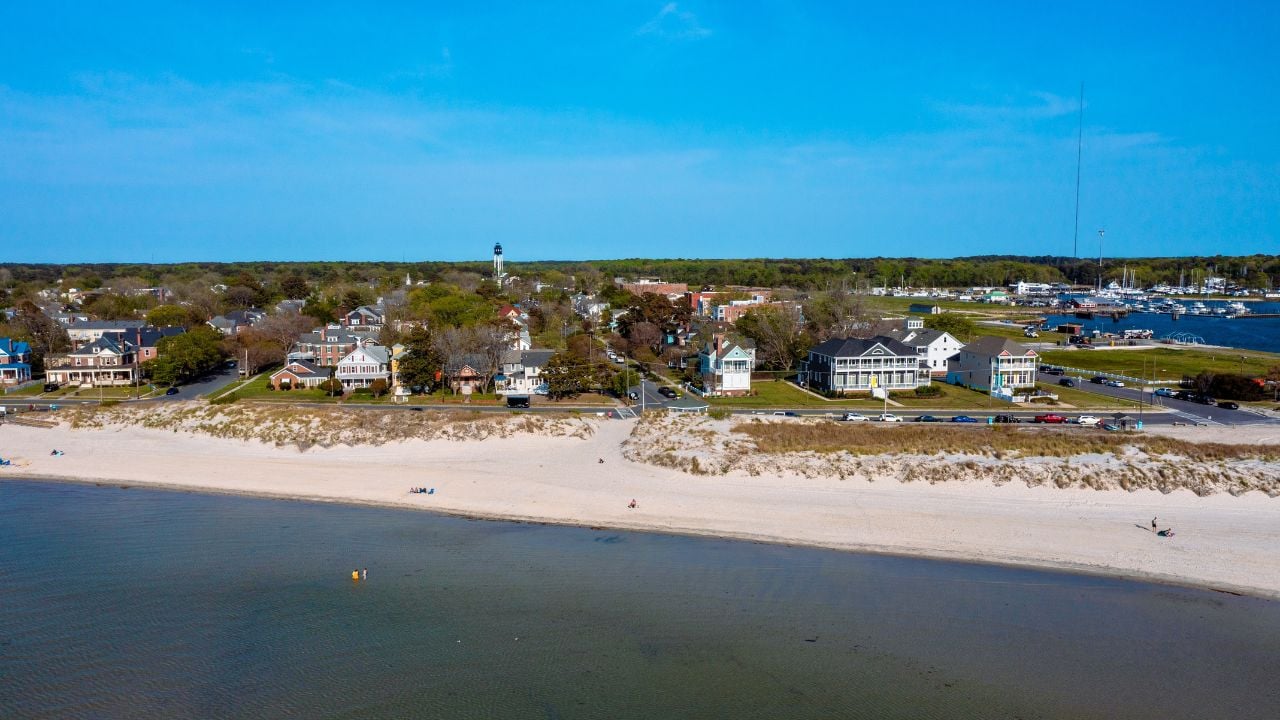
8 Virginia Beach Towns Locals Love (and 3 They Hand to Tourists)

Virginia has more coastline than most people give it credit for, and the best of it isn’t where the billboards point.
Locals figured that out a long time ago.
They send the crowds to the neon strip and the summer pony crush, then slip off to the creek towns and bay beaches where the sand is free and nobody’s fighting for a chair.
These are the coastal towns Virginians love, and the beaches they hand straight to the tourists.
1. Cape Charles
Cape Charles sits on the bay side of the Eastern Shore, at the far end of US-13 past the Bay Bridge-Tunnel.
It faces due west.
That means the sun drops straight into the Chesapeake Bay every evening, a trick most of the East Coast can’t pull off.
The town beach runs the length of Bay Avenue, with an opening at the end of every block, and it charges no fee.
No meter, no wristband, no attendant waving you into a parking lot.
A working harbor still sends boats out for oysters and rockfish, the golf courses at Bay Creek sit a short drive south, and a rail-barge crawls across the bay toward Norfolk like something out of another century.
2. Onancock
Onancock hides at the head of a deep creek off the Chesapeake, a few turns west of US-13 in Accomack County.
Virginians founded it in 1680.
That’s older than the country it sits in.
The wharf at the bottom of Market Street is the whole point, where the mailboat still runs out to Tangier Island and Mallards serves crab cakes right at the water’s edge.
Boats tie up where steamboats once landed.
Ker Place, a Federal-era brick mansion, anchors the historic blocks uphill, and a handful of galleries and a coffee counter fill in the rest of the walk.
3. Sandbridge
Sandbridge is the beach Virginia Beach locals drive to when they want the ocean without the neon.
It sits at the city’s southern tip, past the farm stands of Pungo, where the streetlights give out.
No boardwalk, no high-rises, just beach houses and a wall of dunes.
Little Island Park hands you a fishing pier and a place to park at the south end.
Keep walking past it and the sand runs into Back Bay National Wildlife Refuge and False Cape State Park, where the only way in is on foot or on a tram.
The pavement ends.
4. Wachapreague
Wachapreague calls itself the Little City by the Sea, though barely 200 people live there.
It hangs off the seaside marshes of the Eastern Shore, where a chain of barrier islands shields the mainland from the open Atlantic.
Flounder built it.
The town has claimed the title Flounder Capital of the World for generations, and every summer its marina fills with boats chasing the flatfish through the channels.
There’s no beach in town.
You run a boat out to the empty barrier islands for that, past marsh grass and diving seagulls, then come back for a fish fry at the dock.
5. Reedville
Reedville sits at the very end of Route 360, out where the Northern Neck runs out of land.
A Maine sea captain named Elijah Reed settled at the tip of the Northern Neck in 1874 and turned a humble fish into a fortune.
The fish was menhaden, oily and inedible, boiled down for oil and fertilizer by the millions.
That money built the mansions still lining Main Street, a stretch locals call Millionaire’s Row.
All of it from a fish nobody would eat.
The Reedville Fishermen’s Museum lays out the whole story, and in season the cruise boats leave the docks for Tangier and Smith Island out in the bay.
Psst! How much do you know about Virginia’s coast? Take our quiz and see if you can ace it.
Quiz
Coastal Virginia IQ
Answer nine questions on Virginia’s bays, ships, and shorelines. We bet you can’t get them all right. Prove us wrong?
Legend says the wild ponies of Assateague Island first came ashore from what?
6. Irvington
Irvington curls around Carter's Creek where it opens into the Rappahannock River, deep in Lancaster County.
The town is small enough to cross on foot in ten minutes.
Then there's the Tides Inn.
The waterfront resort has drawn sailors and honeymooners to Irvington since 1947, with a marina, a dock bar, and lawns that run down to the creek.
You don't need a room to enjoy the town, though.
The Steamboat Era Museum, a wine shop, and a bakery ring the little commons, while oyster boats work the river out past the docks.
7. Colonial Beach
Colonial Beach faces the Potomac River, not the ocean, up on the Northern Neck in Westmoreland County.
Its 2.5 miles of sand run second in length only to Virginia Beach's.
Locals get around by golf cart.
No car required.
The town is street-legal for them, so golf carts line up outside the boardwalk and the snack windows on a summer night.
Gambling piers once stretched out over the water into Maryland, back when the tables were legal on that side of the line.
Reader's Digest called it the nicest place in Virginia.
8. Buckroe Beach
Buckroe Beach curves along the Chesapeake Bay in Hampton, on the opposite side of the water from the oceanfront crowds.
The bay makes the difference.
No pounding surf, just calm water and a sandy bottom that families with small kids can wade into.
A fishing pier reaches out over the bay, rebuilt after Hurricane Isabel and known for cobia in the warm months.
There's real history in the sand too.
In 1898, Black businessmen opened Bay Shore Beach right beside Buckroe, a seaside resort for Black families all through the era of segregation.
The old amusement park is long gone, but its carousel still spins on the Hampton waterfront downtown.
Handed to the Tourists
Now for the beaches locals point visitors toward, then steer clear of themselves.
1. Virginia Beach Oceanfront
The Virginia Beach Oceanfront is the postcard, the strip every first-timer pictures.
Three miles of boardwalk run along the sand, past a line of high-rise hotels and a 34-foot bronze King Neptune rising out of the beach at 31st Street.
Atlantic Avenue hums with t-shirt shops, funnel cake, and traffic that barely moves all summer.
Locals let them have it.
They know the parking is brutal and the hotels are booked solid, and that the same ocean rolls onto calmer sand a few miles south at Sandbridge, or across the bay at Buckroe.
2. Chincoteague
Chincoteague earns its fame the last Wednesday of July, when the wild ponies swim the channel from Assateague and the island packs to the rafters.
Pony Penning week is a 101-year tradition worth seeing once.
It's also when the one road on and off the island backs up for hours.
Hotels sell out a year ahead.
The locals who love Chincoteague the other 51 weeks, for its oysters and its wildlife refuge and its empty morning beaches, hand this one week to the visitors and go fishing.
Come back in September.
3. Yorktown
Yorktown finishes every tour bus loop through the Historic Triangle, the last stop after Jamestown and Williamsburg.
The little beach on the York River sits right under the Coleman Bridge, free and easy to reach, which is exactly why it fills.
By noon, it's full.
Riverwalk Landing lines the water with shops and restaurants, and the 1781 battlefield where Cornwallis surrendered spreads out on the bluff above.
The history is the real draw, and it's worth the crowd once.
But locals who want the York River to themselves cross the Coleman Bridge to Gloucester or point the car north toward the Northern Neck, and leave the tour buses to fight over the last parking spot.
9 Vintage Cookout Sides Virginians Still Bring

The folding table starts sagging before the last dish even lands.
Some sides show up at every Virginia cookout, carried in the same foil-covered plate summer after summer.
9 Vintage Cookout Sides Virginians Still Bring to Every Summer Potluck
9 Virginia Squatter Rules That Leave Homeowners Powerless
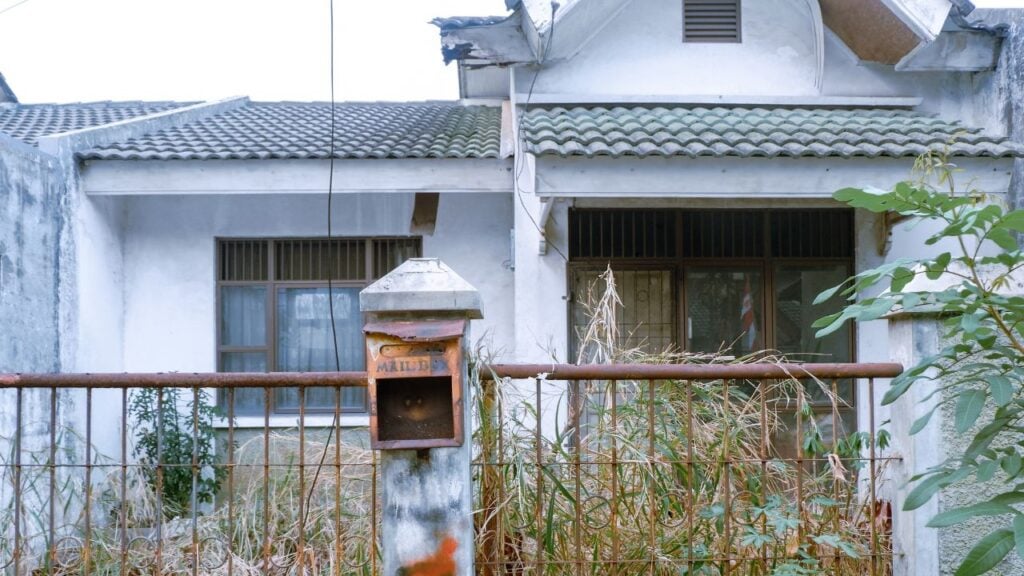
An inherited house sits empty on the Eastern Shore, checked once a season, if that.
By the next visit, there's a stranger's mail in the box, and Virginia law makes your key beside the point.
