

9 Reasons Northern Retirees Keep Choosing Tennessee Over Florida in 2026

A retired couple from Buffalo sells their house in Fort Myers and buys again outside Johnson City.
Their golf clubs come along. So does their pontoon boat.
What stays behind is the July heat, and they aren’t the only couple running that math in 2026.
These are the reasons seniors from northern states are choosing to spend their retirement in Tennessee over Florida.
Note: This is general information, not financial or tax advice. Tax rules, program limits, and dollar amounts are subject to change.
1. Homeowners Insurance Costs
Retirees who sell in Florida and buy in Tennessee usually see the difference first on a homeowners insurance renewal.
Florida homeowners pay an average of $7,136 a year on a policy carrying $300,000 of dwelling coverage, according to Insurance.com’s 2026 rate analysis.
Tennessee homeowners pay $2,958 for the identical coverage in that same analysis.
The difference comes to $4,178 a year, which works out to $348 a month.
Call it a car payment.
A couple on a fixed income frees up that much before they change any other habit.
2. No Tax on Retirement Income
One question stops a lot of Florida retirees cold: If the whole pitch was no income tax, why give it up?
You don’t.
Tennessee doesn’t tax earned income either, and the state fully repealed its old Hall tax on interest and dividends for tax years beginning January 1, 2021, per the Tennessee Department of Revenue.
Your pension, your withdrawals from a 401(k), your Social Security check, and the dividends off that old brokerage account all land untouched by the state.
Tennessee spent five years phasing that tax down, dropping the rate to 1% in 2020 before erasing it, so anyone describing the state as a dividend-tax state is reading an old brochure.
A retiree heading north out of Naples surrenders the beach and keeps every bit of the tax break.
3. What a House Costs
Retirees comparing house prices find the widest gap well inland, at places like Fairfield Glade, a community of golf courses and fishing lakes nine miles outside Crossville on the Cumberland Plateau.
Nobody there sees the ocean.
They don’t pay ocean prices either, and the statewide numbers explain why the trade tempts people.
Zillow put the typical Florida home at $377,578 on May 31, 2026, down 3.3% over the year.
In Johnson City, up in East Tennessee, Zillow put the typical home at $296,489 on the same date.
A retiree selling the Florida house and buying in Johnson City keeps roughly $81,000 of the proceeds.
4. Property Tax Breaks at 65
Tennessee taxes a retiree’s house on a quarter of what it’s worth, then offers two more breaks at 65, though only part of the state offers the second break.
A county assessor appraises your home, then assesses it at 25% of that number before the rate touches it, per the state comptroller.
Your county taxes a $400,000 house like a $100,000 house.
That’s the baseline.
Tax Relief comes next, and the state reimburses part of the bill for owners 65 and older whose income stayed under $38,470 in 2025.
That ceiling applies statewide, and the reimbursement covers a slice of the home’s value rather than all of it.
The Property Tax Freeze goes further by locking your bill at the amount you owed the year you first qualified, and it holds even as values and rates rise.
Only 27 counties and 36 cities have adopted the freeze out of Tennessee’s 95 counties, and each participating county sets its own income limit every year.
You reapply for both every year, and skipping that paperwork puts you back on the full bill like everybody else on the street.
Psst! Curious how many years your savings would cover once you stop working? Punch your numbers into the calculator below and see the estimate.
5. No Hurricane Landfalls
Retirees who move inland stop planning June through November around a storm track, and the reason is worth stating plainly.
Tennessee sits hundreds of miles from salt water in every direction.
What reaches Nashville or Kingsport from a Gulf storm is leftover rain, usually days after the coast has already dealt with the wind, so the practical worry shifts from structural damage to a flooded basement and a few downed limbs.
Rain is a different problem.
Tennessee weather isn’t harmless, though, and the state sits in a corridor that produces damaging tornadoes every spring.
Many retirees still count the swap as a win.
A tornado warning runs on minutes, while a hurricane runs on a week of watching, packing, and deciding whether to drive north.
6. Elevation and Cooler Nights
Many retirees leave Florida over the heat, and Tennessee’s version of relief owes more to elevation than to latitude.
Altitude is the reason.
Crossville sits 1,890 feet up on the Cumberland Plateau, where the average yearly temperature runs 55.85 degrees and Hinch Mountain tops out at 3,048 feet.
Nights cool off on that plateau in a way July nights on the Florida coast seldom do, which is the whole reason retirees keep buying up there.
The trade is a genuine winter with a few snow days in it.
You buy that winter in exchange for July evenings you can spend on your own porch instead of behind the glass with the air conditioning running.
7. Everyday Prices and Sales Tax
Start with the part that costs Tennessee retirees money, since the grocery aisle is where Florida wins.
Tennessee charges 7% sales tax on most goods and a lower 4% rate on food, but counties and cities add up to 2.75% on top of both, so the register rate on groceries lands near 6.75% across much of the state.
Florida exempts most groceries outright.
Local rates shift, too, so a retiree shopping in one county can pay a different rate than a friend two counties over.
Tennessee still comes out ahead on the wider comparison, and the Missouri Economic Research and Information Center is the group that measures it.
Researchers there collect what cities report on housing, groceries, utilities, health care, and transportation, then score every state against a national average of 100.
Tennessee came in at 88.9 for the first quarter of 2026, ninth cheapest in the country.
Florida landed at 100.7 and ranked 31st, with housing scored at 101.1 against Tennessee’s 80.3.
8. Vanderbilt in Nashville
Many retirees stall on the health care question once the money side works out, and Tennessee’s answer sits in Nashville.
Becker’s Hospital Review named Vanderbilt Health to its 2025 list of great hospitals in America, and Newsweek ranked Vanderbilt University Medical Center 21st in the country that same year.
Doctors know that name.
Check the drive, though, since Nashville isn’t around the corner from the towns retirees keep buying into.
Johnson City sits roughly 300 miles east of Nashville, and Crossville and Kingsport both put a long stretch of I-40 or I-81 between a patient and Vanderbilt’s front door.
Florida has strong hospitals too, so nobody sells a house over medicine alone, and a couple weighing Fort Myers against Franklin should price the drive before they price the house.
Psst! How much do you know about Tennessee and the history of American retirement? Take our quiz and see if you can ace it.
Quiz
Tennessee Trivia Test
Answer these questions on Tennessee history, music, and the story of American retirement. We bet you can’t get them all right. Prove us wrong?
A 24-year-old Tennessee lawmaker switched his vote in August 1920 and handed American women the right to vote. What changed his mind?
9. Closer to the Grandkids
Moving companies have a word for retirees who went to Florida, stayed a decade, then came partway back north: Halfbacks.
Researchers at the University of North Carolina put numbers to the pattern, though they studied North Carolina rather than Tennessee, and they used 2014 data.
They found that about 13% of the people 55 and older who moved from Florida to North Carolina that year were born in New York, roughly double the share among older adults nationally.
No such Tennessee study exists.
What Tennessee does have is a headcount, and HireAHelper's 2026 study of nearly 15 million moves found the state gained a net 3,191 residents 65 and older during 2025, fourth best in the country.
Florida drew 45,696 older movers in that same study, lost 44,881, and finished with a net gain of 815.
Read those two figures carefully, since the study never asks where a mover came from and never follows Florida's departures to a destination.
So the honest reading is Tennessee gaining while Florida stalls, not one state pulling retirees straight out of the other.
The Census Bureau's American Community Survey lands in the same place, averaging 2020 through 2024 to count about 18,500 people of all ages a year moving from Florida to Tennessee, against roughly 16,200 heading the other way.
United Van Lines' 2025 movers study found family is now the top reason Americans relocate, at 29% of moves.
For a retiree outside Knoxville, that means a granddaughter's graduation in Cincinnati turns into a morning on I-75 instead of a day spent in airports.
The Cheapest Places to Retire in Tennessee in 2026

The bargain corner of Tennessee sits nowhere near the interstate, and the typical house there costs a fraction of what the same square footage runs in Nashville.
One West Tennessee town has retirees rethinking the eastern half of the state, and the price tag is the reason.
The Cheapest Places to Retire in Tennessee in 2026
8 Publix Deals Tennessee Shoppers Wish They'd Grabbed Sooner
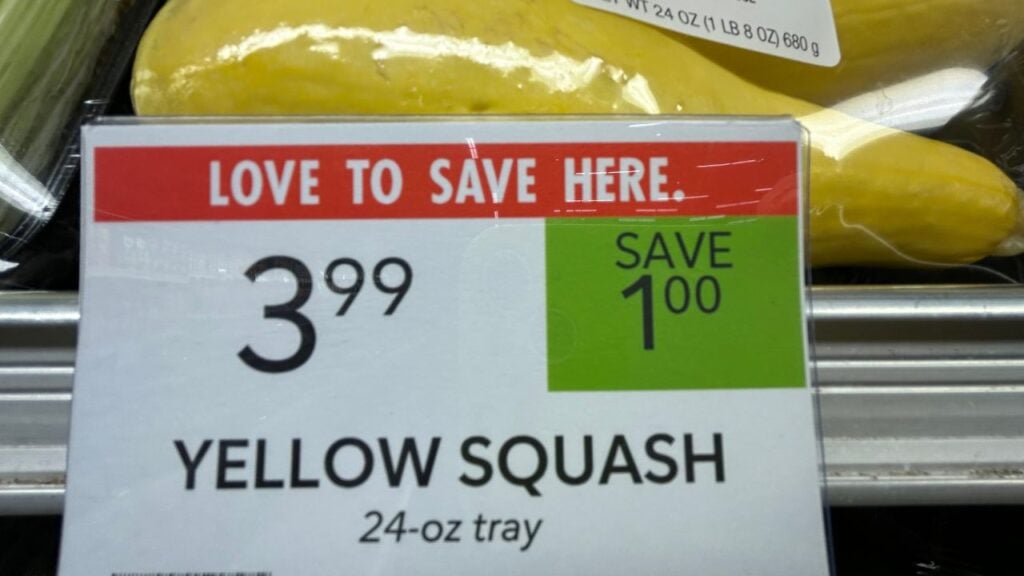
Loyalty doesn't save you a dime at Publix, and knowing the rules does.
Tennessee shoppers get one buy-one-get-one rule that Florida shoppers never do, and it changes what a single trip costs.
8 Publix Deals Tennessee Shoppers Wish They'd Grabbed Sooner
