
12 Things Arizona Boomers Say Without Realizing They’re Offensive Nowadays

A couple pulls into the trailhead parking lot north of downtown Phoenix and tells their hiking group they’re headed up Squaw Peak.
The sign at the trailhead says Piestewa Peak.
Nobody corrects them, and nobody wants to.
These are the words Arizona boomers keep saying without realizing they turned offensive somewhere along the way.
1. Handicapped
Handicapped still shows up on the blue parking sign out front, which is why the word feels safe to use for a person too.
It isn’t anymore.
The disability style guide many newsrooms follow, written at Arizona State University’s journalism school in Phoenix, tells writers to skip it when describing people and keep it for laws and parking spaces.
Crippled sits on the same list.
Say that a man uses a wheelchair, or that your neighbor has a disability, and you’ve said the whole thing without the sting.
2. Oriental
In 2016, President Obama signed a bill that struck Oriental out of federal law and put Asian American in its place.
Merriam-Webster marks the word as offensive for a person.
Somebody at a Green Valley estate sale still calls the rug Oriental and means it as praise.
Call the rug Oriental.
The word had been sitting in two federal statutes for decades, one written in 1976 and the other in 1977.
3. Squaw Peak
Squaw Peak comes out of habit, since that’s what the mountain went by for generations.
It’s Piestewa Peak now.
The state renamed it in 2003 for Lori Piestewa, a Hopi soldier from Tuba City and the first Native American woman killed in combat while serving in the U.S. military, and the federal board followed in 2008.
Then-Interior Secretary Deb Haaland called the old word a slur against Indigenous women, and by September 2022 the federal government had scrubbed it off 66 Arizona sites, creeks, reservoirs, and summits included.
Many hikers at that trailhead still use the retired name.
4. Sexual Preference
You say sexual preference at a Sun City card table because it sounds like the careful, courteous choice.
The trouble is the second word.
Preference suggests somebody picked from a menu, and Merriam-Webster’s usage note calls the phrase offensive for that reason.
Nobody chose anything.
The dictionary added that label in 2020, right after a Supreme Court nominee used the phrase at her confirmation hearing.
Sexual orientation is the swap.
5. Gypped
A man at a Quartzsite swap meet turns a turquoise bracelet over, decides he paid too much, and says he got gypped.
Cheated or ripped off would have covered it.
Merriam-Webster says gyp is probably short for Gypsy, a term for Romani people, and marks the cheating sense widely regarded as offensive.
There’s a people in there.
Romani advocates have explained that link for years, and many people using the word have never once heard the explanation.
6. The R-Word
Retarded was a clinical label once, typed into school files and printed in federal statutes.
Congress pulled it out.
President Obama signed Rosa’s Law in 2010, swapping mental retardation for intellectual disability across federal health and education law.
The casual version stayed in use anyway, and it still turns up when a printer jams in a Tempe back office and somebody calls the machine retarded.
People still flinch.
Ridiculous and maddening do that job instead.
Two youth leaders started the Spread the Word to End the Word campaign in 2009, and Special Olympics and Best Buddies International have run it since.
7. Illegal Alien
A retiree at a Yuma coffee counter says illegals without a second thought, the way forty years of nightly news taught a whole generation to say it.
The Associated Press quit that wording in 2013, telling reporters that illegal describes an action, not a human being.
Illegal immigrant went out with it.
Reporters now write about people living in the country illegally, or without legal permission, which takes a few more syllables and skips the insult.
The fact doesn’t change.
8. Colored
Your fifth-grade teacher said colored people, and in 1955 that was the courteous version, printed in the morning paper and taught in Phoenix classrooms.
Merriam-Webster now marks it usually offensive and dated, with Black and African American as the words it points to.
The confusion is fair.
The National Association for the Advancement of Colored People has kept the phrase in its name since 1909, and not one letter of it has changed.
9. That’s Insane
Insane, crazy, deranged: The Associated Press put all three on its do-not-use list when it added a mental illness entry to its stylebook in 2013.
Say wild or ridiculous, and you’ve made the same point.
The entry guides reporters covering mental illness, and it also warns them off borrowing a diagnosis for something unrelated.
Its example is plain: Don’t call an awards show schizophrenic.
That borrowed diagnosis is the part with the paper trail, and it’s what puts Loop 101 at rush hour and the price of a rib eye in a tricky spot.
The freeway isn’t sick.
10. Off the Reservation
A council member goes rogue in Fountain Hills, and somebody at the meeting says he’s off the reservation.
It was once literal.
Federal rules called the Civilization Regulations confined Native families to reservations in the late 1800s, and soldiers went after anybody who left.
People died for crossing that line.
A presidential candidate used the phrase on national television in 2016, and her campaign apologized the next day.
11. Homosexual
Somebody at a Sedona book club calls the author of the memoir a homosexual, and means nothing by it.
Gay is the word the author uses for himself, and it does the same work in one syllable.
GLAAD, an advocacy group that coaches newsrooms on gay and transgender coverage, calls homosexual derogatory and outdated, a holdover from the decades it sat in diagnostic manuals.
A word like that turns a person into a category, which is what a diagnostic manual is for.
12. Junkie
Junkie and addict come out with sympathy attached, usually in a sentence about somebody’s kid at a Prescott kitchen table.
In 2017, the Associated Press told journalists to stop using addict, user, and abuser.
The AP Stylebook calls junkie and drunk derogatory too, and it keeps exceptions for direct quotes, organization names like Alcoholics Anonymous, and people who prefer those words for themselves.
Here’s the replacement: He was addicted, or she used heroin.
Person with an addiction runs longer than junkie, and it puts the person ahead of the habit.
The kid stays a kid.
Psst! How much do you know about where everyday American words came from? Take our quiz and see how many you can get right.
Quiz
American Word Origins
Answer these questions on where everyday American words came from. We bet you can’t get them all right. Prove us wrong?
Which everyday work word started as a boundary at a Civil War prison camp that guards could shoot you for crossing?
Where Navajo Still Ranks
Arizona holds 22 federally recognized tribes, per the state education department, from the Navajo Nation's capital at Window Rock to the Tohono O'odham Nation southwest of Tucson.
That shows up in what people speak.
Census figures for 2017 through 2021 put Navajo and Western Apache among the state's 15 most spoken languages other than English, and only nine states have a Native language ranking that high.
Roughly 167,000 people spoke Navajo nationwide over that stretch, close to half of all the Native language speakers counted in the country.
That's a living language.
KTNN, the Voice of the Navajo Nation, signed on from Window Rock in February 1986.
Its hosts work in Navajo and English.
At 50,000 watts, the station carries chapter news, livestock reports, and rodeo results clear across the Four Corners.
8 Things Snowbirds Pack for Arizona That Locals Find Hilarious
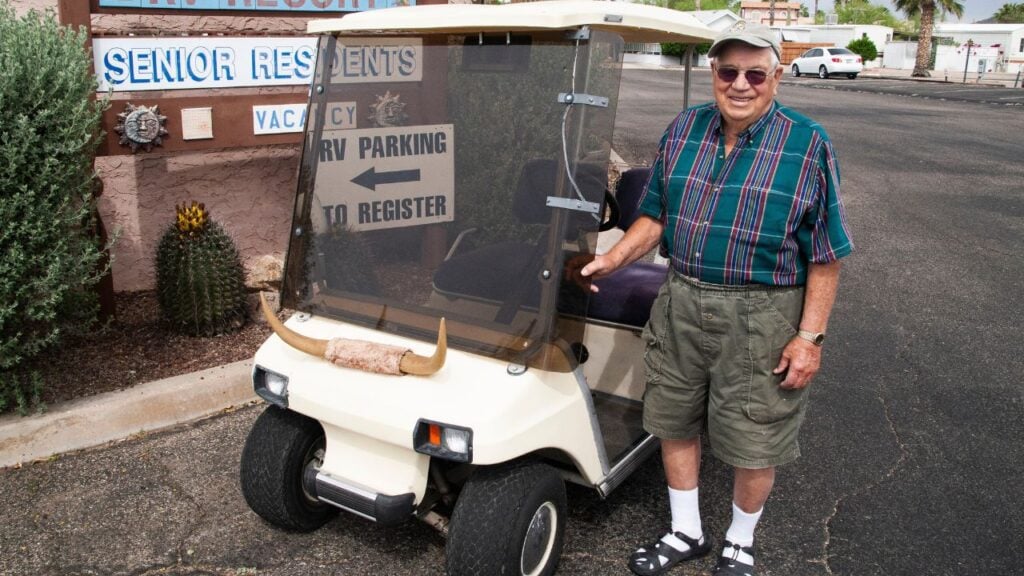
Welcome Snowbirds banners go up outside the recreational-vehicle resorts in Mesa every fall.
The suitcases that follow them were packed for an Arizona that doesn't exist.
8 Things Snowbirds Pack for Arizona That Locals Find Hilarious

I don’t care if you’re offended by the terms you noted above. Perhaps you’re a bit too politically correct. I won’t go into each one. Too much trouble. But I shall continue to use them.
Thank you for your time.
Scott Beidelman
Chino Valley
Exactly. I was a little more detailed so I’m sure my post will not be approved. I told it like it is.
You know what? Just because some group of people came along and decided words were no longer acceptable is down right retarded. You people have too much time on your hands. Try getting a job instead of wanting free everything. I grew up in a town where the legend was about an Indian Squaw and the town and the legend was HIGHLY respected. Squaw Peak was there for many many years until some dipshit decided it was offensive. Just like the Redskins. Nothing offensive about it, just a bunch of retarded people with too much time on your hands. Oh, and by the way, IF you enter this country illegally, you are an ILLEGAL ALIEN. It’s not about the criminal’s feelings, it’s about mine.
Very well said, SV !!!!!!
Sorry KAREN!! Don’t be RETARDED!!🤡💩