
9 Signs You Grew Up in a Pennsylvania Steel Town

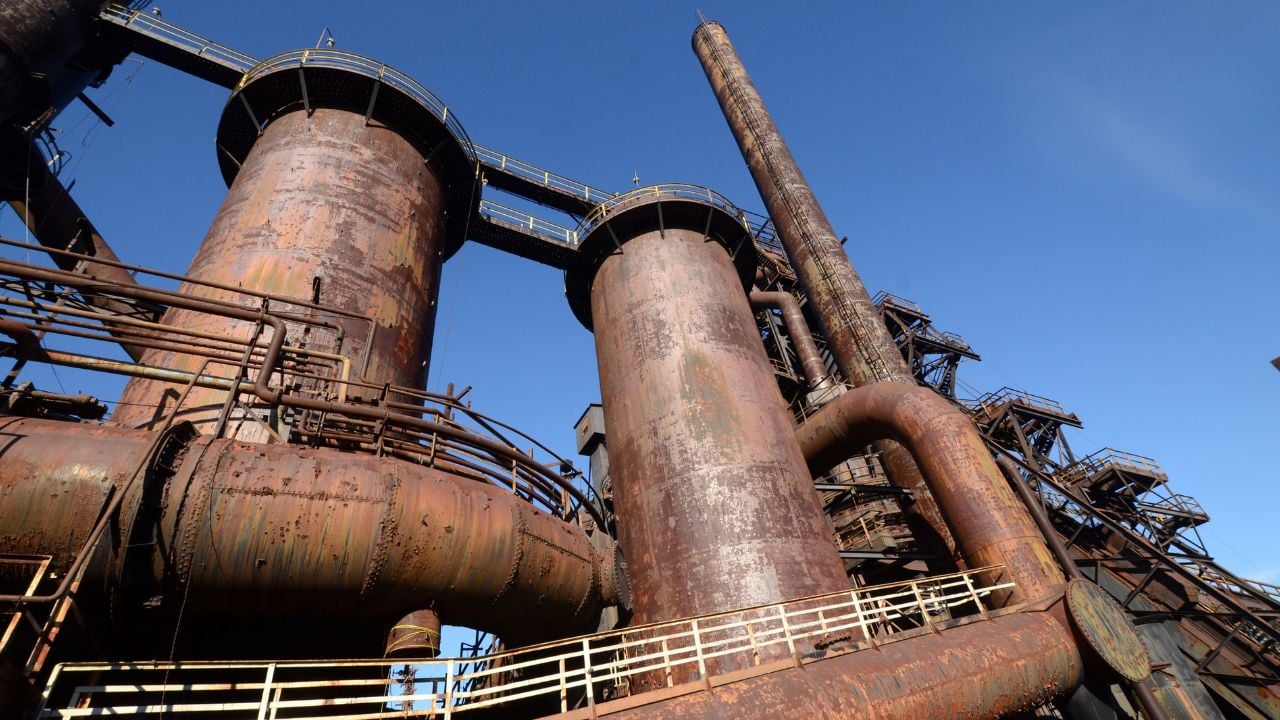
Bethlehem Steel once ran the biggest mill many Pennsylvania families had ever seen, and an entire way of raising a family grew up around it.
None of it looked like anywhere else in the country.
Every Sunday, every summer, and every ordinary Tuesday bent around one furnace’s schedule.
These are the signs of a real Pennsylvania steel town childhood.
1. You Know Your Family’s Shift, Not Just Its Trade
Ask a kid from a Pennsylvania steel town what their father did, and the answer usually comes with a shift attached, not just a job title.
Day turn, back turn, or the graveyard shift nobody wanted decided when supper happened, when the house had to stay silent, and when Dad’s boots hit the porch.
A blast furnace can’t just shut off for the night.
At Braddock’s Edgar Thomson Works, the plant Andrew Carnegie opened in 1875, crews still run the last two blast furnaces operating anywhere in Pennsylvania.
Once, the state had 72.
Anybody who measured a week by a shift schedule instead of a Monday-to-Friday clock understands exactly why that number stings.
2. You Can Say Which Plan (or Parish) Was Yours
Jones and Laughlin Steel didn’t just build a mill in Aliquippa.
It built the town, laying out the borough into numbered sections it called Plans, Plan 6, Plan 11, Plan 12, and so on, and settling workers into them by nationality.
More than 30 ethnic groups ended up inside one small town, and each built its own parish: St. Elijah Serbian Orthodox, Assumption Greek Orthodox, a Romanian parochial school in Woodlawn, plus Croatian, Slovak, and Italian social clubs that are still around today.
Ask someone from a Pennsylvania steel town where they’re from, and the honest answer is never just the town’s name.
It’s the Plan, the parish, or the block.
That told a neighbor everything.
3. Everyone Remembers the 1959 Strike
Every Pennsylvania steel family seems to have a strike story passed down, and the biggest strike started in the summer of 1959.
That July, roughly 500,000 steelworkers across the country walked off the job in a fight over job security, not just wages.
The strike ran 116 days, into November, one of the longest shutdowns the industry ever saw.
Mills fell silent, paychecks stopped, and grandparents in steel towns still talk about how the family got through it.
Nobody forgot that summer.
The union kept its ground on job protections.
But the long shutdown pushed buyers toward cheaper foreign steel.
Pennsylvania’s mills never fully undid that shift.
4. You Know the Exact Date the Mill Went Dark
Ask someone from a Pennsylvania steel town when the mill closed, and many can give you the actual date, not just the year.
Bethlehem Steel poured its last cast on November 18, 1995, at a plant that once employed more than 30,000 people.
That Bethlehem plant had ranked as the country’s second-largest steelmaker.
Homestead’s mill went silent in 1986.
McKeesport’s National Tube Works, the reason the city still carries the nickname Tube City, closed the following year.
Bethlehem Steel’s Johnstown plants shut down in 1992, and J&L’s Aliquippa mill went dark between 1984 and 1988.
Nobody forgets it.
Steel families repeat every one of those dates the way other families repeat a birthday.
5. Furnace Glow Was Your Night-Light
Bedrooms near a Pennsylvania steel mill picked up a color no other town’s night sky had.
Bethlehem’s blast furnaces stood more than 230 feet tall, the oldest dating to 1915, and it ran for roughly 80 years before that last cast in 1995.
A long time to glow.
That meant an orange glow over South Bethlehem rooftops most nights, whether anyone in the house was awake to see it or not.
Kids fell asleep to it the way other kids fell asleep to a streetlight.
Five of those furnaces still stand today as the anchor of SteelStacks, the arts campus built where the mill used to run.
6. Summer Meant a Trolley Ride to Kennywood
Every mill town within reach of Pittsburgh built its summer around the same amusement park.
Kennywood opened in 1898 along the Monongahela River in West Mifflin, and the original trolley line ran straight out of Duquesne and McKeesport, two mill towns whose workers filled the park on weekends.
The trolley did the rest.
Generations of the same families kept going back long after the streetcars stopped running.
Kennywood earned National Historic Landmark status in 1987, the same decade steel stopped paying most of those families’ bills.
7. Pierogi Sale Meant Fundraiser Weekend
Steel towns turned Eastern European comfort food into a fundraising machine, and it’s still running today.
Western Pennsylvania’s pierogi tradition came straight from the immigrants who filled the mills: Polish, Slovak, Ukrainian, and Carpatho-Rusyn families cooking the way their grandparents did back home.
Bethlehem’s Ss. Peter and Paul Byzantine Catholic Church still runs a pierogi sale and halupki dinners that have been part of the parish for longer than anyone can remember.
A steel town kid grew up knowing which weekend belonged to which parish’s sale, and whose halupki deserved the line.
Nobody printed a schedule.
You just knew.
Psst! How much do you know about Pennsylvania’s steel and labor history? Take our quiz and see if you can ace it.
Quiz
Pennsylvania Steel Town IQ
Answer these questions on Pennsylvania steel and labor history. We bet you can’t get them all right. Prove us wrong?
In 1892, how many Pinkerton detectives did Carnegie Steel send up the river by barge to break the lockout at Homestead?
8. Union Hall Mattered as Much as the Church
A Pennsylvania steel town has two buildings everyone can find without directions: The parish church and the union hall.
United Steelworkers Local 1211 bought its Aliquippa headquarters in 1943, a Classical Revival building on Franklin Avenue the union still owns today.
The union did more than collect dues there.
Much more.
It settled disputes with Jones and Laughlin, backed other unions organizing across Pennsylvania and Ohio, and became the place families turned to over housing and unemployment.
The National Park Service listed the hall on the National Register of Historic Places in 2021.
The union still manages the building today, though it isn't open to the public.
9. Friday Nights Became the Town's Proof of Life
Football never needed the mill's permission to matter in a Pennsylvania steel town, but it filled the hole the mill left behind.
Clairton, a Mon Valley steel town that has lost more than 10,000 jobs to steel's decline, watched its high school football team string together a 61-game winning streak, among the longest active streaks in the country.
One player put it plainly: Lose a game, and you let the whole town down.
No exaggeration there.
Aliquippa built the same kind of reputation, sending National Football League (NFL) players like Mike Ditka, Tony Dorsett, Ty Law, Darrelle Revis, and Sean Gilbert out of a high school with only a few hundred students.
15 Pennsylvania Quirks the Rest of America Will Never Get
An Ohio driver waits at a downtown Pittsburgh light, ready to go straight the second it turns green.
Three cars swing left in front of her first, and nobody behind her taps the horn because that's just how Pennsylvania runs its intersections.
15 Pennsylvania Quirks the Rest of America Will Never Get
12 Things Pennsylvanians Are Proud Of That No Other American Gets
America's oldest brewery has been filling glasses in Pottsville since 1829, back when the country had only 24 states.
Yuengling is just the start of what makes Pennsylvanians so proud of where they're from.
12 Things Pennsylvanians Are Proud Of That No Other American Gets
