
9 Things That Confuse First-Time Visitors to Arizona

Cactus, sunshine, and not much else is the Arizona many tourists picture before they land.
The reality comes with many surprises, some of which could send you to the hospital.
These are the things that confuse first-time visitors to Arizona.
Note: This is general information, not medical or emergency advice.
1. Arizona Skips Daylight Saving Time
Arizona stopped moving its clocks forward or back in 1967, and the decision stuck for good.
No spring forward, no fall back.
For half the year, Phoenix keeps the same clock as Los Angeles.
The other half, it matches Denver instead, and nothing on your phone warns you when the switch happens.
The Navajo Nation, which covers the northeast corner of the state, keeps its own clock and observes daylight saving time like most of the country.
One state, two clocks.
Cross onto tribal land in summer, and the dashboard clock in your rental car jumps an hour whether you touched it or not.
2. Pavement Hot Enough to Burn
First-time visitors assume a hot sidewalk is just hot, not Phoenix’s actual summer hazard, since asphalt in direct sun runs 40 to 60 degrees hotter than the air above it.
On a 110-degree afternoon, that pavement can reach 180 degrees.
That’s a third-degree burn, in minutes.
The Arizona Burn Center at Valleywise Health treated 120 patients for contact burns in the summer of 2023, up from just nine back in 2008.
Flip-flops meant for a pool deck back home won’t survive a parking lot at 2 p.m.
Barefoot is out of the question, and so is letting a dog’s paws touch that same asphalt.
Many longtime residents run errands before 9 a.m. or after 7 p.m., once the concrete finally cools enough to trust.
3. Check Your Shoes First
Newcomers assume Arizona’s scorpion stories are exaggerated tourist talk.
The state is home to the bark scorpion, the only scorpion in the country dangerous enough to send someone to the emergency room.
It hunts at night and hides by day, tucked into shoes, towels, and stacks of firewood left by the back door.
Not a myth.
A sting brings sharp pain, numbness, and sometimes trouble breathing, serious enough that doctors treat children and older adults with extra caution.
After dark, a flashlight helps, since a bark scorpion glows blue-green under ultraviolet (UV) light and is nearly invisible without one.
Longtime Arizonans shake out their boots on the porch every single time, before ever sliding a foot inside.
4. Flooded Roads Carry a Fine
Summer storms fill dry desert washes with fast-moving water in minutes, and more than one visitor learns that the hard way behind the wheel.
Arizona has a law for exactly that moment, Arizona Revised Statutes 28-910, better known by its nickname.
The stupid motorist law.
Drive around a barricade into a flooded road, get stuck, and rescuers can bill you for the cost of pulling you out, plus liability up to $2,000.
That’s before the tow truck shows up.
Locals treat every orange barrier as final, no exceptions, no matter how shallow the water looks from the driver’s seat.
A wash that ran bone dry that morning can rise waist-deep by the time you’re driving home from lunch.
5. Arizona Runs a Ski Resort
Newcomers picture saguaros and 115-degree afternoons, not a ski resort.
Flagstaff sits at nearly 7,000 feet, high enough for exactly that.
Arizona Snowbowl climbs to 11,500 feet on the San Francisco Peaks, with a season that stretches from November into May most years.
Powder, not sand.
Snowbowl averages 260 inches of snow a year, more than many mountain towns in Colorado or Utah ever see.
The Grand Canyon’s South Rim sits high enough above the desert floor that snow and ice can close sections of the park in the middle of winter.
Pack shorts for Phoenix and a warm coat for Flagstaff or the canyon rim, since the elevation change covers more temperature swing than most vacations ever need.
Psst! Arizona’s heat, wildlife, and driving distances catch first-time visitors off guard more than almost anything else about the state. Run through this checklist and see how ready you are.
6. Grand Canyon Isn’t Close
Arizona looks compact on a phone screen, and first-time visitors routinely plan a day trip that turns into a road trip.
Phoenix to the Grand Canyon’s South Rim runs about 230 miles, a three-and-a-half to four-hour drive up Interstate 17 through Flagstaff.
It’s not exactly next door.
Sedona sits about two hours north of Phoenix, and Tucson runs another two hours south, so a single day trip can burn a full tank of gas before lunch.
Rural stretches make it worse.
The stretch of old Route 66 between Seligman and Kingman runs for miles with barely a gas station along the way.
Fill the tank before you leave town, since the next pump might be an hour down the highway.
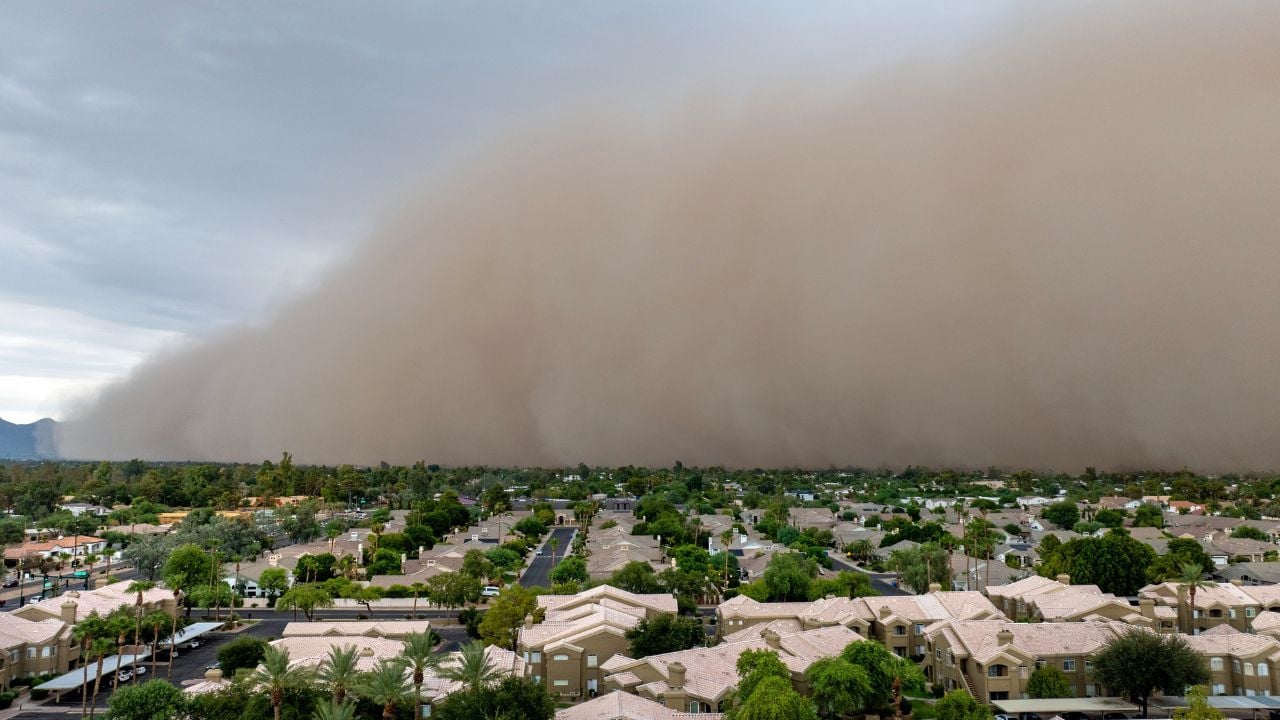
7. Dust Storms Show Up Fast
Monsoon season runs from June 15 through September 30 across Arizona, and the storms that come with it don’t always start with rain.
Sometimes they start with dust.
A haboob can rise more than 3,000 feet high and roll across a highway at speeds near 50 miles an hour, dropping visibility to zero in seconds.
Drivers who keep going vanish into a brown-out with cars still speeding around them.
The Arizona Department of Transportation’s advice is blunt: Pull off the road, turn off your lights, and take your foot off the brake so nobody uses your taillights as a guide.
Pull Aside, Stay Alive, printed on road signs across the Valley of the Sun.
Ignore it, and a haboob can trigger a multi-car pileup within seconds.
8. Grass Yards Are Disappearing
Arizona’s drought years have pushed cities to rethink one of the most basic parts of a home, the front yard.
Scottsdale banned natural grass in the front yards of new single-family homes in 2023, and other Valley cities have floated similar rules since.
No more grass, by ordinance.
Gravel, decomposed granite, and drought-tolerant plants like agave and the palo verde tree have replaced the green lawn as the local default.
A visitor used to a Midwest subdivision notices the difference immediately, block after block of rock yards instead of grass.
It isn’t about looks.
Arizona has also paused approval for new Phoenix-area subdivisions that would rely on groundwater alone, so every gallon saved on landscaping stretches the supply further.
9. Javelina Move In Next Door
Suburban Arizona backyards double as habitat for animals a newcomer only expects to see on a hike.
Javelina, the bristly, pig-like animals that travel in small herds, wander through yards raiding pet food bowls and fallen citrus.
They’re not pigs, technically, but nobody corrects them on that in the moment.
A dog is the second-leading cause of javelina bites on people, behind only feeding them.
Don’t approach either animal.
Rattlesnake season brings the same advice, keep your distance, keep pets close, and call a professional if either animal won’t leave your yard on its own.
A coyote trotting down a Scottsdale sidewalk at dawn barely gets a second look from anyone who has lived there a year.
14 Things That Surprise Snowbirds Who Winter in Arizona
Florida gets most of the credit for snowbird season, but Arizona built its own version around backyard citrus trees ripening in January.
The state even protects its saguaro cactus with a law serious enough to carry felony charges for anyone who damages one.
14 Things That Surprise Snowbirds Who Winter in Arizona
8 Things Snowbirds Pack for Arizona That Locals Find Hilarious

A banner welcoming snowbirds goes up outside a Mesa recreational-vehicle resort every October, like clockwork.
Most of what rolls in on the trailers behind it doesn’t match the Arizona waiting for the people inside.
8 Things Snowbirds Pack for Arizona That Locals Find Hilarious
