

10 Words New Yorkers Use That Confuse Everyone Else

Most of the country assumes New York has one accent and one set of words.
It has at least four, and they change at county lines.
These are the words that split New Yorkers from the rest of the country, and sometimes from each other.
1. On Line
Long Island and New York City’s closest suburbs don’t wait in a line at the deli or the Department of Motor Vehicles.
They wait on line.
Language Log traces the phrase back to Yiddish, since New York’s Jewish immigrant neighborhoods calqued it from a construction that already existed there, though the post’s author admits he can’t confirm the exact history for certain.
Head upstate far enough, and “in line” takes over completely.
2. Regular
Order “a regular” at a New York City diner counter, and the server doesn’t ask a single follow-up question.
She already knows what it means.
A regular coffee comes loaded with cream and sugar, no substitutions offered and none expected.
It never varies.
Order the same way outside New York, and a server needs every word spelled out: Coffee, cream, two sugars.
New York keeps it to one word.
3. Egg Cream
New York City natives order an egg cream at a candy counter without blinking, even though the drink never once involves an egg or cream.
It’s milk, seltzer, and chocolate syrup, invented at a candy shop on Manhattan’s Lower East Side about 1900.
Historians widely credit Louis Auster with serving the first egg cream at that shop, and old soda jerks guarded their exact syrup ratio like a trade secret.
The name never changed.
Brooklyn’s candy stores built the drink’s bigger reputation anyway, keeping egg creams a neighborhood fixture for decades after.
No New York City fountain has ever put real egg or cream in the glass.
4. Pocketbook
A New Yorker asks a friend to grab her pocketbook off the chair.
She means her purse.
Not a paperback, and not a wallet.
The word traces back to English pocket journals from centuries ago, long before it settled into the Northeast’s vocabulary for a woman’s handbag.
Older generations across New York keep it in daily rotation, and Pennsylvania, Massachusetts, and parts of Appalachia never dropped it either.
Younger New Yorkers still hear it from an older relative and know exactly what to fetch.
Outsiders elsewhere reach for a dictionary instead.
5. Mad
A teenager in the Bronx calls a slice of pizza “mad good,” and nobody nearby needs it translated.
That’s New York City slang.
“Mad” works as a stand-in for “very” or “extremely” throughout New York City, a habit rooted in Black Vernacular English and decades of hip-hop culture born in the city’s own boroughs.
It caught on everywhere the music traveled.
Newcomers still hear “mad” and assume someone’s angry, not impressed.
The confusion never lasts long.
Psst! How much do you know about New York’s history and dialect? Take our quiz and see if you can ace it.
Quiz
New York Word Origins Quiz
Answer these questions on New York’s history and dialect. We bet you can’t get them all right. Prove us wrong?
What happened to immigrants’ last names when they passed through Ellis Island?
6. Upstate
Ask a New Yorker where "upstate" begins, and count how many different answers come back.
Nobody agrees.
A 2016 poll of New York voters found the state split almost evenly three ways, with roughly three in ten placing the line at Westchester County.
Westchester residents reject the label anyway, since plenty commute into New York City and watch its television stations every night.
Ask five New Yorkers and the boundary moves five times.
A Manhattan resident calls Yonkers upstate.
A Yonkers resident points north to Poughkeepsie instead.
A Poughkeepsie resident swears upstate doesn't start until Albany.
Outsiders assume the word marks a fixed place on a map, and it never has.
7. Pop
A shopper in Buffalo asks the corner store for "a pop," and the register never blinks.
New York City is solid soda territory, but people in far western New York say it the other way.
Rochester sits right on the dialect line, close to the exact spot where "pop" turns into "soda" heading east on the Thruway.
The switch happens fast.
Say "soda" in Buffalo instead, and the cashier corrects it right back.
8. Weck
Order "a beef on weck" in Buffalo, and a server piles roast beef onto a roll dusted with pretzel salt and caraway seeds.
"Weck" is short for kummelweck, the roll's German name.
German immigrant bakers most likely carried the word to Buffalo generations ago, according to a historic marker placed at the sandwich's Western New York birthplace.
The name stuck.
Just the roll earns its own name.
Most delis outside Buffalo have never even stocked it.
9. Half Moon
Ask a Utica bakery for a black and white cookie, and the woman behind the counter corrects the order: It's a half moon.
Utica disagrees completely.
Both cookies split down the middle between chocolate and vanilla frosting, but Utica's version puffs up pillowy and cakey under real buttercream, nothing like the flat glazed disc New York City delis sell as a black and white.
Hemstrought's Bakery opened in Utica in 1920 but didn't start baking half moons until around 1925, and the name never left the Mohawk Valley.
A visitor from Oregon orders "a black and white" at a Utica counter and gets a confused look right back.
10. Spiedie
Order "a spiedie" in Binghamton, and a cook grills marinated chunks of meat on a skewer, then slides them onto a slice of Italian bread.
The name comes from the Italian word for skewer, and Italian immigrants carried it over when they settled Binghamton's Endicott suburb in the 1920s.
The sandwich itself wasn't documented until Camillo Iacovelli started serving spiedies there in 1938, with his brother Agostino popularizing them a year later.
Few other places claim it.
Someone from Texas hears "spiedie" and assumes it's a typo for "speedy."
Binghamton throws an entire festival for the spiedie every August, complete with a balloon rally and a hunt for the county's best marinade.
Order a spiedie at a diner two counties over, and most cooks will still ask what exactly it is.
9 New York Laws Newcomers Break Without Realizing
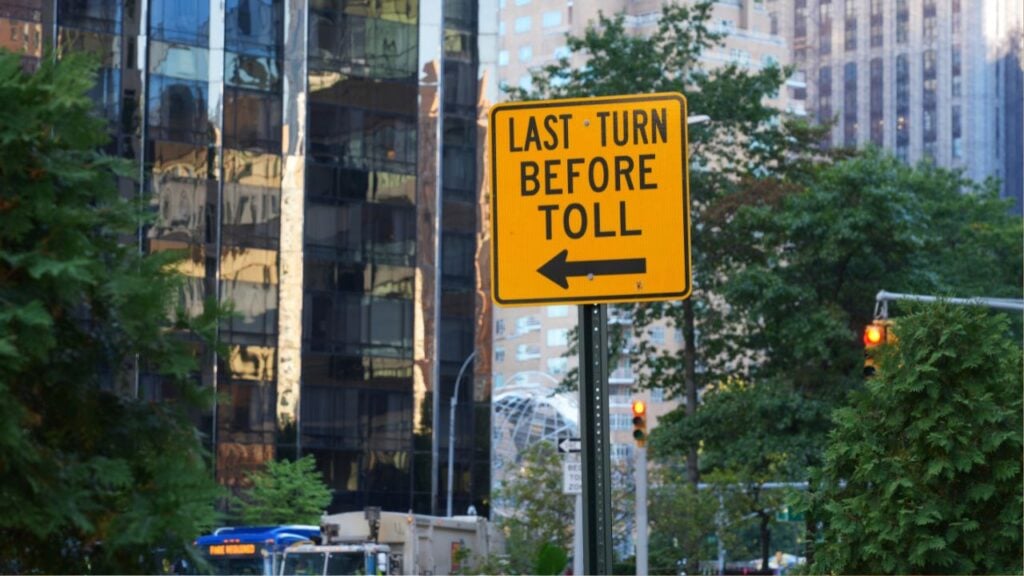
A driving habit or a shopping move that felt normal back home can turn into a New York misdemeanor without any warning.
These are the state laws that catch newcomers off guard the fastest.
9 New York Laws Newcomers Break Without Realizing
16 Things New Yorkers Do That Tourists Always Get Wrong
A family stops dead in the middle of a Midtown sidewalk to crane their necks at the skyscrapers, and the crowd splits around them without a word.
These are the small habits that separate a native New Yorker from a first-time visitor.

The word “mad” does not come from a “habit rooted in African American Vernacular English.” Its rooted from Black American Vernacular English & hip-hop culture. We are AMERICAN we were not born in Africa and moved to the USA.