
8 Things to Know About Georgia’s Newest UNESCO World Heritage Site

For its whole history, Georgia was home to North America’s largest blackwater swamp and never had a world-famous title to show for it.
That changed in the summer of 2026.
Almost overnight, this tea-black swamp landed on the same list as the Grand Canyon, the pyramids of Egypt, and the Great Barrier Reef.
These are the things worth knowing about Georgia’s first World Heritage Site, the Okefenokee National Wildlife Refuge.
1. Land of Trembling Earth
The Okefenokee’s name is a warning label from the people who knew it first.
It comes from a Hitchiti word that locals have long translated as “land of the trembling earth.”
That isn’t poetry.
Much of the swamp floats on thick mats of peat, and some of those mats hold their shape well enough to walk on.
Step onto one of these floating islands, which locals call batteries.
The ground shivers under your boots.
The shrubs and small trees sway along with you.
The trees are real, the soil is real, and none of it is anchored to anything solid.
2. Water Black as Sweet Tea
The first thing that stops a visitor at the Okefenokee is the color of the water.
It runs the deep brown of steeped tea.
No, it isn’t dirty.
The dark stain comes from tannins, the same natural acids that leak out of decaying leaves and peat, which is why places like the Okefenokee earn the name blackwater swamp.
Spread across roughly 438,000 acres, it’s the largest blackwater swamp in North America, a mirror-still sheet of coffee-colored water that doubles the cypress trees standing in it.
On a calm morning you can’t tell where the trees stop and the reflection starts.
3. Gator Country, and Then Some
The Okefenokee runs on alligators the way a small town runs on its regulars.
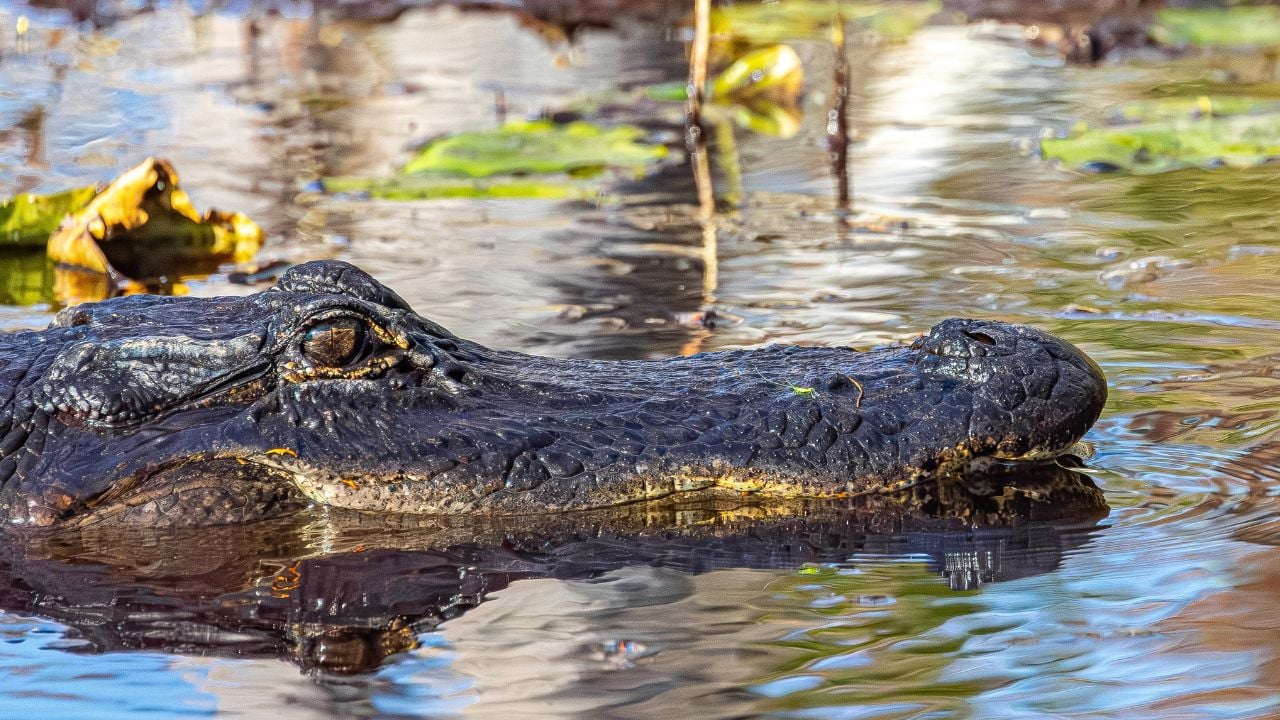
Roughly 15,000 alligators live in the swamp, sunning on logs and cruising the canoe trails with just their eyes above the surface.
They own the place.
The gators share it with more than 1,270 kinds of plants and animals, a roster that includes black bears, sandhill cranes, and the endangered eastern indigo snake.
Red-cockaded woodpeckers work the pines along the edges, a bird that has nearly vanished across the rest of the South.
That crowded, tangled, fully working web of life is the whole reason the United Nations came calling.
4. Georgia’s Very First
The Okefenokee is the first place in Georgia ever named a World Heritage Site by the United Nations.
The list is short.
A World Heritage Site is a spot the United Nations calls so special it belongs to all of humanity, from Stonehenge to Yellowstone.
The Okefenokee National Wildlife Refuge joined that list at a committee meeting in Busan, South Korea, becoming the 27th site in the country and the first natural one the United States has added in more than 30 years.
Georgians waited a long time for a name on that list.
That first honor went to a swamp most of the country drives right past on the way to Florida.
5. Where Two Rivers Are Born
The Okefenokee doesn’t just sit there holding water.
It starts two rivers.
Rain falls into the swamp, filters through the peat, and drains out as the headwaters of both the Suwannee River, which runs down into Florida, and the St. Marys River, which traces part of the Georgia line.
You’ve heard of that first river, even if you don’t know it.
The Suwannee is the “Swanee River” of the old Stephen Foster song, and the state park deep inside the swamp near Fargo carries his name.
Two rivers that feed towns for hundreds of miles both begin in the same slow, dark water.
Psst! How much do you know about Georgia’s wild side? Take our quiz and see if you can ace it.
Quiz
Wild Georgia Quiz
Answer these questions on Georgia’s mountains, rivers, and landmarks. We bet you can’t get them all right. Prove us wrong?
Georgia is nicknamed the Peach State, yet it grows about half the nation’s supply of which crop?
6. They Tried to Drain It
The Okefenokee almost didn't survive to become anybody's world wonder.
Back in 1891, a company led by Captain Henry Jackson bought a huge chunk of the swamp and set out to drain it dry for farmland and timber.
Crews dug a canal 11.5 miles into the swamp before the sandy walls kept caving in and the money ran dry.
They quit in 1894.
Loggers came next and floated out millions of feet of ancient cypress before the federal government finally stepped in and made the swamp a wildlife refuge in 1937.
That half-dug ditch still carries water today, and boaters slide right down it under the name the Suwannee Canal.
7. One of the Darkest Skies Around
The Okefenokee is worth a look long after the sun goes down.
Sit deep in the swamp at night and there are no gas stations, no billboards, and no city glow to wash out the stars.
The dark is total.
The Milky Way shows up like a smear of chalk.
Stephen C. Foster State Park, tucked inside the swamp, was named Georgia's first Dark Sky Park in 2016 for exactly that reason.
Rangers run night programs where you can watch planets rise over water so still it holds a second sky underneath the first.
8. Mining at the Edge
The Okefenokee earned its title a year after it dodged its biggest modern threat.
For years, a company pushed to dig a titanium mine along Trail Ridge, the sandy rim that holds the swamp's water in place like the lip of a giant bowl.
Scientists warned that mining the ridge could pull the water level down and dry the swamp from the edges in.
Then the fight turned.
In 2025, a conservation group bought the very land the mine wanted, taking the threat off the table and clearing the path for the World Heritage vote a year later.
You can paddle Trail Ridge's edge today, past the drowned cypress and the gator eyes, and never guess how close the whole thing came to draining away.
How to See It Yourself
The Okefenokee has three front doors, and each opens onto a different swamp.
The east entrance near Folkston follows the old Suwannee Canal, where guided boat tours motor deep into the open water prairies.
The west entrance at Stephen C. Foster State Park, out past Fargo, drops you into the wildest, darkest heart of the swamp.
Up north near Waycross, the Okefenokee Swamp Park leans on boardwalks and a little train for a quicker look.
Pick your door.
Marked canoe trails thread the whole refuge, and the hardiest paddlers book an overnight stay on wooden platforms staked out in open water.
Sleeping on a plank far from the nearest road, with gators bellowing somewhere in the dark, is a night most visitors never forget.
8 Georgia Farmers Markets Locals Get to Early (and 3 They Skip)

The best tomatoes and peaches in Georgia never make it to a chain store shelf.
Locals know which markets are worth a Saturday alarm and which to leave to the tourists.
8 Georgia Farmers Markets Locals Get to Early (and 3 They Skip)
9 Southern Dishes Georgians Bring to Every Potluck
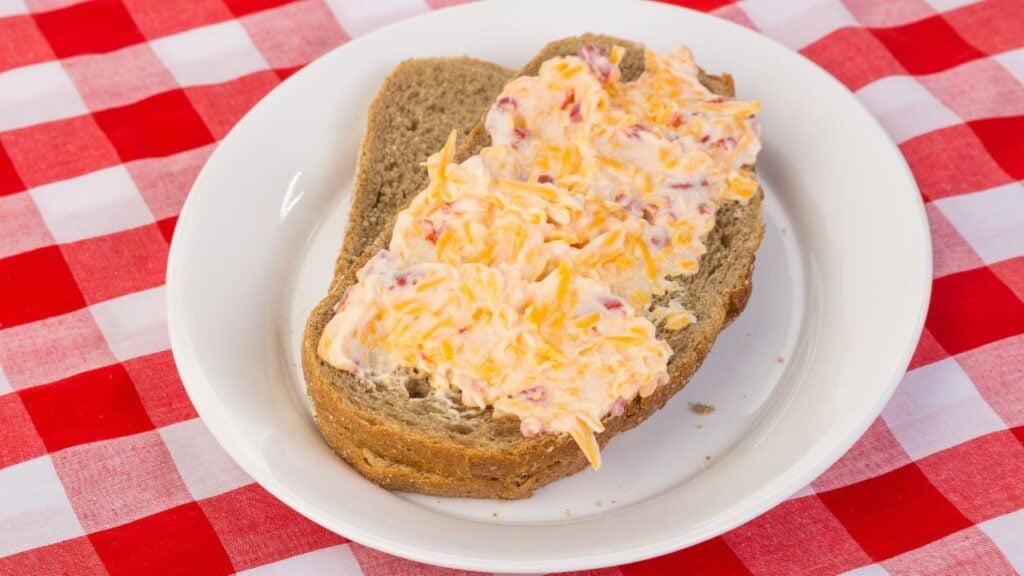
Every fellowship hall in Georgia fills up with foil-covered dishes before the sermon even ends.
Nobody signs up, and yet the Brunswick stew and the deviled eggs always show up right on cue.
