
10 Things California Residents Can’t Legally Toss in a Household Garbage Bin

Scrape tonight’s dinner plate into the kitchen trash, and in California you might be breaking a state law.
Food scraps are only the start.
These are the things you can’t legally throw in a California household garbage bin.
Note: This is general information, not legal advice. Disposal rules and penalties vary by city and county and are subject to change, so confirm the current rules with your local waste agency.
1. Any Kind of Battery
That drawer of dead batteries by your kitchen junk pile can’t legally go in the black bin.
Not one of them.
California treats every battery as universal waste, from the double-A in a TV remote to the button cell in a birthday card.
None of it belongs in the trash.
The rule covers rechargeables and the old alkaline kind alike.
Loose lithium batteries also spark fires in garbage trucks and sorting lines, which is a big reason the state pulled them from the waste stream.
Tape the terminals and drop them at a hardware store or a household hazardous waste site instead.
2. Last Night’s Food Scraps
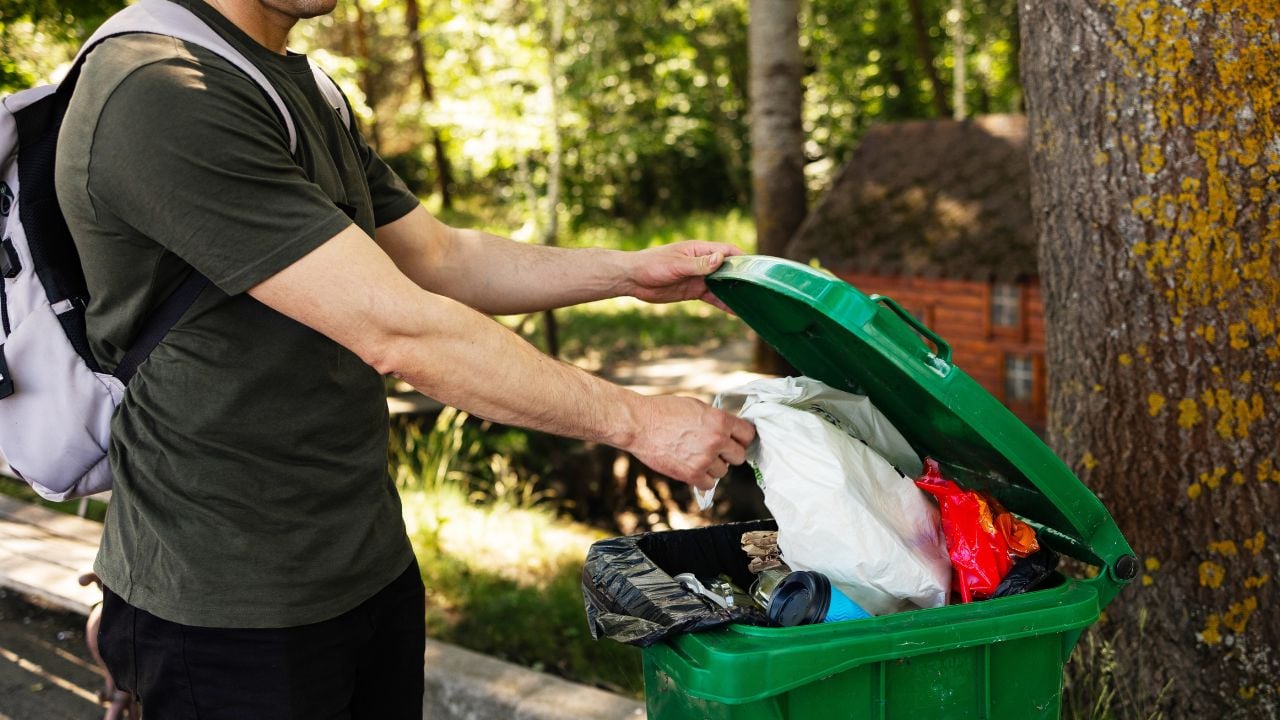
Your leftover food scraps are the sneaky item on this list, and scraping a plate into the trash can land you on the wrong side of a state law.
Since 2022, a law called Senate Bill 1383 has required nearly every California resident to keep food waste out of the garbage.
Food scraps, yard trimmings, and paper make up about half of what the state buries, and rotting food in a landfill throws off a big share of California’s methane.
That green cart on your curb is where the banana peels and coffee grounds go now.
Yes, the bones too.
It’s the one item here that shows up in your bin every single day.
3. Your Old Phone
That junk-drawer graveyard of old phones is electronic waste, and e-waste is banned from trash across California.
Toss it and you’re breaking the rules.
Phones, tablets, chargers, cordless handsets, and even a dead pair of earbuds hold metals and lithium that don’t belong in a landfill.
Most cities run free e-waste drop-offs.
Many electronics stores take the old device back, too.
Wipe your data first.
4. Living Room TV
A busted television is one of the oldest things on California’s banned list, and a flat screen counts as much as the heavy old tube set.
California passed a 2003 law that built statewide electronics recycling and pushed these devices out of the garbage.
That’s the recycling fee you pay at checkout on a new TV or monitor.
The same ban covers computer monitors, laptops, and printers.
Tube or flat, it’s out.
Your hauler won’t take a TV at the curb, so a recycler or a collection event is the move.
5. Fluorescent Tubes and Bulbs
The long fluorescent tubes in your garage and the curly compact-fluorescent bulbs in your lamps can’t go in the bin either.
They hold mercury.
A cracked tube in a trash bag lets that mercury escape as vapor, which is why the state files bulbs under universal waste right next to the batteries.
Burned-out bulbs pile up fast in a house.
Many hardware chains keep a recycling kiosk near the front door that takes them back for free.
Psst! How much do you know about California beyond its recycling bins? Take our quiz and see if you can ace it.
Quiz
Golden State IQ
Answer these questions on California’s parks, lakes, and recycling. We bet you can’t get them all right. Prove us wrong?
California has more national parks than any other state. How many national parks does it have?
6. Used Motor Oil
If you change your own oil in the driveway, that dark jug of used motor oil is one thing you cannot pour out or bag up.
It can't go down a drain or into the trash.
Not a drop.
A single gallon of used oil can foul a huge amount of drinking water.
So California built a whole recycling program around it.
The oil filter goes with it, since it holds oil too.
Certified centers, including many auto parts stores, take both back at no charge.
Some even pay you a few cents a gallon.
7. Leftover Paint
That stack of half-used paint cans in the garage is another banned item, whether it's latex or oil-based.
California runs a stewardship program called PaintCare, funded by a small fee on every can you buy, that recycles leftover house paint for free.
You already paid for it.
Thousands of stores double as year-round drop-off sites.
Only a bone-dry, empty can with the lid off can go in the trash.
8. Needles and Sharps
Home needles and sharps are the item on this list that can hurt a sanitation worker, so the state banned them from the trash years ago.
Since 2008, California law has made it illegal to put home-generated sharps in the garbage or the recycling.
That covers insulin syringes, lancets, and used EpiPens.
No exceptions.
They have to travel in a rigid, approved sharps container to a collection site or through a mail-back program.
A coffee can with a lid doesn't count.
9. Weed Killer and Pool Chemicals
The weed killer under the sink and the chlorine tabs by the pool count as household hazardous waste, which never goes in the bin.
Pesticides, pool acid, oven cleaner, and old bug spray can burn, poison, or react inside a packed garbage truck.
Some have caught fire.
So it's against the law to bag any of it up.
Long Beach, Fresno, and most counties run free household hazardous waste days for exactly this stuff.
Bring the containers exactly as you stored them, and don't mix them together.
10. Mercury Thermostats and Thermometers
An old round thermostat off the wall and a silver-bulb fever thermometer round out the banned list, both for the same reason.
Mercury again.
The little silver bead inside is toxic enough that California moved these off the trash route and onto the universal waste list.
The newer digital thermostats and thermometers are fine, but the vintage mercury versions need a hazardous waste drop-off.
One broken thermometer holds enough mercury to contaminate a whole room.
Where the Big Stuff Goes
A worn-out mattress and a roll of old carpet won't fit in a bin, but California still gives them a place to land.
Since 2016, the state has run a free mattress take-back program, funded by a recycling fee built into the price of every new bed.
No bin required.
Many mattress stores will haul the old bed away when they deliver a new one.
Old carpet has a statewide recycling program of its own, with drop-off spots that take it off your hands.
The mattress program keeps a drop-off site within about 15 miles of most homes in the state.
8 Things California Fast Food Workers Won't Tell You
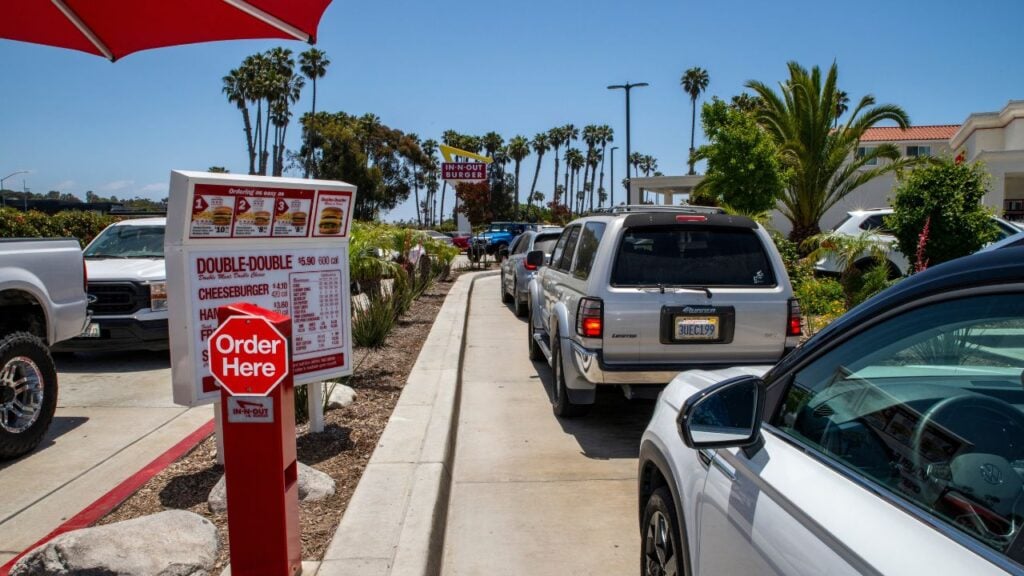
Anybody who's worked a drive-thru window knows a few things they'd never say out loud to the car at the speaker.
From why a worker waves you into an empty parking spot to what goes on behind the counter, there's a whole list they leave off the menu.
8 Things California Fast Food Workers Won't Tell You
10 Habits That Embarrass Californians the Second They Leave the State

A Californian steps off the curb mid-block in Nashville, no crosswalk in sight, and doesn't flinch at the honking pickup truck.
The little habits people pick up at home start turning heads the second they cross the state line.
10 Habits That Embarrass Californians the Second They Leave the State
