

6 Back-to-School “Essentials” Georgia Parents Never Had to Buy in the ’80s and ’90s

A kindergarten supply list in Duluth runs 15 lines, and one of them asks for two reams of printer paper.
Nobody in Gwinnett County was buying the copy paper in 1992, and the list has only gotten longer since.
These are the back-to-school essentials Georgia parents never had to buy in the ’80s and ’90s.
1. Wired Headphones for Every Grade
Headphones sit in the second slot on every grade’s back-to-school list at Chattahoochee Elementary in Duluth, and the school capitalizes the word “wired.”
The reason gets its own note at the bottom of the page, telling families that students need a set for daily instruction and for upcoming assessments.
Bluetooth won’t work.
Twenty minutes away in Lilburn, Minor Elementary asks for a pair too, and second graders bring two.
Many classrooms in 1988 had one television on a rolling cart and a headphone set in the media center that everybody signed up for.
A kid now carries a pair in the backpack, labeled in permanent marker, and needs another by February after somebody steps on them.
2. Sanitizing Wipes by the Tub
Sanitizing wipes run down almost every elementary grade on those same two Gwinnett lists, and a Lilburn fifth grader hauls in three packages.
Chattahoochee even names the type, telling families to send Clorox or Lysol and not the hand kind.
Clorox Disinfecting Wipes reached store shelves in 2000.
That’s the whole answer.
A parent shopping for third grade in Macon in 1994 couldn’t have bought a canister for any price, and the custodial staff wiped the desks anyway.
Now a teacher in Duluth opens the school year with a shelf of canisters that twenty-odd families carried through the door in one week.
Psst! How much do you know about 1980s and 1990s classrooms? Take our quiz and see if you can ace it.
Quiz
Old-School Classroom Quiz
Answer these questions on the software, shows, and school supplies of the 1980s and 1990s. We bet you can’t get them all right. Prove us wrong?
The Oregon Trail was written in 1971 by three student teachers in which state?
3. Pump-Top Hand Sanitizer
The Lilburn back-to-school list gives hand sanitizer its own line, and it asks kindergarten families for four large bottles.
First grade brings three twelve-ounce bottles.
Purell spent years as a hospital and food-service product before it landed on consumer shelves in 1997.
Nobody carried a bottle in.
Kindergartners in 1990 washed up at the sink by the classroom door, and the district paid for the pink soap in the dispenser.
A county over, the Duluth lists get fussier still, asking for hand sanitizer with a pump so a five-year-old can work it one-handed.
4. Reams of Copy Paper
Copy paper turned into a back-to-school purchase somewhere along the way, and the Duluth kindergarten list asks each family for two reams.
Grades one through five bring a ream apiece, with a few lists splitting the job between boys and girls.
Nobody sent paper.
The front office ran the copier in 1991, and before the copier it was the ditto machine, purple ink and all.
A family loading up on paper, wipes, and markers pays full price at the register in August, sales tax included.
Georgia's Tax-Free Weekend Is Gone
Georgia used to hold a summer sales tax holiday on clothes, computers, and school supplies.
Lawmakers let it lapse after 2016, and it hasn't come back.
So every item on the supply list carries the full state and local sales tax, no matter which week you shop.
5. Thirty-Six Dry-Erase Markers
Dry-erase markers show up in bulk on the back-to-school list, and the first-grade page at Minor Elementary asks each family for 36 black markers.
Chattahoochee spreads it out, with second and fifth graders each bringing two four-count packs of black Expo.
Many classrooms hand every child a small whiteboard now, which makes the marker a consumable.
Chalk was the consumable.
In a Georgia classroom in 1986, a teacher opened a supply closet and took a box of it off the shelf.
That teacher never sent a note home about it.
6. See-Through Backpacks
Some districts now tell families exactly which backpack to buy for the school year, down to the material.
Fannin County announced a clear-backpack requirement for every student in October 2024, with exceptions for athletic, band, and medical bags.
Down on the coast, the Liberty County board voted the same way in September 2025, and the rule holds for this school year.
So a perfectly good backpack from last August won't get a Hinesville student through the front door, and that family buys a second backpack.
It has to be clear.
No school in 1987 asked a parent to prove what was inside a book bag.
The Charges That Never Hit a Shelf
Some of the back-to-school money in Georgia leaves the account without anybody walking into a store.
Gainesville City Schools partnered with Safeware so families can buy coverage on a student device, and a kid who loses a Chromebook has to be covered before the school issues another.
The repair prices are posted.
A cracked screen runs $40, a keyboard $30, a charger $25, and a protective case another $40, while a lost device runs from $50 to $175 depending on the model.
Paulding County sells its own laptop insurance for $24, and Cobb County families who load a cafeteria account through MySchoolBucks pay a $2.49 program fee on every payment.
Cobb keeps none of it.
Across the country, families with a student in kindergarten through 12th grade plan to spend an average of $863.86 this year, with electronics the biggest slice at $293.11 and school supplies the smallest at $146.45.
Two Shots Georgia Added in 2014
Georgia has required a certificate of immunization for school attendance for decades, so shots on the August checklist are nothing new.
What changed is the grade.
Since July 1, 2014, the state has required one dose of Tdap, which covers tetanus, diphtheria, and pertussis, plus one dose of meningococcal conjugate vaccine, for every seventh grader and for new students entering grades 8 through 12.
Eleventh graders need a meningococcal booster too, unless that first dose came after their sixteenth birthday.
A parent in 1995 filled out the immunization form for a kindergartner and rarely thought about it again.
Now the paperwork comes back around twice more before a kid graduates.
The Phone Rule That Changed August
Something came off the back-to-school list this year instead of going on it.
Gov. Brian Kemp signed the Distraction-Free Education Act in 2025, and as of July 1, 2026, Georgia public schools keep personal phones, tablets, and smartwatches out of a student's hands from the first bell to the last, kindergarten through eighth grade.
Districts had until January to write their own storage plans, and they landed in different places.
Some use lockers.
Rockdale County went with lockable pouches, so a Conyers eighth grader carries a phone all day without opening it.
Students on an individualized education program or a medical plan that calls for a device keep using it.
Every District Writes Its Own List
Gwinnett County ran a clear-backpack pilot and then decided against a requirement, reporting that the bags added some visibility and a sense of safety for some students without moving the overall safety picture.
Fannin and Liberty looked at the same question and landed somewhere else.
Same state, different answer.
Supply lists split that way too, school by school, so a kid in Duluth and a cousin in Lilburn carry different piles into buildings run by one district.
Cobb, Gwinnett, Fannin, and Liberty each answer to their own elected board, and a vote in Hinesville in September has no bearing on a family in Kennesaw.
Fannin's announcement landed in October, halfway through a school year, which is its own kind of surprise for a family that already bought a backpack in August.
8 Southern Breakfasts Everyone Still Fights About, and Georgia Never Backs Down

A grandmother stands at the stove with a spoon in her hand, waiting to hear how you want your breakfast fixed.
Answer wrong, and every Southern state has a version of that argument waiting for you.
8 Southern Breakfasts Everyone Still Fights About, and Georgia Never Backs Down
10 Things That Surprise First-Time Aldi Shoppers in Georgia
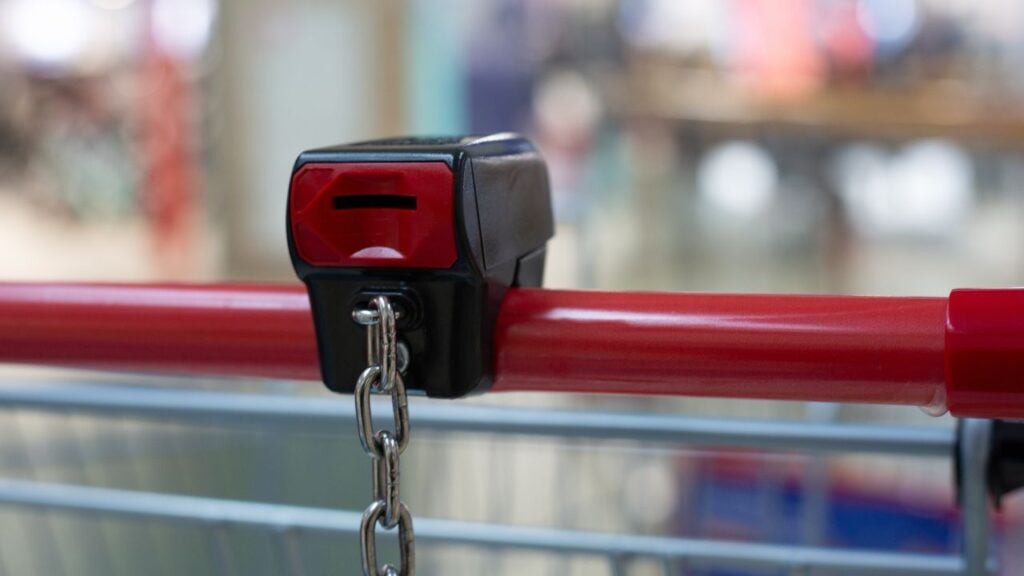
A shopper in Marietta stands at the cart corral patting down every pocket, hunting for a quarter.
She isn't the only Georgia shopper caught off guard on a first trip this week.
