

9 Florida Car Insurance Rules Drivers Don’t Find Out About Until a Claim

Two drivers argue over who had the right-of-way at a Tampa intersection, and an adjuster ends up splitting the blame: 51% one way, 49% the other.
One point away from an even split, and Florida law treats those two drivers completely differently.
That gap opened wider in Florida in 2023, and many drivers still don’t know it’s there until they’re the one holding the higher number.
These are the Florida car insurance rules that often stay invisible until a claim forces them into the open.
Note: This is general information, not insurance advice. Coverage and terms are subject to change, so check the specifics with your insurer or agent.
1. The 14-Day Treatment Window
Florida’s personal injury protection (PIP) coverage is the first money that moves after a crash, and it pays out no matter who caused the wreck.
It also runs on a clock many drivers never notice until they need it.
State law requires the injured driver to get initial treatment within 14 days of the accident, or the driver forfeits PIP benefits entirely, not just part of them.
All of them.
A sore neck that feels manageable on day one can turn serious by day 20, and by then the driver’s own $10,000 in PIP coverage is already off the table.
Adjusters know this rule cold.
Drivers rarely do, until the denial letter names it.
2. The $2,500 Cap Without an ER Diagnosis
Florida’s PIP coverage advertises up to $10,000 in medical benefits, but that full number only shows up under one condition.
A physician, dentist, physician assistant, or advanced-practice nurse has to certify that the injury counts as an “emergency medical condition” under that same law.
Skip that certification, or never get one, and the payout caps at $2,500, even if the actual bills run much higher.
$7,500 vanishes.
That gap catches drivers who assumed the number on their declarations page was the number they’d collect.
Insurers deny whiplash and soft-tissue claims more often, since those injuries rarely produce a same-day diagnosis dramatic enough to earn the certification.
A $6,000 bill for an emergency room visit and two weeks of physical therapy sounds routine.
Without that one signature, the insurer only pays $2,500 of it.
The Math Behind Florida’s PIP Payout
Florida’s PIP coverage pays 80% of medical bills, never the full amount.
With an emergency medical condition certified, that 80% applies up to a $10,000 cap covering medical costs and lost income combined.
Without that certification, the cap drops to $2,500.
Say a driver runs up $6,000 in emergency room and physical therapy bills after a crash.
Certified as an emergency medical condition, PIP pays 80% of that bill, or $4,800.
Without the certification, PIP only pays out up to its $2,500 cap, leaving roughly $3,500 for the driver to cover alone.
3. Insurers Get 30 Days to Pay or Deny
Florida insurers can’t sit on a PIP claim forever.
Once a driver’s insurer receives written notice of a covered loss and the dollar amount, the same statute that sets the 14-day treatment rule gives it 30 days to pay the claim or deny it.
Miss that window, and the payment is legally “overdue.”
Interest adds up daily.
Overdue amounts start collecting interest, calculated back to the day the insurer received the paperwork.
Few drivers ever cite that clock.
A driver whose payment drags past 30 days can point to the exact statute and ask why interest hasn’t shown up on the check yet.
4. A Stacking Waiver Follows You Forever
Florida requires every auto insurer to offer uninsured motorist (UM) coverage that “stacks,” combining the UM limits on every vehicle listed on a policy into one larger total after a crash.
Stacked coverage is the default.
A driver can trade it for a cheaper, non-stacked policy by signing a rejection form, and Florida requires insurers to knock at least 20% off the uninsured-motorist portion of the premium for making that choice.
Here’s the part that catches people: Once that form is signed, the cheaper, non-stacked choice renews automatically on every policy period after that, without a new signature.
A driver who signed away stacking to save money five years ago is often still non-stacked today, without remembering they ever made that choice.
They find out only after a second accident, when they try to combine UM limits across two or three insured vehicles and discover the policy won’t allow it.
Getting back to stacked coverage takes a new written request and a higher premium, not a phone call.
5. Florida’s 51% Fault Bar
Florida changed how shared-fault crashes pay out in 2023, and the new rule catches drivers who assume they’ll recover something no matter what.
Under a law known as House Bill 837, a driver found more than 50% at fault for their own crash recovers nothing at all, not a reduced amount.
Not a dime.
Cross that halfway line by even one point, and years of medical bills and repair costs become the driver’s own to cover.
Before 2023, Florida let an injured driver collect a share of damages even at 99% fault, reduced by their own share of the blame.
That’s gone now.
The fault split only matters once an adjuster, a mediator, or a jury assigns one on an open claim, and by then it’s too late to plan around it.
Psst! How much do you know about Florida driving and insurance history? Take our quiz and see how many you can get right.
Quiz
Florida Insurance & Road IQ
Answer these questions on Florida driving and insurance history. We bet you can’t get them all right. Prove us wrong?
In what year did Florida’s no-fault car insurance law take effect?
6. The Clock That Favors Insurers
Florida claims run on two clocks at once, and many drivers only track the one their insurer mentions out loud.
An adjuster brings up the 30-day PIP payment deadline, so that clock draws attention.
The deadline to sue almost never does.
The same 2023 law that added the 51% fault bar cut Florida's filing deadline for a negligence claim from four years down to two years.
Half the time.
Insurers know that clock is running even when a driver doesn't, and a slow-walked settlement offer costs the driver leverage every month that passes.
A driver who spends a year negotiating with an adjuster before deciding to hire a lawyer has already burned half the runway.
Wait too long, and the right to sue disappears even though the crash, the injury, and the bills are all genuine.
7. Diminished Value Isn't on Your Own Insurer's Tab
A Florida driver's repaired car is rarely worth what it was worth the day before the crash, even after a flawless repair job.
That gap is called diminished value, and many Florida drivers assume their own insurer owes them for it.
Their own insurer usually doesn't.
The Florida Supreme Court's Siegle ruling found that once an insurer repairs a car to its pre-accident condition, the policy doesn't obligate it to also pay for the resale value the car lost.
The workaround runs through the other driver.
A Florida driver can still collect diminished value, but only as a third-party claim against the at-fault driver's liability insurer, not their own.
Get rear-ended by someone else, and that distinction decides whether the diminished-value check ever arrives.
8. The Windshield Deductible Only Waives With Comprehensive
Florida has a reputation for free windshield replacement, and the reputation is only half true.
State law does waive the deductible for a cracked or shattered windshield, but only for drivers who already carry comprehensive coverage.
No comprehensive, no waiver.
A driver carrying just liability and PIP, Florida's legal minimum, gets no deductible break under that law at all.
They pay full price for the glass, the same as if the windshield law didn't exist.
The confusion shows up at the auto glass shop, not the insurance office.
A driver who dropped comprehensive years ago to save money finds out the free-windshield rule never applied to them in the first place.
9. A Claim Alone Can't Get You Canceled
Filing a claim feels like it should paint a target on a Florida driver's policy, and many drivers brace for a cancellation notice right after.
Florida law doesn't allow that.
An insurer can only cancel a policy mid-term for nonpayment, fraud or misrepresentation, or a suspended license, and filing a claim isn't on that list.
That's the whole list.
What can happen instead is a non-renewal at the end of the policy term, with at least 45 days' written notice and a stated reason.
Filing a claim can also nudge the premium itself, even when the policy survives untouched.
The average Florida driver with a clean record pays about $189 a month, and that rises to roughly $239 once an accident lands on the record.
5 Ways Costco Benefits Florida Seniors
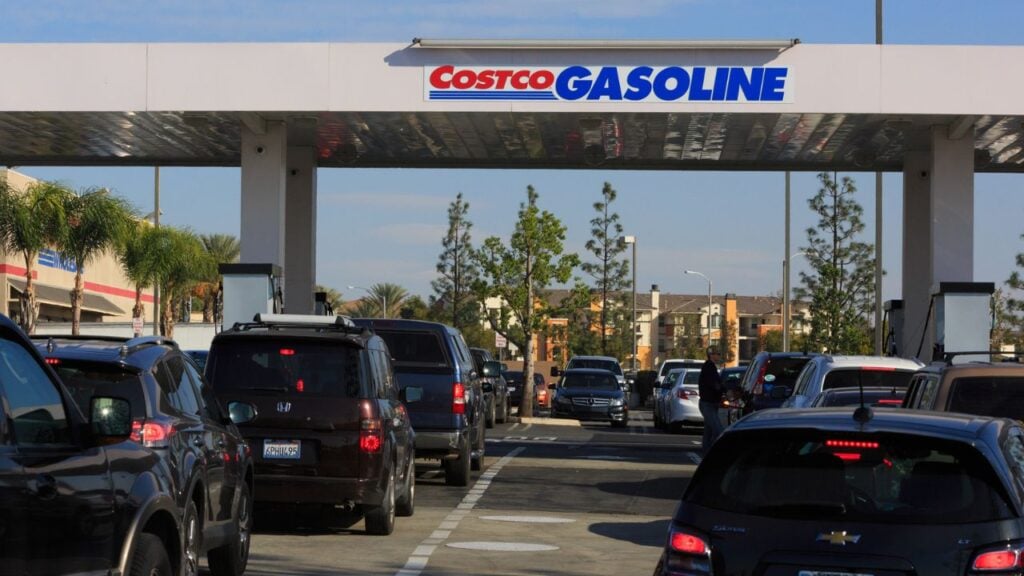
Costco is famous for its oversized packages, but some of its biggest advantages for Florida seniors have nothing to do with buying 30 rolls of toilet paper at once.
The warehouse club offers savings and services that can come in handy throughout retirement, including a few perks members frequently overlook.
5 Ways Costco Benefits Florida Seniors
7 Reasons People Are Leaving Florida in 2026
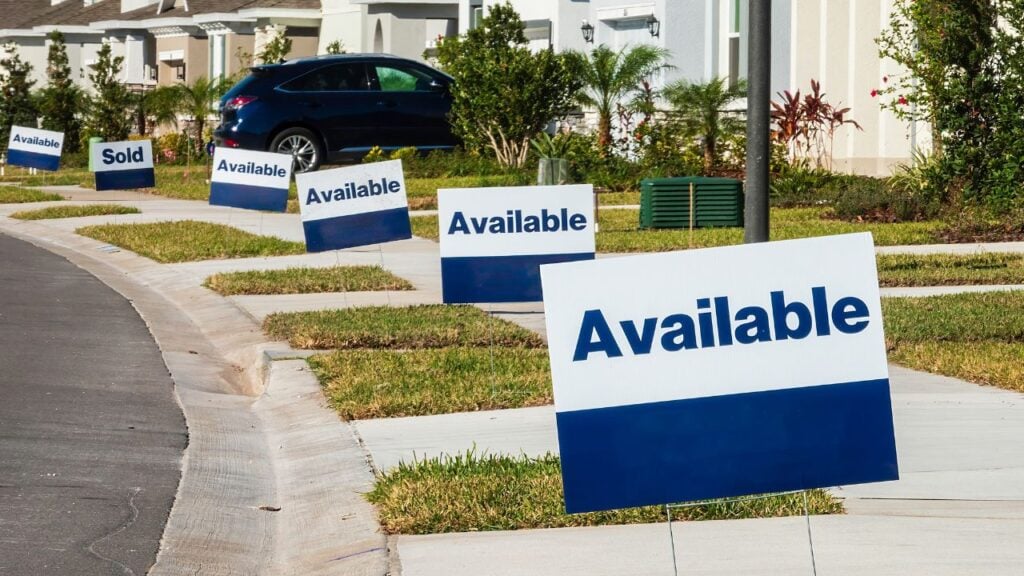
Florida gained just 22,517 residents from other states last year, down from 183,646 two years earlier.
Fewer people are arriving, and the households already there are running the numbers on property taxes, condo bills, and hurricane season.
