

8 Things Alabamians Once Memorized That Their Phones Remember for Them Now

Quick, no peeking at your phone: What’s your child’s phone number?
A national survey found 82% of parents can’t recite it from memory anymore.
That number used to live in your head. Now it lives in a contacts app.
These are the things Alabamians used to memorize that a phone now remembers for them.
1. Area Codes
Alabama shared a single area code, 205, for every phone number in the state from 1947 until 1995.
One area code covered Mobile, Montgomery, Birmingham, and everywhere between them, so Alabamians memorized those three digits without a second thought.
Then Alabama split.
Area code 334 arrived in 1995 for the southeastern part of the state, 256 followed in 1998 for the north, and 251 split off from 334 in 2001 to cover the south.
Two more overlays, 938 and 659, stacked on top of existing regions without moving anyone’s number.
Now a saved contact already carries the area code every time, so a phone recalls it instead of the person doing the dialing.
Split vs. Overlay: What Changed in Alabama
Alabama’s area codes didn’t all change the same way.
A split, like the one that created 334 in 1995, redraws the map and hands part of the state a new area code while the rest keeps the old one.
An overlay, like 659 in 2019, stacks a second area code on the same region without moving a single number, so even a call across the street needs all ten digits.
2. Driving Directions
A trip across Alabama once meant memorizing every turn before you left the driveway.
Google Maps didn’t launch until February 2005, and voice-guided turn-by-turn directions didn’t show up in the app until 2009.
Before then, a trip to Gulf Shores or over to Auburn meant memorizing every turn, or trusting a paper atlas folded up in the glove box.
Miss the exit, and there was no recalculating.
You just turned around at the next gas station and tried again.
A phone narrates the whole drive today, right down to which lane to take a half mile ahead.
No more guessing.
3. Football Records
Alabama football fans once carried records in their heads the same way they carried birthdays.
Paul “Bear” Bryant retired from coaching Alabama in 1982 with 323 career wins, the most of any coach in college football history at the time.
He died 28 days later.
Fans who grew up on that era can still recite the number without pausing.
Rivalry stats mattered just as much to Alabama fans.
Fans carried an Iron Bowl score from one particular year, a quarterback’s completion percentage, or a kicker’s miss around from memory, pulled from a folded newspaper box score or argued about at the barbershop.
A phone settles any of those arguments in seconds now, box score included.
Bragging rights just got a lot more boring.
4. Family Recipes
One Alabama cook could hold an entire family recipe in her memory, no card in the drawer at all.
Bob Gibson opened his barbecue restaurant in Decatur in 1925, dipping smoked chicken in a tangy white sauce of mayonnaise, vinegar, and black pepper that eventually spread across the whole state.
Many Alabama families kept their own version of that trick, or a cornbread, biscuit, or pound cake recipe, the same way: Fully memorized, measurements and all, with nothing written down anywhere.
The recipe lived in one person’s head.
Nowhere else.
If that cook never wrote it down, the exact recipe could disappear with her.
A phone changed that. Many Alabama families now photograph a handwritten recipe card, or type out a grandmother’s memorized measurements into a notes app once and save them for good.
The phone remembers the family’s own recipe exactly, so nobody has to recite it from memory ever again.
Psst! How much do you know about the everyday things people used to memorize? Take our quiz and see how many you can get right.
Quiz
Memory Lane IQ
Answer these questions on the everyday info Americans used to keep in their heads. We bet you can’t get them all right. Prove us wrong?
About how many pay phones were scattered across the U.S. at their peak in 1999?
5. TV Channels
Every Alabama household once knew its TV channels without looking twice.
Birmingham's television station (WBRC) signed on the air in 1949 and moved to channel 6 in 1953, joining a handful of local stations families across the state could find blind.
Flip to 6 for the news.
Flip to 13 for something else.
Nobody needed to look it up.
Streaming apps buried that whole skill.
Now a phone or a remote just searches a show's name and finds it, no channel number required at all.
Gone in one search.
6. Times Tables
Every Alabama classroom drilled times tables until the answers came without thinking.
Alabama kids memorized multiplication facts through 12 times 12 by rote for generations, worksheets and flash cards included.
That started changing once national math standards published in 1989 said calculators should be available to students at all times, not saved for after the basics were memorized.
Nine times seven still trips some adults up today.
No shame in it.
A phone answers it instantly, no waiting for the number to surface from memory.
7. Passwords
Alabamians once kept every password in their heads, back before anyone needed 250 of them.
The average American now juggles more than 250 passwords across personal and work accounts, and only about half still rely on memory to keep track of them.
The rest lean on a browser or a password manager instead.
Nobody memorizes a sixteen-character string with three symbols in it.
Not anymore.
A phone remembers every one of them and unlocks the right account with a glance at a face or a thumb on a button.
8. Phone Numbers
The house phone number was the first thing an Alabama kid memorized, often before they were tall enough to reach the dial.
A national survey from Panda Security found 82% of parents can't recite their own child's phone number from memory anymore.
Fifty-nine percent of couples can't recall their partner's number either.
Marriage doesn't help.
A household repeated its own landline number so often that it stuck, whether anyone tried to learn it or not.
Save a new contact today, and a phone holds onto every digit without a single repeat.
Nobody has to say a number twice just to make it stick anymore.
How Alabama's Storm Warnings Moved From the Sky to a Lock Screen
Alabama sits inside what meteorologists call Dixie Alley, a stretch of the South nearly as prone to tornadoes as the Great Plains.
Meteorologist James Spann has covered Alabama weather on air since the 1970s, and during the April 27, 2011 tornado outbreak, he and a colleague delivered more than 12 hours of live coverage as dozens of tornadoes tore across the state.
Alabama families once watched the sky change color and listened for a familiar voice on the radio to know when to get to the hallway.
No app to check.
Now a phone pushes a wireless emergency alert straight to the lock screen, sirens included, before anyone has to look up at the sky.
The habit of watching first is fading fast.
8 Publix Habits That Mark a Lifelong Alabama Shopper
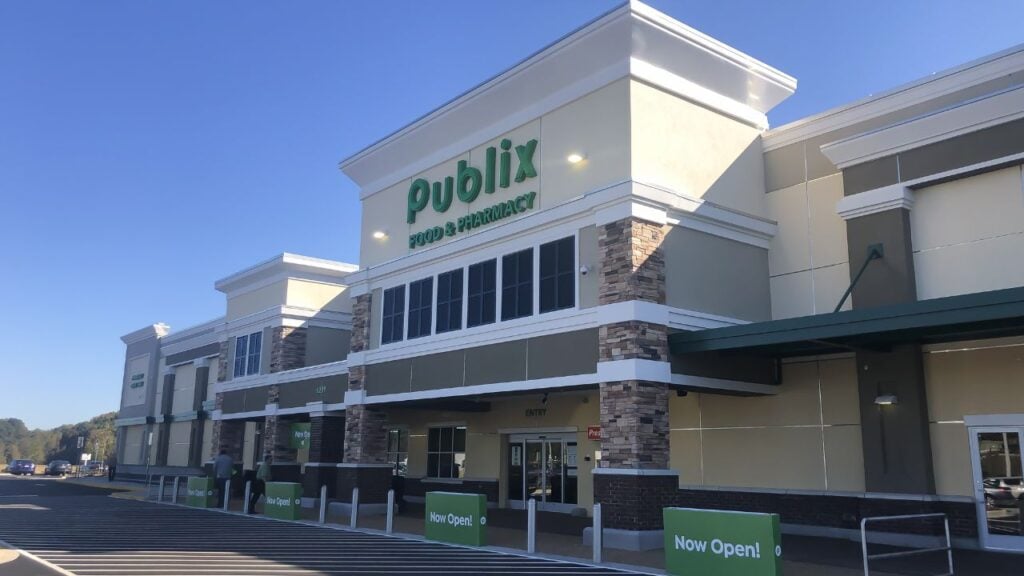
A shopper at a Trussville Publix says four words to the cashier that make the next person in line ask how she pulled it off.
Years behind the buggy taught her habits nobody bothers to post about.
8 Publix Habits That Mark a Lifelong Alabama Shopper
12 Things Alabamians Do That Baffle the Rest of the Country

Alabama's constitution runs two and a half times longer than the world's next-longest constitution, and that's not a typo.
These are the habits Alabamians live by that leave the rest of the country scratching their heads.
