
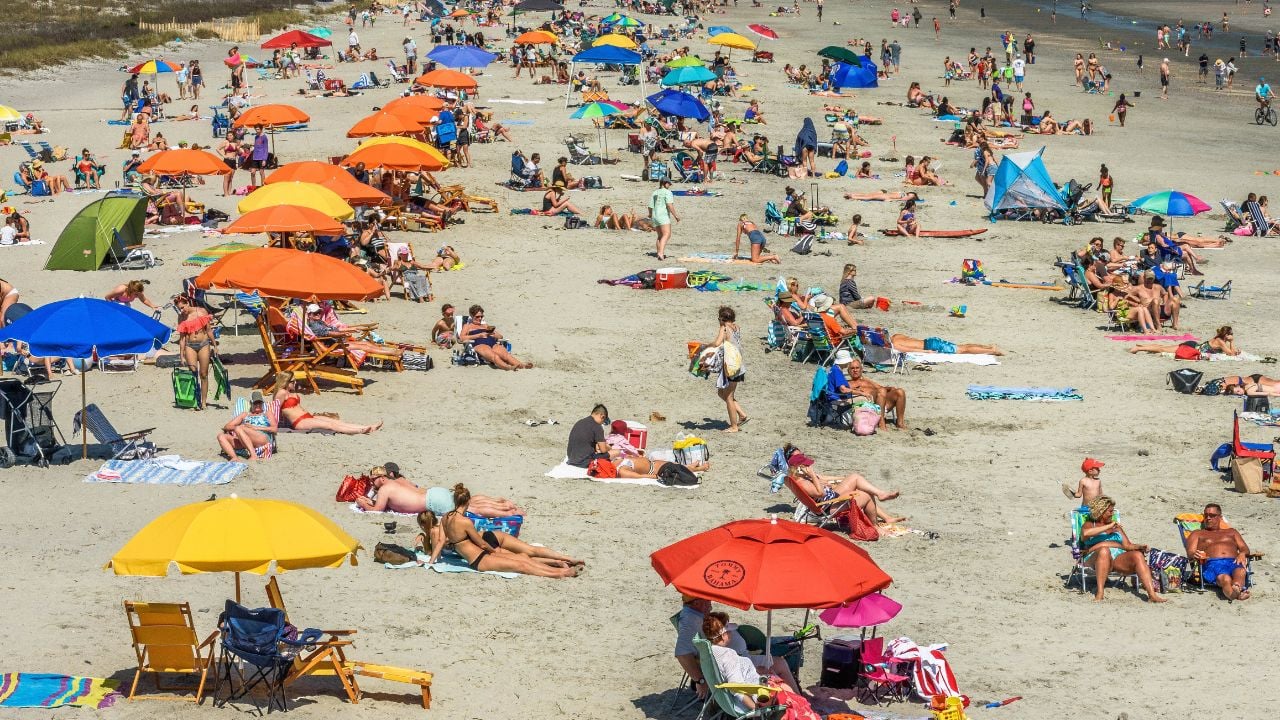
9 South Carolina Beach Towns Locals Say Visitors Ruined

More than 200 people packed into a North Myrtle Beach meeting room one evening in June 2025.
By the time the vote came, 185 of them raised their hands for tougher short-term rental rules.
These are the South Carolina beach towns locals say visitors have ruined.
Isle of Palms
Isle of Palms voters had a chance to cap short-term rentals in 2023, and they turned it down, 54% to 46%.
Some islanders wish that vote had gone the other way.
Real estate investment funds increasingly buy homes on Isle of Palms’ residential streets and run them as year-round vacation rentals instead of houses families live in.
Brian Duffy, a former city council member who has called the island home for almost 30 years, watched the shift happen.
“There’s been this proliferation of real estate investment funds that are now beginning to focus on residential communities for short-term rentals as a return on their investment,” he said. “That’s not what we’re about.”
Not anymore, it seems.
Other residents say the same pattern prices out families, with investors buying homes on Isle of Palms only to convert or rebuild them purely for rental income.
The push for stricter rules hasn’t gone away just because one vote failed.
Folly Beach
Folly Beach residents watched vacation rentals take over their neighborhoods for years before the town did anything about it.
By 2023, rental properties made up 43% of Folly Beach’s housing stock, nearly half the homes on a six-mile barrier island turned into vacation units instead of full-time houses.
Some residents said they no longer had neighbors on Folly Beach, just a rotation of vacationing families and groups of friends checking in and out week after week.
Folly Beach voters capped short-term rental permits at 800 in 2023, deciding the island had had enough.
Council member Blair Holladay says the cap now cuts both ways: It protects Folly Beach’s year-round community, but it’s also made a Folly Beach vacation “astronomically out of reach” for regular families.
Mayor Chris Bizzell says the goal was never punishing tourism, just keeping long-term neighbors from disappearing.
“We have a lot of people moving in that are now long-term residents, as opposed to looking at the community as an investment,” he said.
That’s the deal now.
A South Carolina appeals court upheld Folly Beach’s cap in 2026, so it’s staying, at least for now.
Hilton Head Island
Hilton Head Island ended free beach parking altogether in 2025.
Weekday parking now costs up to $15 a day, and weekends run a flat $20, though residents still get free permits for two vehicles.
Town leaders say the fee pays for parking upkeep and eases crowding, but it’s also proof of how far the balance between residents and visitors has tipped on Hilton Head Island.
Rent tells the same story.
Apartments near the water that once ran about $800 a month rose to as much as $1,500 within a few years, as Hilton Head Island’s short-term rental boom ate into its long-term housing supply.
More than 14,000 workers commute onto the island every day because they can’t afford to live on Hilton Head Island anymore.
That’s proof enough.
What’s Behind Hilton Head Island’s Rent Spike
Hilton Head Island’s Chimney Cove apartments, once among the cheapest units on this stretch of South Carolina’s coast, rented for about $800 a month in the early 2020s.
By 2022, that same apartment cost as much as $1,500.
New owners then moved to redevelop the complex entirely.
Seasonal and short-term rental homes make up close to 16% of housing across the Hilton Head Island-Bluffton area, Census data shows, leaving fewer year-round apartments for the workers the island depends on.
North Myrtle Beach
North Myrtle Beach has more than 5,400 licensed short-term rentals, and city officials say about 1,700 of them have no one locally responsible for the property.
Resident Patricia Kellers told the Post and Courier the rentals aren’t just a summer inconvenience anymore.
“The short-term rentals are no longer seasonal phenomenon. Everyone’s coming here,” she said. “Our ordinance needs to have input from the community because we have to live amongst the chaos.”
Neighbor Imogene Boseman says at least four homes on her street became rentals, including the one next door, and large groups pack in especially around Memorial Day.
She’s called the police over the noise.
She says guests have also hit her windows with fireworks debris.
That’s not a one-time complaint.
More than 200 North Myrtle Beach residents packed a June 2025 input session on the town’s short-term rental rules, and 185 of them backed stricter regulation.
Only four voted no.
Pawleys Island
Pawleys Island reserves just 141 public parking spaces across nine free beach accesses for a barrier island under four miles long and mostly one house wide.
Many of Pawleys Island’s historic homes are rented out to vacationers each summer, some by the same families that have owned them for three or four generations.
“We have a very limited infrastructure and very limited geography,” says Cindy Persons, executive director of Keep It Green Advocacy.
“We have one highway. It’s already overcrowded and overdeveloped.”
That highway is the only way on or off Pawleys Island, for a vacationer heading to the beach or a family evacuating ahead of a hurricane.
Georgetown County’s land use plan now permits nearly 4,700 more households along the Waccamaw Neck, a 70% jump in population for an area with that same single road.
There’s nowhere else to go.
Persons and a growing group of Pawleys Island residents want to incorporate the Waccamaw Neck into its own town, so it can write its own zoning rules instead of following the county’s growth plan.
Sullivan’s Island
Sullivan’s Island banned short-term rentals outright back in 2002, the only town in South Carolina to shut the door completely.
The idea was to keep Sullivan’s Island a residential neighborhood instead of a hotel strip.
It hasn’t worked.
Thousands of day-trippers still flood Sullivan’s Island’s beach and commercial district on summer weekends, circling residential streets for a spot to park.
The town’s Recreation Committee weighed building a new $320,000 parking lot near the tennis courts this year, then backed off in favor of opening an employee lot to the public on evenings and weekends instead.
Free shuttles now run from Mount Pleasant for big events like Carolina Day, just to keep cars off Sullivan’s Island altogether.
Banning rentals solved one problem on Sullivan’s Island. It never solved this one.
Murrells Inlet
Murrells Inlet’s MarshWalk restaurants started charging non-customers to park years ago, after overflow visitors filled every lot before lunch.
Wicked Tuna’s general manager said the restaurant’s own lot would fill up by 10 a.m., with some cars staying put until the next day and leaving actual customers with nowhere to park.
So several restaurants along the Murrells Inlet MarshWalk now charge $5 to park, refunded only if a customer’s tab covers it.
Resident Robert Thomas says nobody warned longtime locals before the fees showed up.
“They didn’t give anyone any warning about it,” he said. “All of a sudden, you’ve got to start paying to park.”
Parking was never easy at Murrells Inlet.
It’s not free, either, anymore.
For years, Murrells Inlet residents could walk the MarshWalk for free.
Now reaching the water can cost money before anyone orders a single drink.
Myrtle Beach
Myrtle Beach sits at the center of a tourism engine that pulled in more than 18.2 million visitors and $13.3 billion in spending across the area in 2025.
Roads and traffic topped the list of concerns in a 2026 survey of Horry and Georgetown county residents, cited by 65% of respondents as their top quality-of-life worry, ahead of public safety, housing, and stormwater.
More than 1,900 people answered the Collaborate2031 Resident Sentiment Survey.
Growth management ranked as their top neighborhood concern too, named by 60% of respondents.
More than half of respondents, 56%, said the area needs more jobs outside tourism altogether.
That’s striking.
South Carolina’s tourism industry pulls in more than $30 billion a year, and Myrtle Beach still markets itself hard to the visitors behind those dollars.
Its own residents just want somewhere else to work.
Daufuskie Island
Daufuskie Island has no bridge, no grocery store, and about 500 full-time residents today.
Half a century ago, nearly 1,000 Gullah Geechee people called Daufuskie Island home.
Today, Sallie Ann Robinson is one of only 15 descendants of the enslaved people who built that community still living on the island.
Fifteen. That’s all.
Some islanders want Daufuskie Island to incorporate as its own town for more control over zoning.
Robinson insists that incorporation can’t move forward without significant protections for her people.
Historian Andrew Kahrl calls incorporation without those protections “the death knell for the Gullah Geechee on Daufuskie.”
Getting a Vote on Daufuskie’s Future
Daufuskie Island’s own advisory council struggles to attend the meetings that decide its future.
Beaufort County’s monthly commission meetings happen on the mainland, and they start after the last county-funded ferry to Daufuskie Island has already left for the day.
They simply can’t get there.
Psst! How much do you know about South Carolina’s coast? Take our quiz and see how many you can get right.
Quiz
South Carolina Coast IQ
Answer these questions on South Carolina’s barrier islands, lighthouses, and beach history. We bet you can’t get them all right. Prove us wrong?
How many barrier islands line South Carolina’s coast?
Developers have fenced off tracts of Daufuskie Island once open for community hunting and fishing, land Gullah families used for generations.
One planned eco-resort on Daufuskie Island is now in question, and two older developments already failed, leaving a ghost golf course behind.
12 Things South Carolinians Are Tired of Explaining to Outsiders
A South Carolina fan wears orange to a family dinner without a second thought.
Her cousin, dressed head to toe in garnet, hasn't spoken to her since the last Palmetto Bowl.
12 Things South Carolinians Are Tired of Explaining to Outsiders
8 Food Lion Deli and Bakery Buys South Carolina Shoppers Grab Every Week
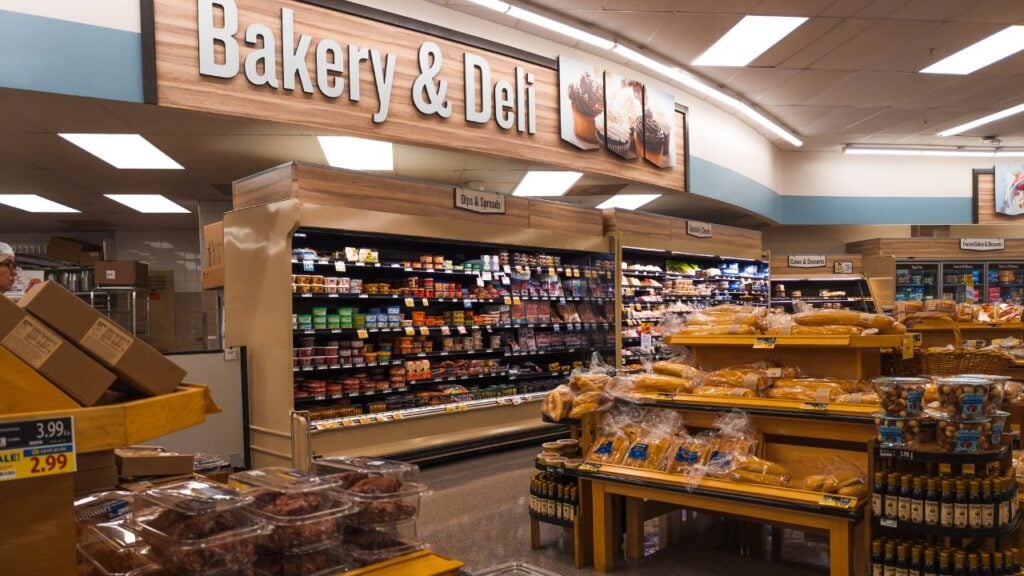
Food Lion opened two new South Carolina stores this year, one on Two Notch Road in Elgin and another on West Georgia Road in Simpsonville.
These are the deli and bakery buys South Carolina shoppers load into their carts week after week.
8 Food Lion Deli and Bakery Buys South Carolina Shoppers Grab Every Week
