
9 Florida Beach Laws Tourists Break Without Realizing It

A family vacationing near Destin cuts across the dune line for a shortcut to the water, flattening a patch of sea oats along the way.
Nobody in the group realizes they just broke a Florida law protecting that exact stretch of sand.
These are the Florida beach laws tourists break without ever meaning to.
Note: This is general information, not legal advice. Beach ordinances vary by county and city and are subject to change.
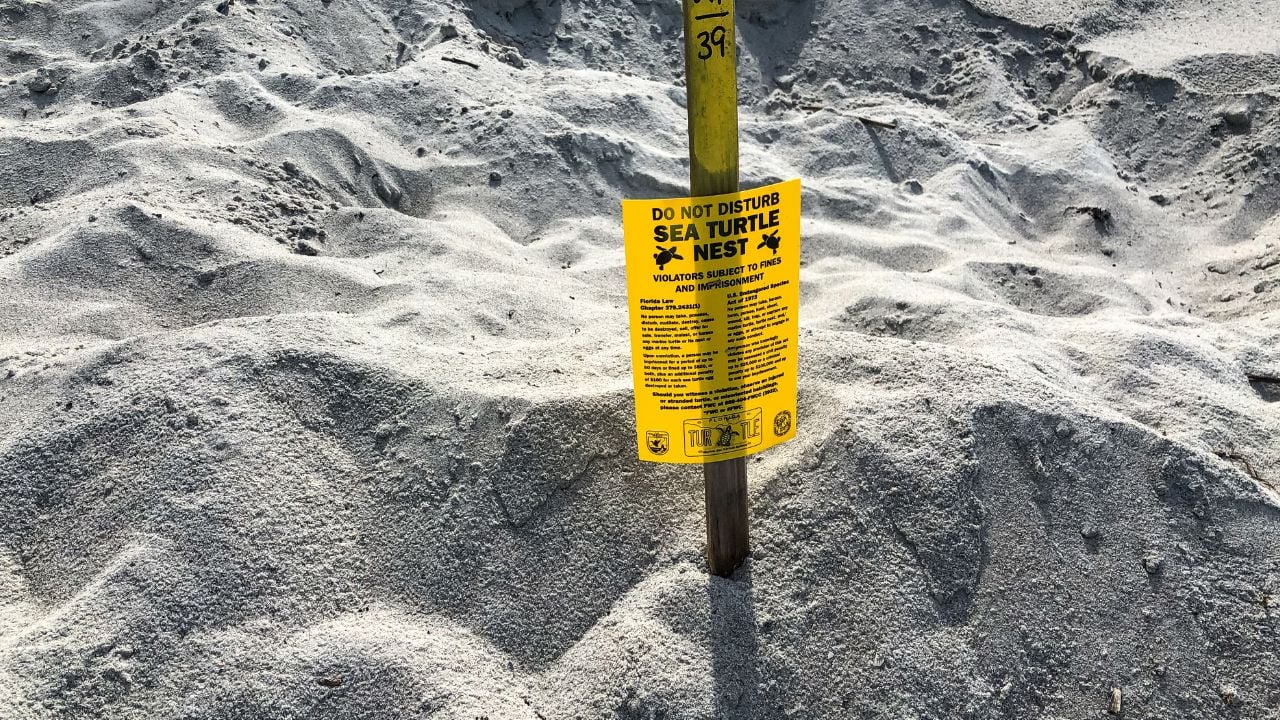
1. Turtle-Season Beach Lighting
Nesting sea turtles along Florida’s coast read a bright porch light as a reason to turn back to the ocean.
The Florida Fish and Wildlife Conservation Commission requires any light visible from the sand during nesting season to be shielded, mounted low, and cast only amber or red light.
That season runs from March through October across much of the state, earlier on the southeast Atlantic coast and later on the Panhandle.
Leave a porch light uncovered in Brevard County, and the fine can reach $500.
It can also mean up to six months in county jail.
No exceptions for renters.
Florida’s Turtle Season, by the Numbers
Florida’s sea turtle nesting season runs from March 1 through October 31 across much of the state’s coastline.
The Florida Fish and Wildlife Conservation Commission requires any beachfront light visible from the sand during that stretch to be shielded, mounted low, and long-wavelength amber or red.
Brevard County backs that rule with fines up to $500 and as much as six months in county jail.
2. Glass Containers on the Sand
A glass bottle counts as a hazard under Florida’s beach ordinances, not a picnic prop.
Walton County’s beach code bans any glass or ceramic item on the sand, full stop, whether it’s holding beer or lemonade.
Nearly every other Florida county runs the same rule, even where visitors can legally drink on the sand.
Bring a bottle of wine to watch the sunset, and a code officer can write the ticket before the cork comes out.
Cans and cups only.
3. Digging an Unfilled Hole
Florida beach towns have started writing a hole’s depth into law, right down to the inch.
Panama City Beach bans holes deeper than 2 feet and keeps metal shovels off the sand entirely.
Lauderdale-by-the-Sea caps holes at 18 inches and requires visitors to fill them in before leaving, a rule the town passed after a child died in a collapsing hole.
Sand caves in fast.
A hole that looks harmless at low tide can trap an ankle, or worse, once the water comes back in.
4. Trampling Protected Dunes
State law shields Florida’s dunes as fiercely as it shields the water beside them.
State statute 161.053 makes it illegal to damage dune vegetation, drive a vehicle over a dune, or alter a protected dune anywhere the coastal construction control line applies.
Sea oats hold the sand in place.
A single shortcut through them can undo years of growth.
Use the marked walkover.
Damage a dune with a vehicle, and the charge is a second-degree misdemeanor.
Any other damage counts as a first-degree misdemeanor.
Florida charges a separate offense for every day the damage goes unfixed.
5. Pocketing Shells or Coral
Florida keeps a tighter grip on its beaches than many visitors realize, right down to the sand.
State rules make it illegal to take any coral, dead or alive, off a Florida beach.
A live shell, sand dollar, or starfish still moving inside its shell has to go back where it was found.
Leave the beach be.
Scooping sand into a jar to take home falls under the same no-removal rule that protects state park land.
Rangers can ticket it as removing a natural resource.
Psst! Think you can spot which of these beach claims are true? Flip each card and find out.
6. Drinking on the Wrong Beach
The alcohol question falls to each city and county in Florida.
The answer changes at the county line.
Miami Beach bans open containers on its public sand year-round, no matter how far you walk from the boardwalk.
Panama City Beach goes further, banning beach drinking for the entire month of March, spring break included.
Walton County takes the opposite approach.
There’s no countywide ban there, as long as the container isn’t glass and nobody’s visibly intoxicated.
Check first.
7. Driving Without a Permit
Florida limits beach driving to a short list of counties.
Volusia County is the strictest about paperwork.
Daytona Beach and New Smyrna Beach let cars onto the sand.
A visitor from outside the county pays $30 a day, or $150 for the year.
The posted speed limit on the sand is 10 mph.
Rangers enforce it strictly.
Rental cars don’t matter.
Skip the pass booth, and the fine costs more than the permit would have.
8. Setting off Illegal Fireworks
Fireworks that fly or explode count as fire code violations under Florida law, beach included.
State law bans anything that flies or explodes without a county permit.
Breaking that rule is a first-degree misdemeanor.
Lawmakers carved out three exceptions in 2020: the Fourth of July, New Year’s Eve, and New Year’s Day.
Beach towns in Volusia County don’t honor that carve-out, banning fireworks on the sand no matter the date.
Save it for the yard.
9. Feeding or Touching Manatees
Florida backs up its manatee and dolphin protections with two overlapping beach laws, state and federal.
The Florida Manatee Sanctuary Act makes it illegal to feed, touch, or harass a manatee, with fines up to $500 and 60 days in jail.
The federal Marine Mammal Protection Act covers dolphins the same way.
Its penalties reach $100,000 and a year in prison.
Look, don’t touch.
A dolphin that learns to expect handouts stops fishing for its own food.
That habit can follow it for life.
Dog Rules Tourists Never Expect
Florida’s dog rules shift just as much as its alcohol and driving rules do.
Many of the state’s busiest tourist beaches ban dogs outright, even on a leash.
Not every beach agrees.
Jupiter’s beach in Palm Beach County is one of Florida’s rare exceptions, letting leashed and unleashed dogs share the same stretch of sand.
Pensacola Beach carves out a separate section just for dogs instead of opening the whole shoreline.
A lifeguard waves a leashed dog through at one access and turns it away at the very next one, block by block.
Ask a lifeguard stand before unclipping the leash, since guessing wrong at the wrong access point means turning around and walking straight back to the car.
13 Florida Theme Park Habits That Instantly Mark You as a Tourist

Florida’s theme parks come with their own unwritten rulebook, and tourists usually learn it the hard way, one dropped phone at a time.
Locals spot a first-timer before they even reach the ticket gate.
13 Florida Theme Park Habits That Instantly Mark You as a Tourist
11 Habits Floridians Develop Without Ever Realizing It
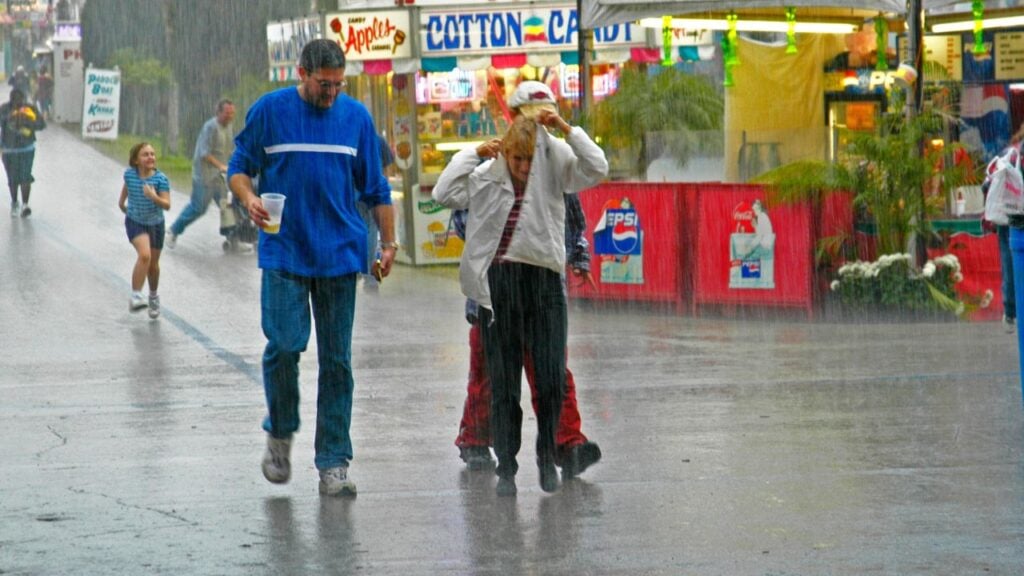
Living in Florida rewires a few everyday habits without anyone noticing it happen.
Hurricanes, gators, and humidity barely make the list once you dig into what Floridians do differently.
