
6 Bank Fees South Carolina Customers Pay That Credit Union Members Don’t

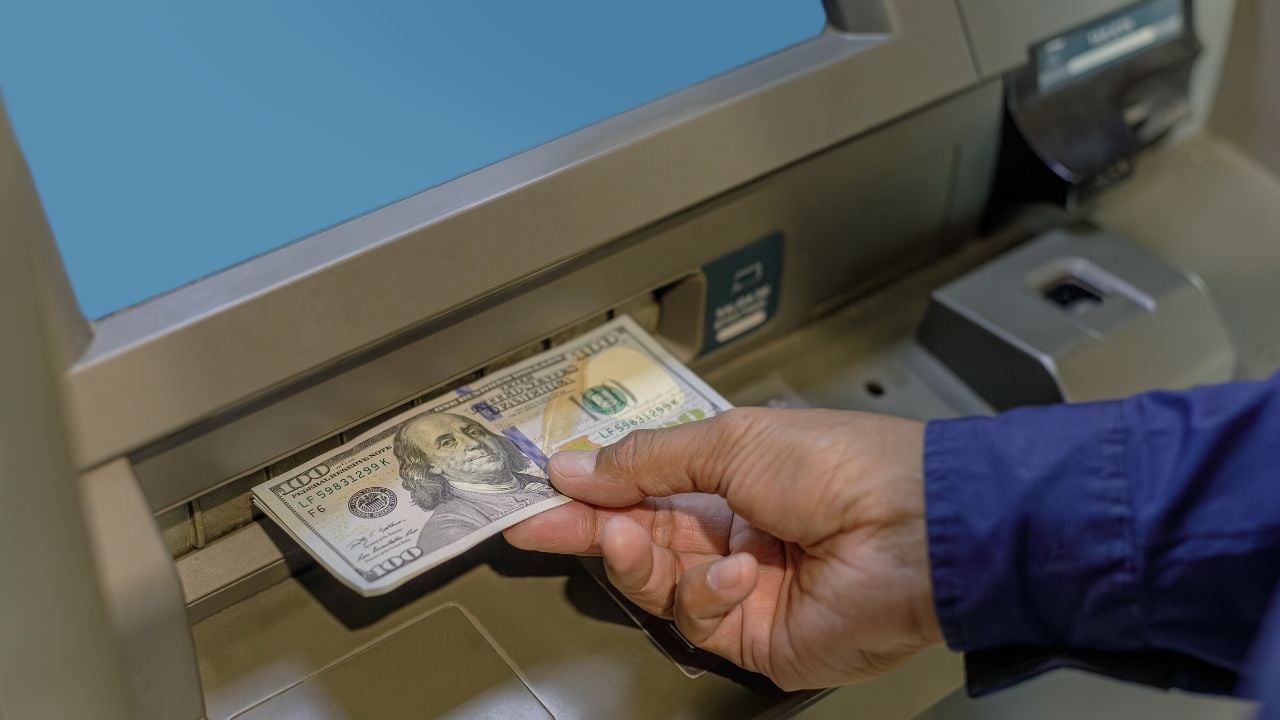
More than 37,000 ATMs in the United States belong to one surcharge-free network.
But some banks don’t let its South Carolina customers tap into it for free.
In contrast, members of credit unions can often walk up to nearly any of those same machines and pay nothing at all.
These are the bank fees South Carolinians pay every year that credit union members skip or pay far less for, using Wells Fargo and Founders Federal Credit Union as the base for examples.
Note: This is general information, not financial advice. Bank and credit union fees vary and are subject to change.
1. Overdraft Fee
Wells Fargo, one of the biggest banks doing business in South Carolina, charges $35 every time it pays a check or debit into overdraft, whether the shortfall runs $40 or four dollars.
There’s no sliding scale.
Founders Federal Credit Union, headquartered in Lancaster, charges $32 for the same overdrawn item, and the charge disappears completely when the shortfall is $3 or less.
A $2 debit that overdraws a Wells Fargo account still costs $35.
The same $2 slip at Founders costs nothing.
2. Monthly Checking Fee
Founders Federal Credit Union’s checking account carries no monthly fee, no minimum balance, and no deposit requirement to chase, as long as a member signs up for free eStatements.
Choose paper statements instead, and that fee runs $2 a month.
That’s easy to avoid.
Wells Fargo’s Everyday Checking account charges $15 a month no matter what, whether the customer uses it daily or barely touches it.
A customer avoids that charge only by hitting one of a few targets: $500 in electronic deposits, a $1,500 minimum balance, or a $5,000 combined balance across accounts.
Miss all three, and the fee posts automatically.
3. Out-of-Network ATM Fee
Wells Fargo charges $3 every time a customer pulls cash from a non-Wells Fargo ATM inside the U.S.
Withdraw abroad, and the fee rises to $5.
Founders Federal Credit Union charges $2 at a machine it doesn’t own, and that drops to nothing at any of the more than 37,000 machines in the CO-OP Network, a shared surcharge-free ATM alliance credit unions across the country belong to.
Location matters.
A Founders member who plans a withdrawal around an in-network machine pays nothing at all for the same $2 a bank customer never gets back.
Psst! How do South Carolina’s banks and credit unions stack up? Sort the table below and compare the fees side by side.
4. Cashier’s Check Fee
A cashier’s check from Wells Fargo costs $10, and the bank tacks on another $8 if a customer orders one online for mail delivery.
Eighteen dollars for a piece of paper a landlord or a title company demands.
Founders Federal Credit Union’s equivalent, a corporate check, costs $2, per its own published fee schedule.
Two dollars, done.
5. Wire Transfer Fee
Sending a wire through Wells Fargo costs $25 online through consumer banking, and that jumps to $40 at a branch.
Founders Federal Credit Union charges $15 for the same outgoing domestic wire, no matter the channel a member uses.
Ten dollars saved.
Send four wires a year, closing on a house or helping a kid with a down payment, and the gap between the two adds up fast.
6. Foreign Transaction Fee
Wells Fargo carries a 3% fee on every foreign-currency purchase made with its debit card, a cost South Carolina customers rarely notice until the statement arrives.
Spend $1,000 on a trip abroad, and the fee alone runs $30.
Founders Federal Credit Union charges 1% on the same kind of purchase, per its own schedule.
Same $1,000 trip, $10 in fees instead of $30.
Twenty dollars kept.
That’s the gap between shopping with a Wells Fargo card and a Founders Federal Credit Union card on the same trip abroad.
Joining a South Carolina Credit Union
Founders Federal Credit Union doesn’t open its lower fees to every South Carolinian who walks through the door.
Membership runs through geography, an employer, or a family member, not a walk-in application.
Eligibility narrows quickly.
Other South Carolina credit unions run the same kind of rule, with their own counties, employers, or church and association ties attached.
South Carolina Federal Credit Union, by contrast, opens membership to anyone who lives, works, worships, or attends school statewide, no county map required.
What It Takes to Join Founders Federal Credit Union
Founders Federal Credit Union ties membership to where someone lives, works, worships, or attends school, not to simply asking.
Its South Carolina coverage runs through Chester, Chesterfield, Lancaster, Laurens, and Union counties, plus parts of Cherokee, Spartanburg, and York counties.
Anyone outside those counties can still qualify through one of Founders’ 200-plus partner employers, or through a spouse, parent, sibling, or child who already belongs.
Not Every Credit Union Beats the Banks
South Carolina Federal Credit Union, one of the state’s largest, charges $36 for a courtesy pay overdraft and $36 for a stop payment request.
That’s a dollar more than Wells Fargo’s own overdraft fee, and four dollars more than Founders Federal Credit Union charges for the same overdraft.
SouthState Bank, another bank with a large presence in South Carolina, charges that same $36 for its own overdraft item, proof a credit union doesn’t automatically undercut every bank in the state.
Wells Fargo’s stop payment fee runs $30, cheaper than what either credit union charges for the identical request.
Numbers move.
South Carolina Federal Credit Union’s outgoing wire fee runs $30, fifteen dollars more than what Founders Federal Credit Union charges for the same domestic transfer.
That’s also five dollars more than Wells Fargo’s own digital wire fee of $25, the one spot on this list where a bank beats South Carolina Federal Credit Union outright, though not Founders, whose $15 wire still undercuts Wells Fargo by ten dollars.
9 South Carolina Squatter Rules That Leave Homeowners Powerless

A stranger’s mattress turns up inside an empty Horry County beach house, and every instinct says change the locks that same night.
Do that instead, and the homeowner could be the one who ends up owing money to the squatter.
9 South Carolina Squatter Rules That Leave Homeowners Powerless
9 Home Insurance Surprises Hitting South Carolina Homeowners in 2026

South Carolina’s insurer of last resort for coastal wind and hail raised its rates 7.5% on houses and 25% on mobile homes this year, and no hurricane had to make landfall first.
Insurers build those increases into rate filings and paperwork many homeowners never open.
9 Home Insurance Surprises Hitting South Carolina Homeowners in 2026
