
9 West Virginia Habits Nobody Realizes Are a West Virginia Thing Until They Move

Many West Virginia lunch boxes have carried the same thing since 1927: a pepperoni roll, wrapped in wax paper, no fork required.
Cross the state line, and the words “pepperoni roll” create confusion.
These are the small, everyday habits a West Virginian never questions until they’ve moved somewhere that draws a blank look instead of a nod.
1. Singing “Country Roads” on Cue
West Virginians don’t wait for an invitation before they sing “Take Me Home, Country Roads.”
The song shows up at a wedding reception, at last call in a bar in Elkins, even at a funeral, and every voice in the room already knows the harmony.
West Virginia adopted the John Denver song as one of its official state songs in 2014, and it plays after every West Virginia University (WVU) football game at Mountaineer Field.
Move to a state where the opening chords land and nobody reaches for their phone to sing along.
The silence is the first thing you notice.
West Virginians never realize how deep that reflex runs until the room stays silent.
2. Packing a Pepperoni Roll
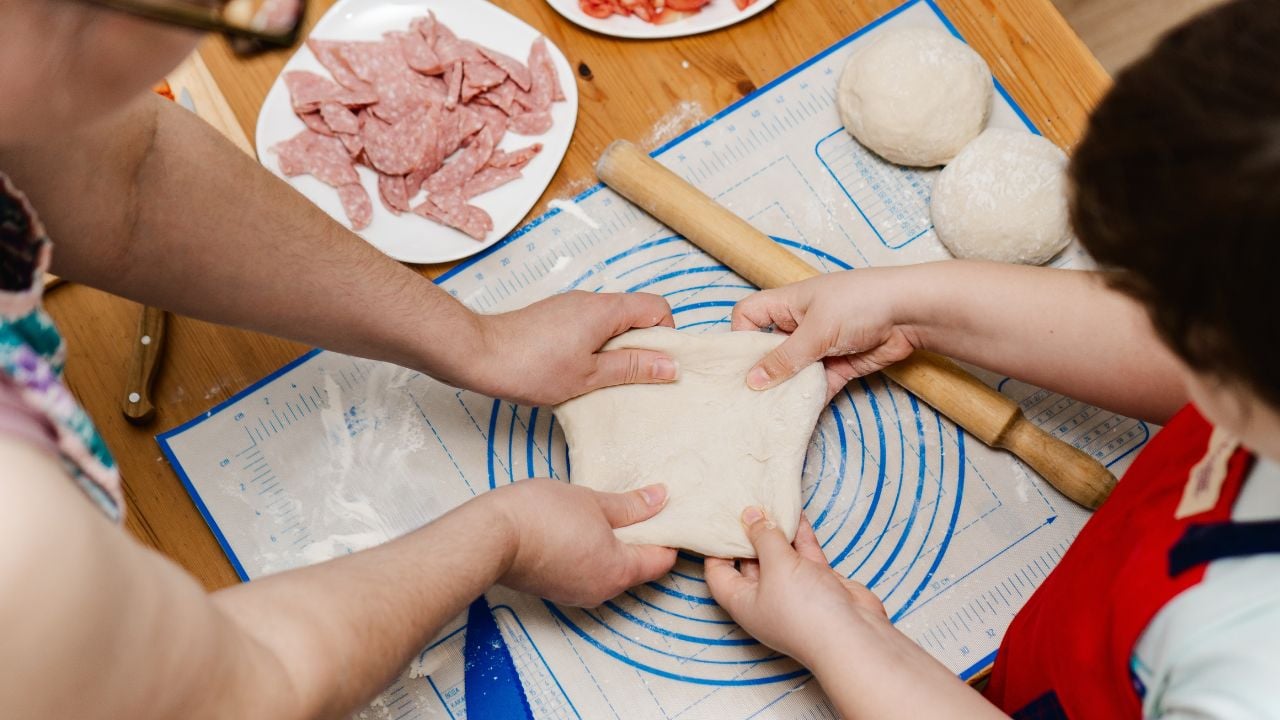
West Virginia’s pepperoni roll travels everywhere a West Virginian does: to school, to the mines, and to a deer stand, wrapped in nothing but wax paper.
Giuseppe Argiro started selling them at the Country Club Bakery in Fairmont in 1927, baking pepperoni straight into the dough so coal miners could eat with one hand and keep working with the other.
One hand stayed free.
The roll caught on across north-central West Virginia and mostly stayed there.
Ask for one at a gas station in Charleston, and the clerk points you to the rack without blinking.
A West Virginian who moves away keeps packing the same roll into a lunch bag out of habit, right up until a new coworker leans over and asks what’s inside it.
Ask for one almost anywhere outside the state, and the answer comes back as a question: What’s in it?
West Virginians never expect that question until they’re the one fielding it, three states from home.
3. Ordering a Hot Dog With Slaw
In West Virginia, ordering a hot dog “with slaw” needs no further explanation.
Mustard, chili, onions, and coleslaw pile onto the dog in that order, a combination that traces to the Stopette Drive-In outside Charleston, where a 1922 newspaper ad was already talking up the slaw dog.
Cabbage was cheap and filling, so it stuck.
The chili itself skips the beans, just meat and spice, built to layer instead of stand alone.
Head north into pepperoni roll country, though, and the order flips.
Slaw gets scarce there, and the chili goes by “sauce” instead.
West Virginians call that boundary the Slaw Line, a divide between the south, where slaw is the default, and the north, where it isn’t.
A West Virginian who’s moved away still orders “with slaw” on reflex, even in a state that’s never heard of a slaw dog, and the server asks if they meant coleslaw on the side.
They didn’t.
West Virginians build a hot dog order around an ingredient many other states reserve for a picnic table.
4. Circling Buck Season
West Virginians mark the opening day of buck season on the calendar the way other states mark a holiday.
Firearms deer season opens right around Thanksgiving every year, and most West Virginia counties still close their schools for that entire week, since so few students show up otherwise.
It’s not officially a hunting holiday.
Districts call it something else on paper, a fall break or an in-service day, and everybody knows what that day is for.
A West Virginian who moves to a state that runs school straight through deer season spends that whole week feeling like something’s missing.
Something is.
5. Buying a Fire Hall Plate
A West Virginia fire hall dinner claims a chunk of the social calendar before the flyer even goes up.
Spaghetti one month, chicken and dumplings the next, a Saturday given over to a folding-table buffet in the same building where the trucks are parked.
About 420 volunteer departments cover most of West Virginia outside cities like Charleston and Huntington, and boot drives, hot dog sales, and dinners like these are how a company pays for hose, turnout gear, and the truck payment state funding doesn’t fully cover.
Every dinner counts.
A West Virginian who’s moved to a city with a paid, tax-funded fire department only clocks the difference the first time they mention a fire hall plate and get asked why a fire department needs to sell chicken and dumplings at all.
Nobody asks that back home.
West Virginians just show up, pay the ten dollars, and go back for seconds.
Psst! How West Virginia are you? Run through this checklist and see where you land.
6. Reaching for E-ZPass
Drive West Virginia’s Turnpike more than a few times a year, and reaching for E-ZPass stops being optional.
Ghent, Pax, and Chelyan sit along the 88-mile stretch between Princeton and Charleston, and a first-time visitor paying cash has to stop at all three.
Locals just know.
West Virginia’s Turnpike runs its own branded pass, the Single Fee Discount Plan, which drops an enrolled driver’s toll to $0.00 at all three plazas for a full year.
West Virginians skip the per-plaza math entirely once they’ve set up an account.
A commuter who drives the Turnpike daily barely notices the toll anymore, since the account renews itself every year without a second thought.
A West Virginian who’s moved away and hits a toll state for the first time reaches for a transponder built for a system that just discounts each trip, and has to relearn tolls from scratch.
The Math Behind West Virginia’s Turnpike Toll
West Virginia’s Turnpike charges cash drivers at three plazas, Ghent, Pax, and Chelyan, and each one runs $4.50 for a passenger car.
A full run between Princeton and Charleston in cash adds up to $13.50 one way.
A West Virginia driver with E-ZPass pays a lower per-plaza rate instead, or signs up for the $27.50 annual unlimited plan, plus a one-time $13 transponder fee, and stops doing the math altogether.
7. Craving Ramps Every Spring
Spring in West Virginia means ramps before it means anything else.
West Virginians go looking for the wild onions the second the ground thaws, digging them out of the hillsides before many people notice spring has arrived.
Richwood has held its ramp dinner, the Feast of the Ramson, for more than 80 years, and fire departments and churches across the state run their own versions every April.
The smell sticks around for days afterward.
West Virginians consider that smell close to a badge of honor.
A West Virginian who’s moved away for college or work still packs a bag of ramps home in a suitcase every spring, and the first roommate from somewhere else who catches a whiff clears out of the kitchen in about ninety seconds.
Worth it.
8. Correcting “You Mean Virginia?”
Mention West Virginia to someone new, and “oh, you mean Virginia” comes back almost every time.
Western counties broke away from Virginia in 1863 rather than join the Confederacy, and West Virginia has stood as its own state, not a region of Virginia, for more than 160 years.
That history doesn’t stop the confusion.
Inside West Virginia, among people who already know better, the correction almost never comes up.
Move away, and it turns into a weekly occurrence, a new coworker, a delivery form, a stranger at a gas station, all making the same assumption in the same breath.
A West Virginian ordering something shipped “to Virginia” watches it land three states away more often than seems possible.
Same mistake, every time.
Say it plainly enough, often enough, and the correction turns into a reflex nobody remembers picking up.
9. Marking Bridge Day
The third Saturday of October gets blocked off on West Virginia calendars before anything else can claim the date.
Bridge Day 2025 drew more than 120,000 people to the New River Gorge Bridge, where BASE jumpers (parachutists who leap from fixed structures instead of aircraft) dropped 876 feet into the gorge on the only day of the year the National Park Service allows it inside a national park.
That’s not a typo.
West Virginia does this every year, without fail.
Move away, and the third Saturday in October turns into just another Saturday on the calendar.
A West Virginian who’s moved away pulls up the Bridge Day livestream from wherever they landed, watching nearly 400 jumpers step off a bridge they used to drive across just to get to work.
