
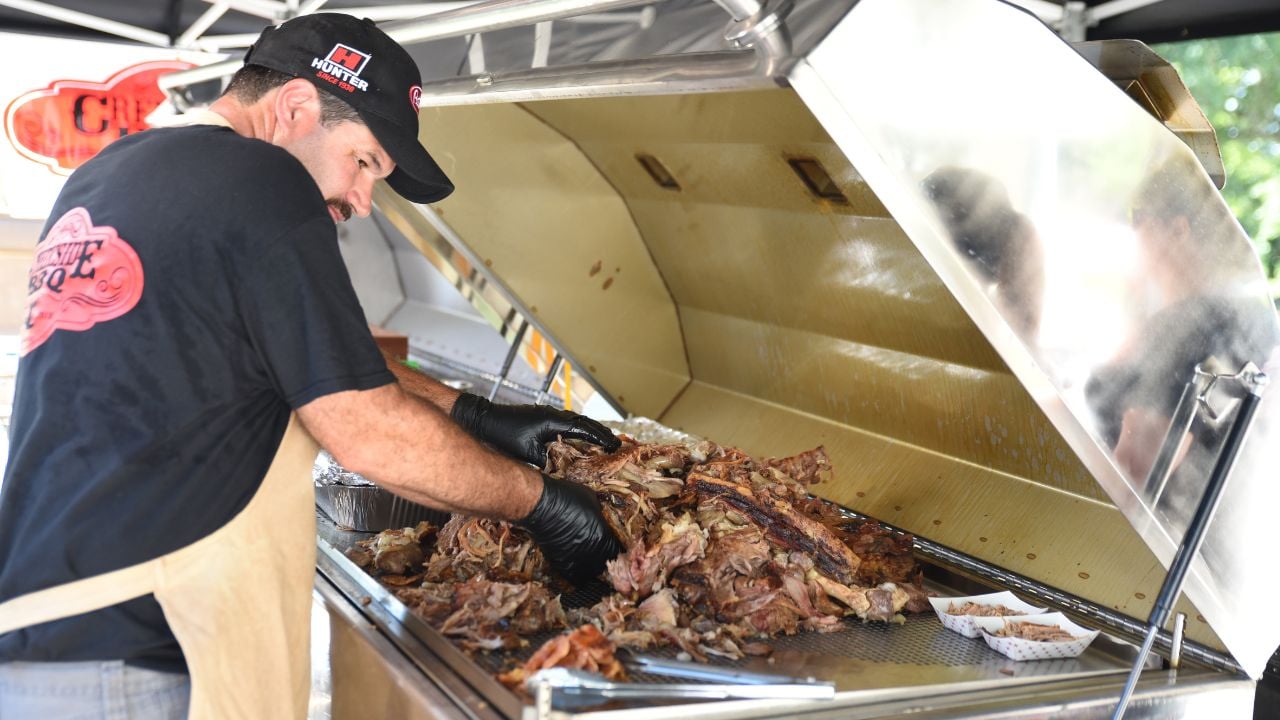
8 North Carolina Barbecue Rules Outsiders Break at Every Cookout

More than 100,000 people crowd Lexington every October for one plate of barbecue.
Many out-of-staters will order it wrong before they even sit down.
These are the North Carolina barbecue rules outsiders break at every cookout.
1. Choosing a Sauce Side
North Carolina barbecue splits into two camps, and picking one out loud, whether at a backyard cookout or a restaurant counter, is the fastest way to mark yourself as new.
Food historian John Shelton Reed, co-author of a defining book on the state’s barbecue, won’t even call Eastern-style “the truest.”
He’ll only call it the original.
Word choice matters that much.
Start that argument at a cookout with a paper plate in your hand, and the host finds a reason to refill the cooler instead of answering.
Compliment whichever style sits in front of you, and let the rest go.
2. Expecting the Same Slaw
North Carolina barbecue plates rarely serve the same coleslaw twice, and assuming otherwise trips up visitors at a backyard cookout as much as at a counter.
Piedmont and Lexington-area kitchens dress their pork with a mayonnaise-free red slaw, colored and sweetened with ketchup.
Lexington cooks pile it right on top of the sandwich, not just alongside it.
Both places at once.
Eastern kitchens, by contrast, stick with a traditional mayonnaise-based white slaw.
Show up to a Piedmont cookout expecting Eastern’s white slaw, and a bright red topping will catch you off guard.
3. Ordering It “Pulled” in Piedmont
North Carolina’s Piedmont barbecue has its own vocabulary, and outsiders trip on it whether they’re at a backyard cookout or a restaurant counter: “pulled” isn’t part of it.
Lexington Barbecue, open in the same Piedmont city since 1962, serves its pork never pulled, only finely chopped, coarsely chopped, or sliced.
Ask for it “pulled” at a Piedmont cookout, and whoever’s working the pit will still hand you barbecue.
They won’t call it that.
The distinction sounds small until a regular corrects the order out loud.
By then, everybody nearby already knows you’re not from the Piedmont.
4. Asking for Bottled Barbecue Sauce
North Carolina barbecue sauce doesn’t work the way every bottled brand’s does, whether it’s on a backyard cookout table or a restaurant counter.
A plain, traditional version contains three ingredients: White vinegar, red pepper, and salt.
No tomato.
Even Lexington’s version, built to please a Piedmont crowd, only adds a splash of ketchup to that same vinegar base.
It never turns into a thick, syrupy sauce.
Ask for the sweet red stuff poured over ribs elsewhere in the country, and you’ll get a puzzled look and a squeeze bottle of vinegar instead.
5. Using “Barbecue” as a Verb
North Carolina treats the word “barbecue” as a noun, and only a noun.
It names the pork itself, or the cookout where people serve it, per North Carolina’s own historical record.
Native Tar Heels never use it as a verb, whether for cooking or for the grill.
Say “we’re going to barbecue some burgers” at a North Carolina cookout, and the sentence gives you away before the food does.
Grilling is grilling.
Barbecue is the noun that’s earned, low and slow, overnight.
Psst! How much do you know about North Carolina barbecue history? Take our quiz and see how many you can get right.
Quiz
Tar Heel Barbecue IQ
Answer these questions on North Carolina barbecue history and lore. We bet you can’t get them all right. Prove us wrong?
Texas Pete hot sauce, a fixture on many North Carolina barbecue tables, comes from which city?
6. Standing Back at a Pig Pickin'
North Carolina pig pickin's run on one unspoken rule: Guests serve themselves straight off the hog.
The tradition earned North Carolina an official title in 1972, when Gov. Bob Scott proclaimed the state the Pig Pickin' Capital of the World.
Guests at a proper pig pickin' pull ribs, cracklin', and shoulder meat straight off the cooked animal themselves.
Nobody hands out plates first.
Stand back near the cooler waiting for table service, and you'll wait through the whole party.
7. Skipping the Outside Brown
North Carolina's whole-hog cooks chop the crisped exterior skin directly into the meat, whether they're tending a competition pit or a backyard cookout fire, and regulars ask for it by name.
That crackling layer goes by "outside brown," or sometimes just "brown."
It's the part longtime customers request more of.
Turn it down at a cookout, or ask for a plate without it, and whoever's running the pit will assume this is your first time.
The crunch is the point.
8. Ordering Ribs or Brisket
North Carolina barbecue joints and cookouts alike build the whole menu around one thing: Chopped, pulled, or sliced pork.
Whole hog or shoulder, that pork stays the entrée everywhere across the state.
Ribs show up as a side item at some pits, never the plate's main feature.
Brisket barely shows up at all.
Ask about beef at a North Carolina cookout, and the steakhouse down the road usually gets the recommendation instead.
Pork built this tradition.
It still runs the show.
Whole Hog Versus Piedmont Shoulder
North Carolina barbecue comes from two different cuts of pork, and the split runs deeper than sauce or slaw.
Eastern North Carolina pitmasters smoke the whole hog, head to tail, over hardwood coals.
Piedmont and Lexington-area pitmasters smoke pork shoulders only.
Walk into a Piedmont barbecue joint expecting a whole hog, and a different cut of meat turns up on the plate.
Same state, different hog.
The two traditions grew up less than a hundred miles apart.
They still don't share a cut of pork.
Where North Carolina's Barbecue Line Falls
North Carolina's barbecue map carries no official border between its two styles, no highway and no county line.
Food historians point to established centers instead.
Rocky Mount, Wilson, and Goldsboro anchor the vinegar-only Eastern tradition.
Greensboro and Lexington anchor the version touched with ketchup.
Assuming a clean geographic split misses the truth: A century of town-by-town family pits built the divide, not a line on a map.
German Recipe in Lexington's Dip
North Carolina's Piedmont barbecue traces back to a World War I-era hustle: Street vendors selling chopped pork shoulder from pop-up stands instead of a full pig pickin'.
Genealogical research by historian Dale Volberg Reed traced several of Lexington's founding pitmen back to German-descended families.
Those families were Pennsylvania Dutch settlers who'd lived in the Piedmont since the 1700s.
They still loved one dish from home: Pork shoulder finished with a sweet and sour vinegar sauce.
Piedmont-style barbecue grew out of that recipe, adapted for a North Carolina smokehouse.
A recipe with a passport.
Ketchup itself only entered the picture after Heinz introduced it commercially in 1876.
Piedmont cooks started stirring it into their vinegar base soon after.
Eastern cooks never picked up the habit.
Barbecue's Grip on North Carolina Politics
North Carolina barbecue has fed the state's politics since long before its modern highway system existed.
By the late 1800s, barbecue had become a fixture at North Carolina political rallies, a habit that never faded.
Candidates still show up to pig pickin's and barbecue fundraisers today.
Every campaign season.
The annual North Carolina Barbecue Festival channels that same civic pride into Lexington's streets every fall, pulling over 100,000 visitors into uptown for a single Saturday.
Rocky Mount claims its own chapter in that same history: Pitmaster Bob Melton opened North Carolina's first sit-down restaurant there in the early 1920s, decades before either style needed a name.
9 Waffle House Mistakes North Carolina Regulars Never Make
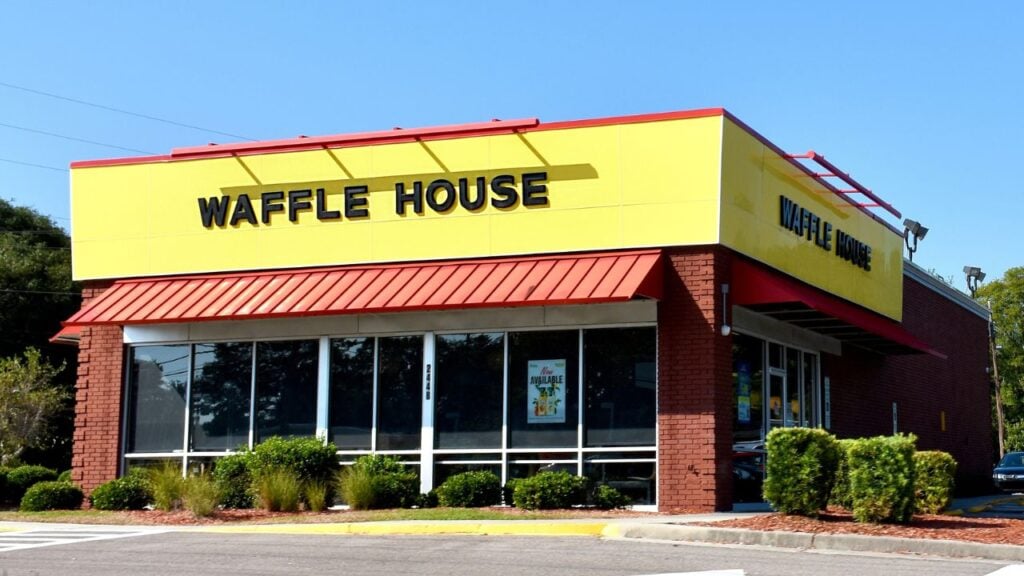
Waffle House's yellow sign glows over I-85 outside Kannapolis at 2 a.m., and a first-time visitor studies the menu like it's written in another language.
Three regulars down the counter already have their coffee topped off without asking, before that visitor even places an order.
9 Waffle House Mistakes North Carolina Regulars Never Make
11 North Carolina Habits That Give Away Someone Who Grew up There
Local boards run every liquor store in North Carolina, town by town and county by county, on hours they set themselves.
Newcomers to the Tar Heel State pull on locked doors constantly.
11 North Carolina Habits That Give Away Someone Who Grew Up There
