
9 Things Pennsylvania Utility Crews Can Legally Do in Your Yard Without Asking First

Think the fence around your Pennsylvania backyard decides who walks in?
It doesn’t.
A gas corridor crossing a yard in Allegheny County can run up to 60 feet wide, and the company holds the right to walk all of it.
These are the moves a Pennsylvania utility company can make in your yard without waiting for a yes.
Note: This is general information, not legal advice. Utility rules and easement terms are subject to change, so confirm the current requirements with the Pennsylvania Public Utility Commission.
1. Read the Meter Uninvited
Any Pennsylvania utility can send a worker across your grass to read the meter or test it.
You won’t get a heads-up.
State rules count refusal of access to the meter among the grounds for termination.
Chain the gate, and the bill still shows up.
Those same rules require an actual reading rather than an estimate at least once every 12 months.
The dog in the fenced backyard is yours to figure out.
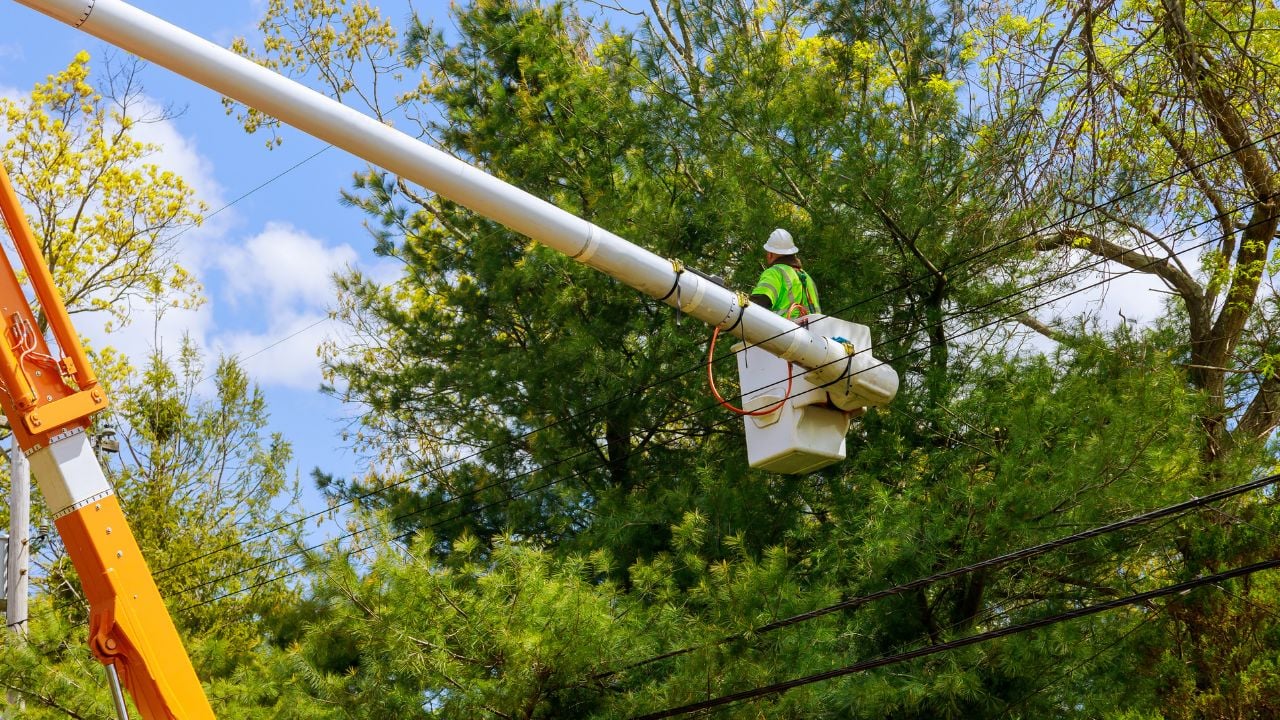
2. Cut Down Your Tree
PPL Electric Utilities, the power company for about 1.5 million Pennsylvania homes and businesses, will run crews along more than 4,750 miles of line this year to cut back trees and branches.
The owners of those trees don’t get a vote.
Inside a recorded right-of-way, a crew can take the whole tree rather than the limbs hanging over the wire.
The tree goes.
You keep owning the dirt it grew in.
The county keeps billing you property tax on it.
FirstEnergy tells homeowners that once a line-clearance expert finds an emergency safety hazard or a threat of immediate loss of electric service, its crews may enter your property and start pruning or removal without prior notice.
Crews move faster on a storm night.
When a limb comes down on a line at 2 a.m., nobody waits for the schedule.
3. Spray Herbicide on Your Brush
Pennsylvania’s line-clearance crews treat the brush in a power line corridor with power saws, mechanical equipment, or herbicides the Environmental Protection Agency has already approved.
The company picks the method.
Federal regulators say that choice sits primarily with the utility, subject to state and local rules.
The reason you can’t call off the sprayer sits in the easement or right-of-way agreement, which came attached to your deed and grants the right to keep that strip clear.
Selective spraying kills the tall species and leaves the low shrubs alone.
What grows back is meadow, not maples.
So the grasses and low shrubs under the wires aren’t an accident.
Somebody in a hard hat chose them for you.
4. Swap Your Meter Anyway
Under Act 129 of 2008, a Pennsylvania electric utility can pull the meter off your wall and set a smart meter in its place, whatever you told the last person who called about it.
The state Supreme Court settled the argument in 2022, holding that the law orders utilities to furnish smart meters and hands customers no opt-out.
Four customers had argued in that case that the radio signals were making them sick.
They lost.
Because the meter hangs on an outside wall at many Pennsylvania homes, the swap happens in your side yard while you’re at work.
5. Cut Your Service the Same Day
On a tampered meter, a Pennsylvania utility can shut your service off that same afternoon.
No warning letter first.
State rules allow immediate termination for unauthorized use, fraud about who the customer is, tampering with company equipment, or a tariff violation that puts safety at risk.
That work happens outside at your meter, whether or not anybody’s home.
The company can throw that switch remotely on a smart meter.
FirstEnergy still sends someone to the premises in person at disconnection, in line with the Public Utility Commission’s current rules.
You find out about the shutoff when the refrigerator stops humming.
The notice comes afterward.
Under those same rules, the company can hand it to somebody at the house or post it where you’ll see it.
Notice Isn’t Permission on a Pennsylvania Easement
A Pennsylvania utility crew can owe you notice and still not need your permission.
Notice means the company tells you a crew is coming.
Permission means you get to say no.
The easement that took permission away came with your deed, signed by an owner who may have moved out decades ago.
Outside that easement strip, a crew needs your say-so before it cuts, digs, or drives.
6. Paint Marks on Your Lawn
A locator working for a Pennsylvania utility can walk your lawn and paint the route of the buried lines onto your grass before anybody digs.
The dig that brings that locator out doesn’t have to be yours.
Somebody else’s project counts.
The excavator files a locate request at least three business days ahead of the work.
Each line’s owner then marks where it runs, at the site the excavator named on that request.
That’s how a gas main replacement on your street reaches your side of the curb: The service lines run from the main to the houses.
Under Pennsylvania law, that marking duty belongs to the company that owns the line.
You never called anybody.
The squiggle across your grass belongs to a project you may never see.
7. Walk the Corridor Behind Your Garage
Peoples Natural Gas sends inspection crews on foot along the pipeline corridors it holds across private property in western Pennsylvania.
No truck pulls up.
An easement gives Peoples permanent, limited access to operate, inspect, maintain, and replace that pipe.
The corridor runs up to 60 feet wide, with the pipe sitting three to six feet under the grass.
Inspectors look for leaks, fresh digging, and anything new parked on top of the line.
Peoples runs periodic aerial patrols over the same corridors, which is the part homeowners tend to notice.
The plane is the easy part to spot.
Somebody crossing your back fence with a clipboard startles people.
8. Send a Survey Crew
A Pennsylvania utility that holds eminent domain power can put a survey crew on your land before it owns any right to be there.
The state’s Eminent Domain Code lets a condemnor enter for studies, surveys, tests, soundings, and appraisals after giving you ten days of notice.
That’s notice, not consent.
Crews can set stakes, pull soil borings, and work out what the company would owe you if it ever claimed the strip for keeps.
The code makes the company pay for actual damage it causes on the way in.
If the two sides can’t agree on that number, the court assesses the damages or hands the question to a board of viewers.
A stake in your lawn doesn’t mean a pipeline is coming.
9. Clear Out What You Built
FirstEnergy, which sells power in Pennsylvania under the Met-Ed, Penelec, Penn Power, and West Penn Power names, publishes a list of what can’t sit inside a transmission right-of-way.
It’s a long list.
Buildings, sheds, barns, garages, swimming pools, decks, playgrounds, flag posts, signs, and fences all sit on it.
A well or a septic field can’t go in there either.
Anything left in the corridor is subject to removal.
The company also says it won’t repair or replace what its crews damage during emergency or maintenance work.
Measure before you pour concrete.
Psst! How much do you know about Pennsylvania’s power and pipeline history? Take our quiz and see if you can ace it.
Quiz
Keystone Power IQ
Answer these questions on Pennsylvania’s power plants, pipelines, and landmark infrastructure. We bet you can’t get them all right. Prove us wrong?
A coal seam fire has burned under one Pennsylvania borough since 1962. Which town emptied out because of it?
What Crews Owe Your Lawn
Columbia Gas of Pennsylvania buries all of its lines, so its crews dig on private property to reach them.
The company publishes what it puts back afterward.
Crews replace concrete with concrete and asphalt with asphalt, following the local code.
They fill the holes, spread topsoil, reseed the grass, and replant flower beds.
Nobody can seed frozen ground, so a crew that closes a trench in December comes back in spring for the grass.
The company won't fix unmarked private lines.
That exclusion covers invisible fences, sprinkler systems, septic fields, buried drains, and the water line running from a well.
Columbia Gas repairs a private line only when the property owner marked it before the digging started.
Those repairs land on you.
When the Company Has to Go to Court
Pennsylvania utilities sometimes have to prove a corridor in front of a judge.
A Berks County couple sued Metropolitan Edison in August 2017, calling the crews that kept coming onto their land a trespass.
Met-Ed answered that October with counterclaims of its own for breach of easement and trespass.
Those counterclaims won.
The corridor came from an easement agreement dated April 18, 1923.
Nothing in the record had ever narrowed the 200 feet it granted.
The Court of Common Pleas in Berks County ordered the swimming pool and the concrete patio out in November 2024, giving the couple 120 days to do the work themselves.
Superior Court affirmed that this February.
No crew touched the pool.
The three-judge panel marked the decision non-precedential, which means it settles that one yard and binds nobody else's.
That 1923 agreement sat in Berks County Miscellaneous Book 96 the whole time, which is where a title search turns up a grant nobody has thought about in a century.
The order also told the couple to pull out every other improvement standing inside those 200 feet.
What Pennsylvania's New Limits on Warrantless Property Searches Mean for Homeowners
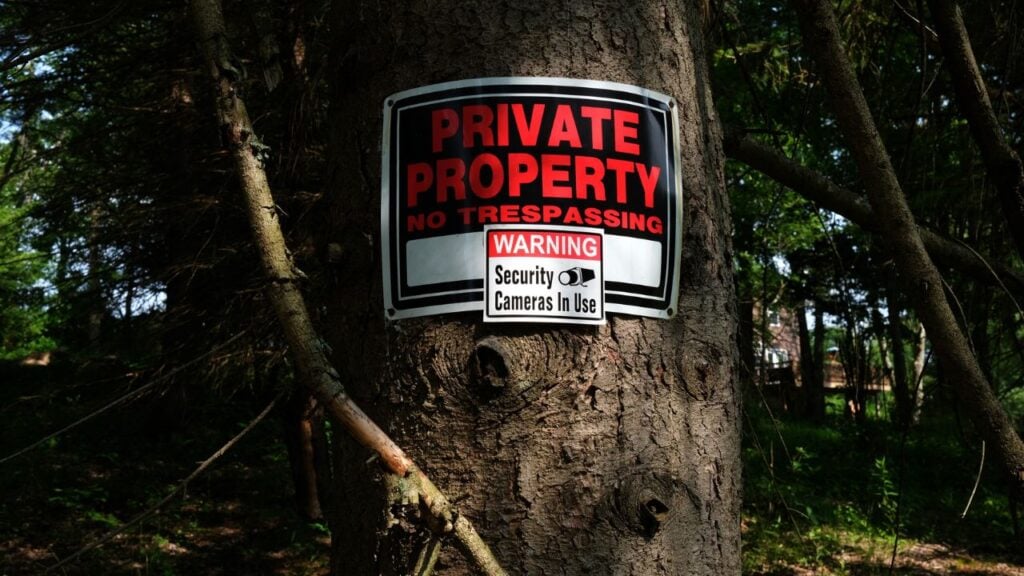
A "No Trespassing" sign on Pennsylvania land used to stop a nosy neighbor and nobody else.
The state Supreme Court changed who else has to respect it, and the new limits reach well past hunting camps.
What Pennsylvania's New Limits on Warrantless Property Searches Mean for Homeowners
8 Overlooked Thrift Store Sections Where Pennsylvanians Can Score the Best Finds

A shopper can walk all 30,000 square feet of a thrift store in New Holland and still miss the shelves worth stopping for.
Volunteers price those shelves without knowing what they're holding.
8 Overlooked Thrift Store Sections Where Pennsylvanians Can Score the Best Finds
