

9 Pennsylvania Utility Fees That Have Skyrocketed Since 2020

A rowhouse in Philadelphia gets more or less the same water bill for years, then two in a row that look nothing like the bills before them.
A third one follows the same pattern.
These are the Pennsylvania utility fees that have risen the fastest since 2020, one approved rate case at a time.
Note: This is general information, not financial or legal advice. Utility rates and fees are subject to change.
1. Philadelphia Gas Works’ Customer Charge
Philadelphia Gas Works, one of Pennsylvania’s largest natural gas utilities, has run two base rate cases since 2020, and both landed on the same flat monthly customer charge every residential customer pays.
The first came in November 2020, when the Public Utility Commission approved a $35 million increase phased in through January 2022, a total 5.2% rise for a typical residential heating customer.
Philadelphia Gas Works settled its next rate case with the commission in October 2025, and the flat monthly customer charge went up along with everything else.
That charge rose from $16.25 to $17.25 this time, on top of a $62 million base rate increase, about 9.3% more in annual revenue for a utility that hadn’t filed for a rate adjustment in two years.
It was the second increase since 2020 to reach that same line item on the bill.
The average residential bill moved from $92.60 to about $98.70 a month, and the new rates cover any gas used on or after Nov. 28, 2025.
2. Pennsylvania American Water’s Base Rate
Pennsylvania American Water’s bills had already risen 35% since 2020 before the state’s latest decision on the company even landed.
Kimberly Barrow, a commissioner on the Pennsylvania Public Utility Commission (PUC), said so herself at a July 2026 public meeting, right before her own commission voted to approve yet another increase.
She said the commission wasn’t striking the right balance on a company that’s “got the highest rates in the state, 35% in increases.”
That newest increase adds $74.9 million in new annual revenue for the company, a 4.75% jump for water service and a 14.17% jump for wastewater.
It’s the fourth base rate hike in six years.
The new rates took effect Aug. 13, 2026, on a company that serves roughly 682,000 water customers and 97,000 sewage disposal customers across 37 counties, among the largest customer bases of any utility in the state.
3. PECO’s Electric Distribution Charge
PECO, the electric and gas utility serving southeastern Pennsylvania, has settled two electric distribution rate cases since 2020, and regulators trimmed both down from what the company originally asked for.
The first, approved in November 2021, added $132 million in new annual revenue instead of the $246 million PECO requested, and it raised a typical residential bill $6.66 a month, to $106.95, effective Jan. 1, 2022.
PECO’s monthly distribution customer charge rose again in the case regulators approved in December 2024, this time up 7.1%.
That’s $0.75 more every month just to stay connected to the grid, before the meter counts a single kilowatt-hour.
PECO wanted more.
The company’s original request would have raised that same charge 36%, and regulators cut it down before signing off.
Once regulators folded in every surcharge and generation cost, a typical residential customer using 700 kilowatt-hours a month saw their total bill rise $13.58, to $149.43, effective Jan. 1, 2025.
PECO provides electric service to roughly 1.7 million customers across southeastern Pennsylvania, and it agreed not to file another general electric rate increase before March 2026.
What the PUC’s Percentage Covers
Most of the percentages in this article come from a Pennsylvania Public Utility Commission distribution rate case, not the whole bill.
Philadelphia’s water and stormwater figures are the exception, since the city’s own independent Rate Board sets those on the whole bill, not just a distribution charge.
Distribution covers the wires, pipes, and meters that a company like PECO or Duquesne Light owns and maintains.
Supply costs, the actual electricity or gas itself, move on a separate pricing schedule that generation companies set, not the PUC.
A 9% distribution increase from Columbia Gas can still land on top of a supply price that already moved for reasons that have nothing to do with the settlement.
4. Columbia Gas of Pennsylvania’s Distribution Charge
Columbia Gas of Pennsylvania has settled two distribution rate cases since 2020, and regulators trimmed both requests by roughly 40%.
The first, approved in December 2021, added $58.5 million in new annual revenue instead of the $98.3 million Columbia Gas sought, and it pushed a typical customer’s bill from $100.77 to $109.10 a month, an 8.27% jump.
Columbia Gas settled its next rate case in November 2024, capping the increase at $74 million a year, a 40% cut from the company’s original $124.1 million ask.
Even trimmed, the change still reached deep into a typical customer’s bill.
A residential customer using 70 therms of gas a month saw their monthly bill rise from $118.16 to $128.06, a 9.06% jump.
That bill rose again before anyone touched the thermostat.
Columbia Gas serves about 445,000 customers across 26 counties in western and south-central Pennsylvania, and the new distribution rates took effect Dec. 14, 2024.
5. UGI Utilities’ Gas Customer Charge
UGI Utilities, the natural gas provider serving parts of central and eastern Pennsylvania, has run at least two base rate cases since 2020, and regulators cut both requests down before approving them.
The first, approved in October 2020, added $20 million in new annual revenue instead of the $74.6 million UGI requested, a three-year phase-in that raised the average heating customer’s bill 3.8% by October 2021.
UGI pushed for a 14.1% increase on its gas division again in 2025, and regulators knocked that down to 8.9% before approving it.
That’s the second time in five years regulators cut a UGI rate request by more than a third.
A typical household using 72.9 hundred cubic feet of gas a month saw its bill rise from $103.57 to $110.51, a 6.7% jump, once the settlement took effect Oct. 28, 2025.
The monthly customer charge itself rose too, up $1.25 instead of the $4.95 UGI originally proposed.
6. Aqua Pennsylvania’s Wastewater Charge
Aqua Pennsylvania has settled two water and wastewater rate cases since 2020, and regulators cut both requests by roughly 30%.
The first, approved in May 2022, added $50.51 million to Aqua’s water revenue and $18.74 million to its wastewater revenue, effective for service starting May 19, 2022.
Aqua Pennsylvania asked the Public Utility Commission for $126.7 million more a year across its water and wastewater divisions again in 2024.
Regulators approved $73 million instead, a 42% cut.
Regulators still let most of that request through anyway.
The wastewater side alone still added up for customers in Rate Zone 1, a monthly bill rising $5.36, from $81.18 to $86.54, a 6.6% increase.
Water customers in that same zone saw their own bill rise $9.95 a month, to $90.86.
Aqua Pennsylvania’s water division alone serves roughly 445,000 customers spread across 32 counties.
7. Duquesne Light’s Distribution Rate
Duquesne Light, the electric utility serving Pittsburgh and its suburbs, has settled two distribution rate cases since 2020, and the first ended a stretch with no increase at all.
Regulators approved that case in December 2021, Duquesne Light’s first base rate increase since 2018, adding $74.2 million in new revenue instead of the $115 million the company sought and raising a typical 600-kilowatt-hour bill $4.23 a month, or 4.23%, effective Jan. 15, 2022.
Duquesne Light asked for $101 million in new distribution revenue again in 2024, and the Public Utility Commission settled the case for roughly half that.
Regulators still let half the original ask through.
A typical residential customer using 600 kilowatt-hours a month still watched their bill move from $130.67 to $135.88, a 3.99% increase.
Duquesne Light’s own proposal would have pushed that bill to $139.19, a 6.52% jump.
The new rates took effect Dec. 20, 2024, and Duquesne Light agreed not to file another general distribution increase before March 2026.
More than 600,000 customers across Allegheny and Beaver counties felt this one land.
Psst! How much do you know about Pennsylvania’s utility history? Take our quiz and see how many you can get right.
Quiz
Pennsylvania Utility IQ
Answer these questions on Pennsylvania’s utility history and rules. We bet you can’t get them all right. Prove us wrong?
Which everyday Pennsylvania expense is exempt from the state’s 6% sales tax when it’s billed to a home address?
8. Philadelphia Water Department's Stormwater Charge
Philadelphia's Water Department answers to an independent city Rate Board, not the state Public Utility Commission that sets rates for every other utility on this list.
That board has raised rates in three separate proceedings since 2020, most recently in September 2024.
Its 2021 rate proceeding alone pushed a typical residential water, sewer, and stormwater bill from $66.73 to $69.15 in September 2021, then to $73.58 by September 2022.
The board approved another rate change effective Sept. 1, 2024, and the department's own Stormwater Charge, the line item that funds runoff management citywide, rose from $18.50 to $20.41 in that single adjustment.
Every other line on the bill rose with it.
A typical residential customer's total monthly bill rose 12.3% that year alone, from $74.81 to $84.03.
A second increase followed in September 2025, pushing that same typical bill to $91.31 a month.
9. Pittsburgh Water and Sewer Authority's Combined Bill
Pittsburgh Water and Sewer Authority (PWSA) isn't a private utility company. The city created it as a municipal authority back in 1984.
It has settled two Public Utility Commission rate cases since 2020, and the first one set up the exact bill the second case built on.
Regulators approved that first case in November 2021, phasing in $20.998 million in new revenue instead of the $32.2 million PWSA requested and raising a typical bill from $79.34 to $86.43 by January 2023, an 8.9% increase.
PWSA originally proposed a three-year, $146.1 million increase across water, wastewater, and stormwater service in its next case.
Regulators trimmed that to a single-year, $35.9 million settlement instead.
Sixteen percent still landed on customers' bills.
A typical residential bill covering 3,000 gallons of water a month still jumped $13.84, from $86.43 to $100.27, a 16% increase.
The new rates covered service starting Feb. 15, 2024, and the settlement kept the authority from filing another increase request until 2026 at the earliest.
Pittsburgh Water and Sewer Authority serves about 100,000 residential, commercial, and industrial customers across the city and its surrounding communities.
The full settlement, including every public comment filed against it, still sits in the Public Utility Commission's docket for anyone who wants to read the fine print for themselves.
8 Overlooked Thrift Store Sections Where Pennsylvanians Can Score the Best Finds

A shopper walks all 30,000 square feet of the Re-Uzit Shop in New Holland and leaves with two shirts, unknowingly passing the good shelves four times.
The volunteers pricing those shelves often have no idea what they're holding.
8 Overlooked Thrift Store Sections Where Pennsylvanians Can Score the Best Finds
9 Signs You Grew up in a Pennsylvania Steel Town
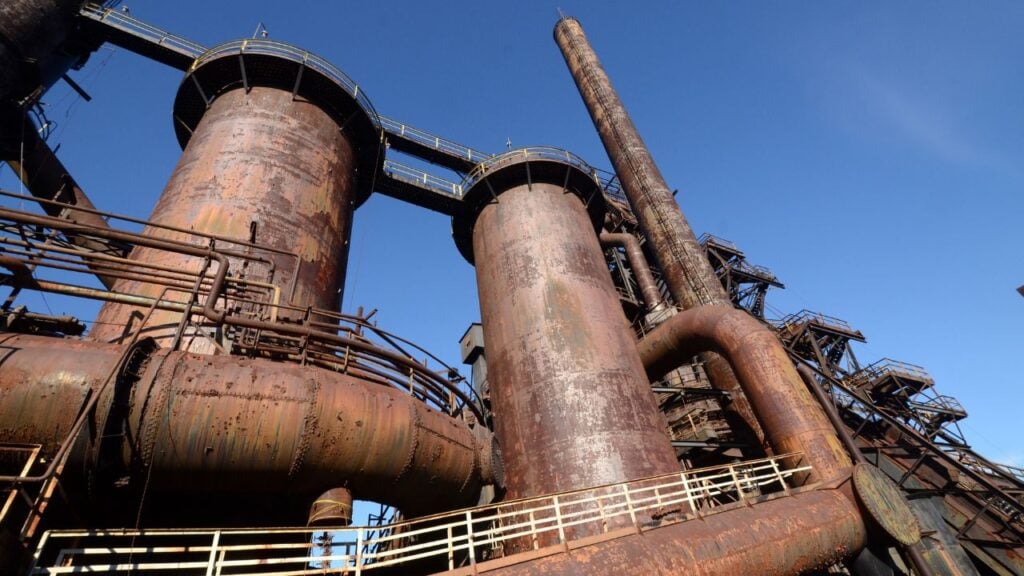
Bethlehem Steel once ran the biggest mill many Pennsylvania families had ever seen, and an entire way of raising a family grew up around it.
Every Sunday, every summer, and every ordinary Tuesday bent around one furnace's schedule.
