
9 Ohio Car Insurance Discounts Worth Asking About Today

The average Ohio driver pays $2,259 a year for full coverage car insurance.
You don’t necessarily have to be among them.
State Farm, Nationwide, and GEICO all build discounts into their policies that many drivers never ask about.
These are the discounts worth bringing up with your car insurance agent this week.
Note: This is general information, not insurance advice. Coverage and terms are subject to change, so check the specifics with your insurer or agent.
1. Bundling Home and Auto
Nationwide, headquartered in Columbus, offers discounts to Ohio drivers who combine home and auto coverage under one company.
The company advertises an average savings of $1,032 a year for bundled customers.
One bill, one company.
Both policies have to sit with Nationwide for the credit to apply.
2. Letting Progressive Track You
An average $164 Snapshot discount lands on a new Ohio customer’s Progressive bill just for signing up.
Snapshot watches braking, mileage, and what time of day a car is on the road, tracked through a phone app or a plug-in device.
Drive well for six months, and Progressive resets the rate again.
Qualifying drivers save an average of $328 a year at that reset.
Not everyone comes out ahead.
Progressive’s own numbers show about 2 in 10 Snapshot participants see their rate rise instead of drop.
3. Keeping Grades Up
Keeping a report card above a set average can knock money off a Grange Insurance policy through the company’s Good Student Discount.
The credit applies once a parent or student shares the educational proof for whoever’s listed as a student driver on the policy.
Full-time high school and college students both qualify.
Good grades pay off.
4. Paying by the Mile
Nationwide’s SmartMiles program pays Ohio drivers up to a 10% discount for safe driving once the first renewal comes around, layered on a rate already priced by the mile instead of a flat yearly number.
Not just a mileage break.
A driver who works from home, rides transit, or shares a second car with the household often racks up few enough miles to notice a difference already.
The safe-driving credit stacks on top of that, rewarding habits behind the wheel and not just the odometer reading.
5. Taking a Refresher Course
State Farm’s Defensive Driving Course Discount isn’t aimed at teenagers.
In Ohio, State Farm lists it for drivers 60 and older, or for any driver who finishes an approved Motor Vehicle Accident Prevention Course.
A rare age-based break.
Complete the course, and the discount holds for three years before it needs renewing.
Psst! How much do you know about car insurance discounts? Flip each card to see if you called it right.
6. Serving in the Military
The Government Employees Insurance Company (GEICO) knocks up to 15% off an Ohio driver’s premium for veterans, active-duty service members, National Guard members, and reservists.
Not just active duty.
GEICO also runs a separate emergency deployment discount for service members called up under a declared military emergency.
One form, verified once, covers the life of the policy.
7. Going Paperless
Grange Insurance, headquartered in Columbus, lowers a bill for customers who switch off paper statements.
The Paperless Discount stacks on top of whatever else a driver already qualifies for.
Grange also credits a driver who pays the full premium upfront instead of spreading it across monthly installments.
Both stack together.
8. Installing an Anti-Theft Device
State Farm reduces the comprehensive portion of an Ohio premium for a car fitted with a factory or State Farm-approved anti-theft device.
An alarm, a tracking system, or a built-in immobilizer can all qualify, depending on the make and model.
Proof usually means a receipt or a dealer sticker showing the equipment came with the car or went in after.
Ask first.
9. Staying on a Parent’s Policy
Grange Insurance calls this one the Legacy Loyalty Discount, and it’s built for a driver stepping off a parent’s or guardian’s Grange policy to start coverage of their own.
A young driver who’s been listed on a family’s Grange policy for years carries that history into their first individual policy instead of starting from zero.
Fewer surprises.
Ask whether the discount transfers before canceling the old policy or adding a new car under someone else’s name.
Why so Many Insurers Call Ohio Home
Ohio doesn’t just license these carriers for the discounts above.
Nationwide and Grange Insurance both run their headquarters out of Columbus, Progressive out of Mayfield Village, and Westfield Insurance out of Westfield Center in Medina County.
Four insurers, one state.
Westfield runs its own telematics discount program, called MissionSafe, which tracks phone use, braking, and speed through an app and can knock off up to 40% at renewal for safe Ohio drivers.
A hometown discount isn’t a stretch when the company started down the street.
What Ohio Requires You to Carry
Ohio’s Bureau of Motor Vehicles sets the state’s floor for coverage at 25/50/25: $25,000 per person and $50,000 per accident for injuries, plus $25,000 for property damage.
Every discount on this list applies on top of whatever coverage level an Ohio driver carries.
The bare minimum.
A driver who carries only that minimum saves fewer raw dollars than a driver carrying full coverage, since the percentage comes off a smaller base.
What Stacking Several Discounts Saves
The average Ohio driver pays $2,259 a year for full coverage, so even a modest discount adds up fast.
Stack enough discounts, and it’s tempting to assume the bill keeps shrinking without limit.
Not quite.
How Far Stacked Discounts Go
Ohio drivers who qualify for every discount on this list still won’t watch their bill disappear.
Most insurers cap total discounts around 25% to 30% of the premium, no matter how many credits a policy carries.
A single discount can also apply to only one piece of coverage, like comprehensive, instead of the full bill.
Two 10% discounts rarely add up to a flat 20% off the total for that reason.
Run the math on Ohio’s $2,259 average bill, and the 25% to 30% cap tops out around $565 to $677.
That’s close to four months of premium, earned by stacking more than one discount instead of settling for a single one.
The States With the Worst Drivers, Ranked. Here’s Where Ohio Falls
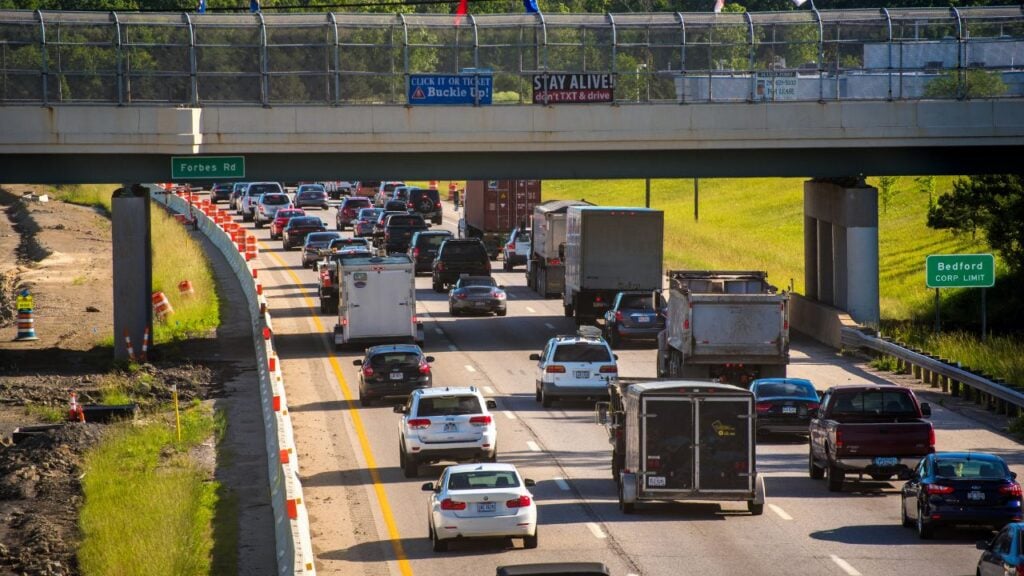
Ohio’s traffic deaths dropped for the fourth straight year in a row, but a nationwide study measured something different: How drivers behave behind the wheel, not just how many crashes end badly.
The rankings don’t flatter every state, and Ohio’s placement might explain why so many local insurers built a discount program around safe driving in the first place.
The States With the Worst Drivers, Ranked. Here’s Where Ohio Falls
8 Reasons People Are Leaving Ohio in 2026

Ohio’s housing stays cheap next to much of the country, but that hasn’t been enough to keep everyone from packing up.
A wave of residents named their own reasons for leaving in 2026, and the list goes well beyond the weather.
