
9 Texas Small Towns Locals Protect From Tourist Guides

Ask what holds the cable steady on the Los Ebanos ferry, and the answer isn’t a winch or a dock cleat.
It’s a Texas ebony tree, rooted on the riverbank for generations.
Some Texas towns couldn’t handle a crowd even if they wanted one.
These are the small towns across Texas that locals steer tourist guides away from, town by town, reason by reason.
Wimberley
Wimberley’s Jacob’s Well has stayed closed to swimmers every summer since 2022, and Hays County isn’t in a hurry to reverse that.
The spring feeding that famous blue hole normally runs at four to six cubic feet per second.
It’s been running at zero.
That drop leaves Cypress Creek more exposed to pollution, since a healthy flow is what naturally flushes the creek clean.
Locals would rather see disappointed swimmers turn around in the parking lot than watch the well die for a photo.
Not worth the shot.
Why Rain Alone Won’t Reopen Jacob’s Well
Jacob’s Well’s low flow doesn’t trace back to a dry summer sky alone, and Wimberley isn’t the only small Texas town guarding a limit like this one.
Hays County ties it to how much groundwater upstream users pump from the Trinity Aquifer for lawns and new subdivisions, long before that water ever reaches Wimberley.
That’s why county officials say a wet season by itself won’t bring swimming back. The fix has to include less pumping across the whole region, not just more rain falling on it.
Fort Davis
Fort Davis sits inside Jeff Davis County, which passed one of the world’s first outdoor lighting ordinances back in 1976.
Only Tucson and Flagstaff, Arizona had anything similar at the time.
The rule wasn’t about keeping the streets pretty.
McDonald Observatory needs skies free of stray light to keep doing its research, and Fort Davis sits close enough to matter.
The dark was the point.
Every business and homeowner within a wide radius of the observatory has to shield their outdoor lights or swap in low-glow bulbs, and a flood of new motels or gas-station signage would undo decades of that work fast.
Rocksprings
The Devil’s Sinkhole Society keeps Rocksprings’ biggest attraction locked behind a phone call.
It only lets visitors into the cave on prearranged guided tours, never as a walk-up stop.
About 3 million Mexican free-tailed bats roost in that sinkhole from summer through October, and a single evening emergence can look like smoke pouring out of the ground.
No walk-ins allowed.
A crowd of strangers wandering the rim on their own could spook the colony right as it’s raising pups, so the reservation system keeps every visit small and supervised.
Vanderpool
Vanderpool counted 22 residents in its last full population tally, and Lost Maples State Natural Area next door draws more visitors on a single fall Saturday than the whole town has neighbors.
Texas Parks and Wildlife now tells visitors to reserve a pass online before showing up in October or November.
The park fills to capacity on many of those days.
Full means full.
Bigtooth maples put down shallow roots, and the cap exists to keep boots off them, not just to shorten the parking line.
Locals here would rather see a family turned back at the gate than watch the grove that draws them get trampled bare.
A guidebook sending more people to Vanderpool without mentioning that cap just lengthens a line that’s already full.
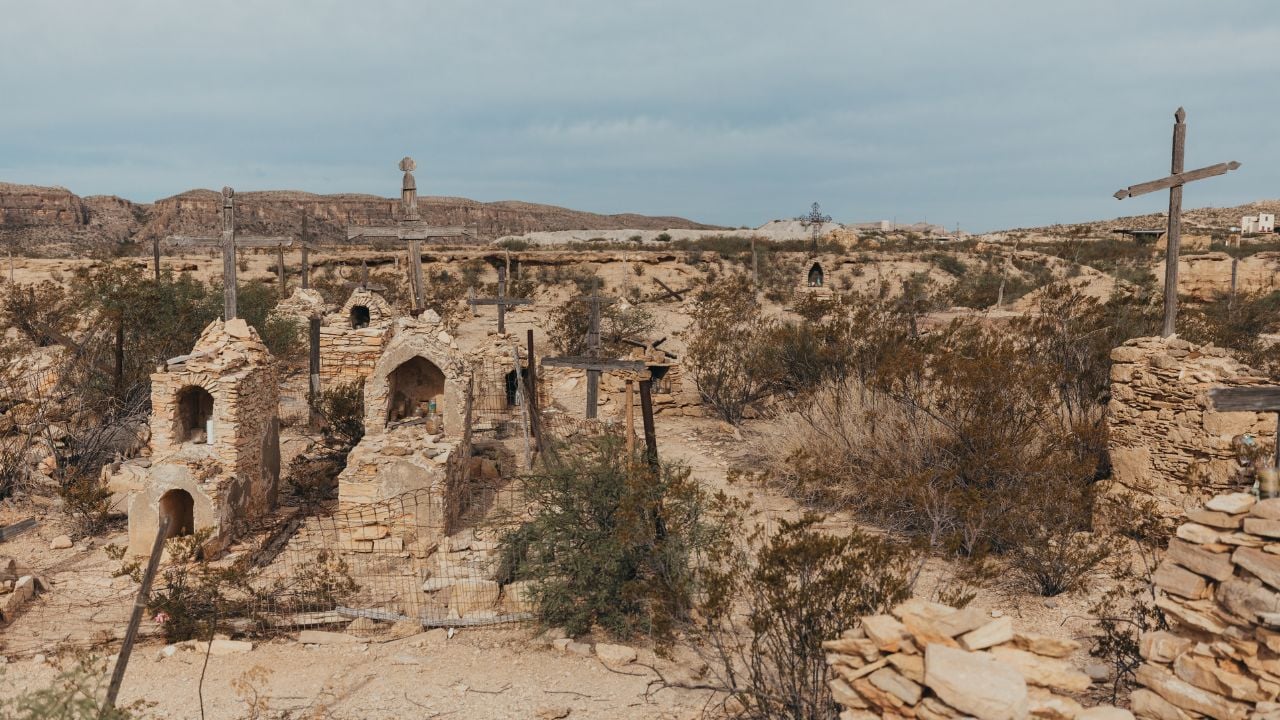
Terlingua
Terlingua’s water committee started rationing wells to its own residents in September 2024.
Committee chair Larry Sunderland said the wells were never drilled to cover both the people who live there and the visitors who show up every winter.
The math never worked.
One well had already run dry back in 2018.
Every gallon that goes to a rental cabin’s shower is a gallon a rancher’s family doesn’t get, so word-of-mouth growth is the last thing the water committee is chasing.
Psst! How much do you know about small-town Texas travel? Take our myth-or-fact quiz and see how many you can get right.
Los Ebanos
Los Ebanos’s hand-pulled ferry is the only one left on the entire US-Mexico border, and it can’t fit a tour bus even if it wanted to.
The cable-pulled boat carries about three vehicles and a handful of passengers per crossing.
Ferrymen pull the rope by hand, the same way the crossing has worked since 1950.
No motor. No shortcuts.
Marco Garza, a co-owner of the ferry, says the ferrymen keep it hand-pulled on purpose, calling it a symbol and identity for the border communities on both sides of the river.
239 residents called Los Ebanos home at the last census, and a sudden wave of sightseers would swamp the only official border crossing the town has.
Junction
Junction has about 2,451 residents, and the North and South Llano Rivers meet just outside downtown, which is where the town’s name comes from.
South Llano River State Park sits four miles south of town.
Texas Parks and Wildlife shuts the park’s day-use area down to just five hours a day, 10 a.m. to 3 p.m., every year from October 1 through March 31.
That’s not a full day.
The shortened hours protect one of the largest wintering wild turkey roosts in Central Texas, hundreds of birds settling into the same bottomland pecan grove all winter long.
A tour group chasing sunrise photos in January would walk straight into the stillness the park’s own schedule exists to protect.
Port Mansfield
Port Mansfield holds around 130 residents, and the town doesn’t even run its own post office.
Getting to Port Mansfield itself is easy. State Highway 186 runs straight into town.
Getting to the actual Gulf of Mexico beach is a different story.
No causeway carries a car from Port Mansfield to open water, unlike the drive locals get at South Padre Island or Port Aransas.
Reaching the Gulf takes a boat and a nine-mile run across the Laguna Madre.
Plan ahead or wait.
That boat-only stretch protects the Laguna Madre’s seagrass beds and the redfish that draw anglers to Port Mansfield in the first place, since heavier boat traffic tears up the shallow flats those fish depend on.
Locals whose whole living comes from that water would rather keep the crowds thin than watch boat traffic churn up the flats.
Panna Maria
Panna Maria’s population has hovered between about 45 and 96 people for years, anchored by the oldest Polish church in the country.
The town saw a true flood of visitors only once, when about 10,000 people showed up in 1966 for the millennium of Polish Christianity, according to the Texas State Historical Association.
Not the norm.
A town that size can host a Sunday Mass crowd. It can’t host a tour-bus circuit stopping through every weekend.
The church and its cemetery stay a working parish first, a museum piece second. The families still worshiping there guard that order.
Ask a Panna Maria neighbor for directions, and you’ll get the church.
Ask where the best photo spot is. You’ll get a shrug.
8 Texas Small Towns Locals Love (and 3 Tourists Overrun)
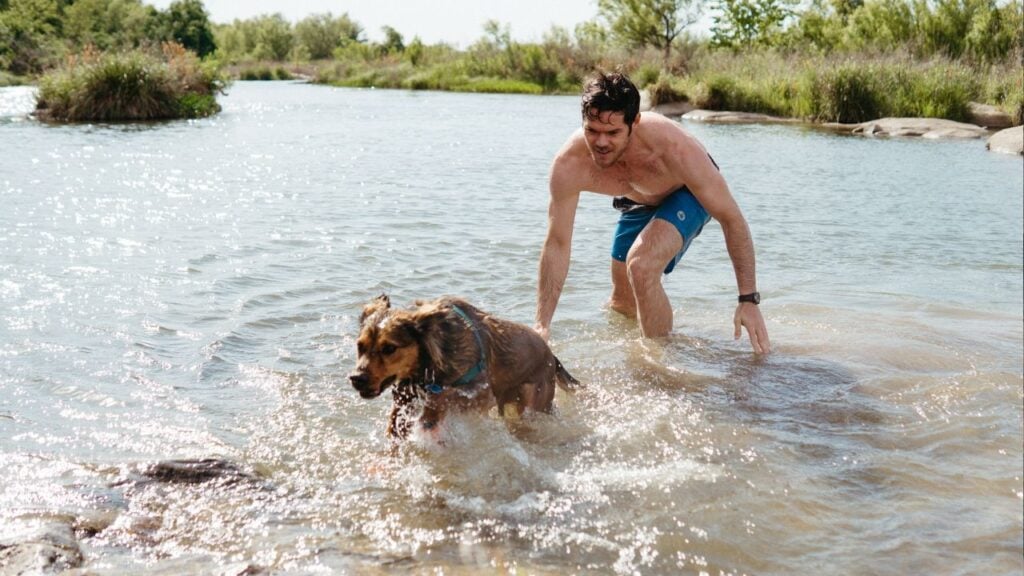
About 300 people live in Turkey, Texas, and roughly 7,000 show up every spring to dance in the streets.
Not every small town minds the crowd, and some have made peace with the trade-off.
8 Texas Small Towns Locals Love (and 3 Tourists Overrun)
9 Odd Texas Laws Most Americans Have Never Heard Of
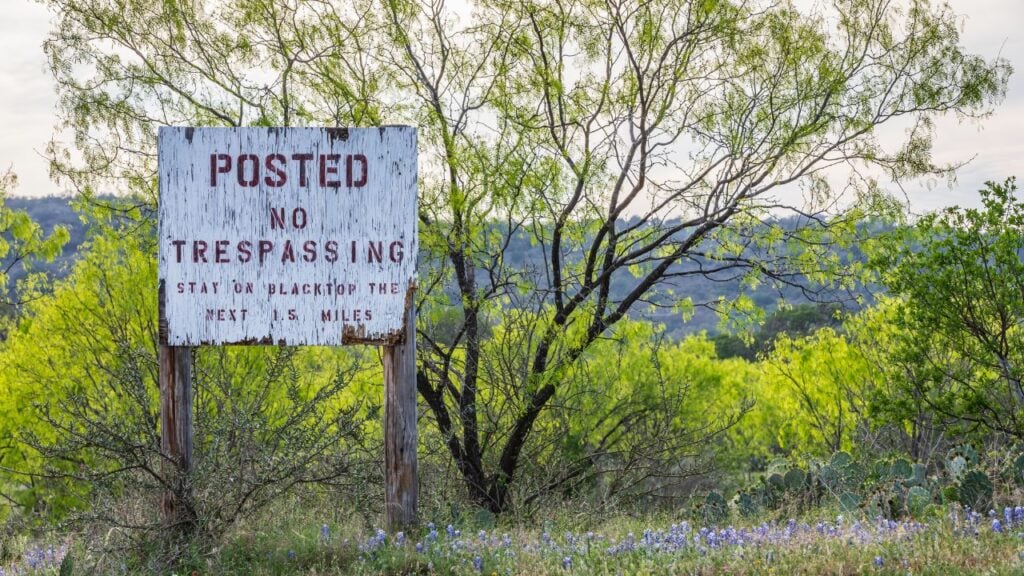
Everything is bigger in Texas, including the surprises buried in its law books.
Some rules protect everyday freedoms. Others govern situations many people would never picture needing a law at all.
