
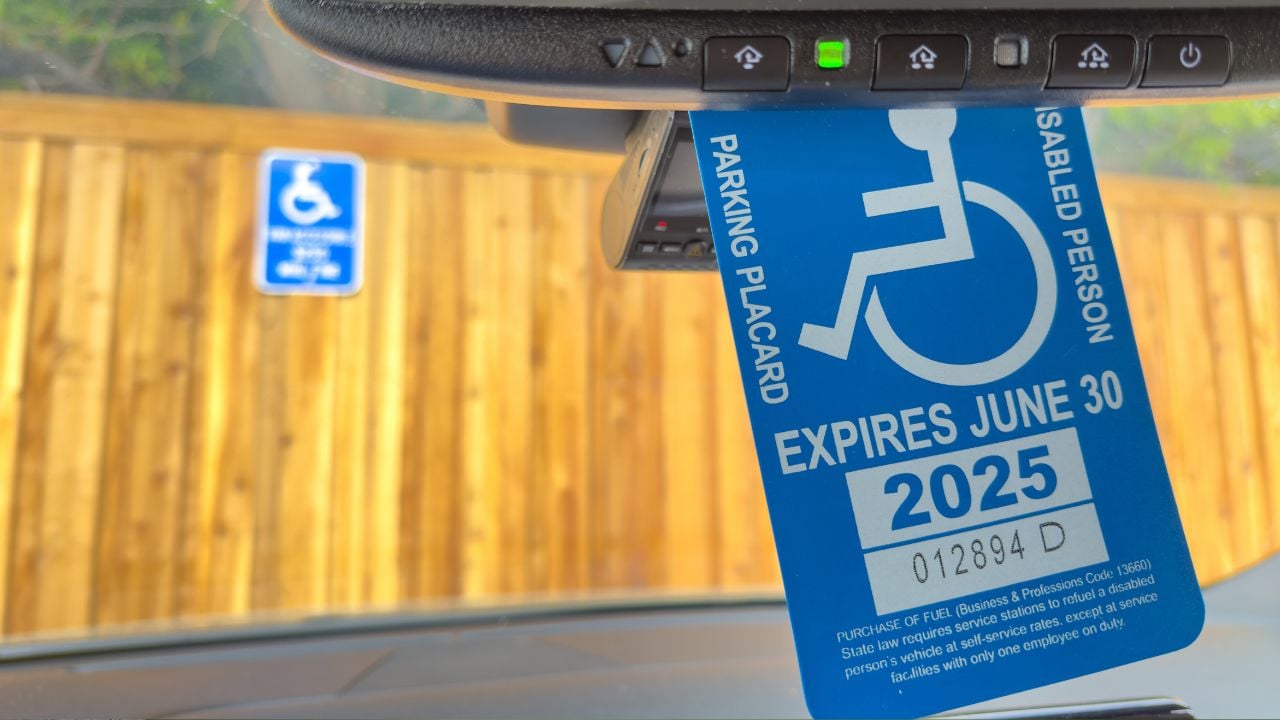
How to Get or Renew a Disabled Parking Placard in Pennsylvania

Getting a disabled parking placard in Pennsylvania comes down to one PennDOT form, MV-145A, and a signature from a licensed health care provider confirming you meet one of eight qualifying conditions.
PennDOT doesn’t charge a cent for it.
Renewing the placard is even simpler.
A permanent Pennsylvania placard lasts five years.
PennDOT mails the renewal paperwork about 60 days before it expires, with no new doctor’s visit required.
Pick the wrong placard type on the form, though, and the whole timeline changes.
Note: This is general information, not legal advice. Placard rules, forms, and fees are subject to change, so confirm the current requirements with PennDOT’s Bureau of Motor Vehicles.
Who Qualifies for a Disability Placard in Pennsylvania
Pennsylvania only issues a disability placard once Form MV-145A confirms the applicant meets one of eight medical conditions PennDOT lists right on the form.
Legal blindness qualifies.
So does losing full use of one or both arms, or needing a wheelchair, brace, cane, crutches, or another mobility aid just to get around.
A lung condition severe enough to limit breathing counts too, along with a heart condition a cardiologist has classified as Class III or IV.
An arthritic, neurological, or orthopedic condition that keeps someone from walking 200 feet without stopping to rest also makes the cut.
Not every condition counts.
Pennsylvania only needs one of those eight boxes checked, not a combination, so a single qualifying condition is enough to move forward with the application.
A spouse, a parent, or another caregiver can apply on behalf of a qualifying person too, which matters for a Pennsylvanian who can’t fill out the paperwork alone.
How to Apply for a Disability Placard in Pennsylvania
Applying for a Pennsylvania disability placard means filling out Form MV-145A from top to bottom, not just the eligibility section.
Section A collects the basics: Name, address, and a Pennsylvania driver’s license or ID number.
Section B is where a licensed health care provider, a physician, chiropractor, optometrist, podiatrist, physician assistant, or certified registered nurse practitioner, signs off on the qualifying condition.
A permanent placard has a second certification path many applicants never notice.
A police officer can certify only two of those eight conditions instead of a health care provider: Not having full use of a leg or both legs, or being blind.
The other six conditions, and every temporary placard application, still need a health care provider’s signature.
One form, start to finish.
Mail the finished form to PennDOT’s Bureau of Motor Vehicles in Harrisburg, or bring it in person to the Riverfront Office Center.
Applying online works too, straight through PennDOT’s own placard portal.
Permanent vs. Temporary Placards
An applicant chooses between two very different placards before PennDOT mails anything out.
Five years is how long a permanent placard stays valid, issued for a condition that isn’t going away.
A temporary placard, by contrast, is meant for a condition expected to improve.
PennDOT caps it at six months, with zero renewals.
Six months, then it’s done.
Recovering from knee surgery or a broken leg is the kind of shorter-term situation a temporary placard tends to fit.
Multiple sclerosis and a spinal cord injury are the kind of lasting conditions that call for a permanent placard instead.
A doctor has to recertify the condition from scratch if a temporary placard holder still needs a placard after that window closes.
Check the wrong box.
A permanent-condition applicant then ends up reapplying every six months instead of settling in for five years.
Read the form twice before mailing it.
Psst! How much do you know about Pennsylvania’s roads and driving laws? Take our quiz and see how many you can get right.
Quiz
Pennsylvania Driving History IQ
Answer these questions on Pennsylvania roads, PennDOT, and the state’s driving laws. We bet you can’t get them all right. Prove us wrong?
Pennsylvania’s newest hands-free driving law, Paul Miller’s Law, took effect in what year?
How to Renew a Permanent Placard
Renewing a Pennsylvania placard starts about 60 days before the five-year clock runs out, when PennDOT mails a renewal notice to the address on file.
No notice, no problem.
A placard holder who never gets the renewal notice in the mail can still start the renewal directly through PennDOT's online placard portal or by requesting a fresh copy of Form MV-145A.
Renewing a Pennsylvania Placard Skips the Doctor's Office
Renewing a permanent placard only requires completing Sections A and E of Form MV-145A.
Section B, the part where a health care provider certifies the disability, applies only to a brand-new application.
A renewal doesn't reopen the medical question at all, so a placard holder whose condition hasn't changed skips a fresh doctor's visit entirely.
What It Costs and How Long It Takes
A Pennsylvania disability placard costs exactly nothing.
PennDOT doesn't charge a placard fee, whether it's a first application, a five-year renewal, or a replacement for a placard that's lost or stolen.
A disability registration plate is a different request, made on a separate form.
That plate does carry a normal plate fee.
The wait is short too.
PennDOT typically works through a completed MV-145A within a couple of weeks of receiving it, though a busy stretch can push that further out.
Mailing the form in adds a few extra days on each end, so applying through the online portal usually shaves time off both directions.
Pennsylvania issues the placard to the person, not the vehicle, so it rides along in whichever car that person happens to be using that day.
Hang it from the rearview mirror once the car is parked.
Take it down again before pulling back into traffic.
Psst! How ready are you to apply for a Pennsylvania placard? Run through this checklist and see where you land.
Replacing a Lost, Stolen, or Never-Received Placard
Losing a Pennsylvania placard doesn't mean starting the whole application over.
The same Form MV-145A handles a replacement request, with a box to check for Defaced, Lost, Stolen, or Never Received.
PennDOT voids the old placard number the moment it issues a new placard, so a found placard can't be used again once the replacement ships.
A "Never Received" claim works the same way if a renewal notice or a fresh placard never showed up in the mail within 90 days.
Found it later?
Send the old placard back to PennDOT rather than keeping two in the glove compartment.
FAQ
Quick answers to what Pennsylvania drivers ask most about getting and renewing a disability placard.
Straight answers, no fluff.
What form do I need to get a disabled parking placard in Pennsylvania?
Pennsylvania uses Form MV-145A for a new application, a renewal, or a replacement. A licensed health care provider certifies the disability, though a police officer can do it instead for two of the eight conditions: Leg mobility loss or blindness.
How much does a Pennsylvania disability placard cost?
Nothing. PennDOT issues the placard itself free of charge, for a first application, a renewal, or a replacement.
How long does a Pennsylvania disability placard last?
A permanent placard is valid for five years. A temporary placard covers up to six months and can't be renewed or extended.
How do I renew my Pennsylvania disability placard?
PennDOT mails a renewal notice about 60 days before a permanent placard expires. Complete Sections A and E of Form MV-145A, or renew online, and no new doctor's certification is required.
What do I do if my Pennsylvania placard is lost or stolen?
Mail Form MV-145A back to PennDOT and check the Lost or Stolen box in the replacement section. The old placard number becomes void as soon as PennDOT issues the new placard.
A Placard Perk for Disabled Veterans
Pennsylvania issues one more placard-adjacent option worth knowing about, a Severely Disabled Veteran plate tied to a full U.S. Department of Veterans Affairs (VA) disability rating and applied for on Form MV-145V.
That plate comes with full placard parking privileges plus free annual registration, a detail many eligible veterans never realize they can claim.
Many veterans miss it.
8 Red Flags That Tell Pennsylvanians It's Time to End a Houseguest's Stay

A guest who overstays a Pennsylvania welcome rarely announces it.
The signs show up in smaller ways first: Many hosts miss every one of them until the visit drags into its second week.
8 Red Flags That Tell Pennsylvanians It's Time to End a Houseguest's Stay
6 Restaurant Chains That Started in Pennsylvania and Went National

A handful of household-name restaurant chains trace back to a single Pennsylvania storefront.
One recipe took a dozen failed tries before the chain kept it on the menu.
6 Restaurant Chains That Started in Pennsylvania and Went National
