
9 Forgotten Southern Suppers That Vanished From South Carolina Kitchens

Think you could set a proper South Carolina supper table using only what a family cooked a hundred years ago?
Many people wouldn’t make it past fried chicken and rice.
A whole shelf of South Carolina cooking slipped away since then, gone before anybody bothered to write the date down.
These are the South Carolina suppers that used to be ordinary and have all but vanished.
1. Terrapin Stew
Terrapin stew once fed South Carolina families for next to nothing, built from a marsh turtle many people today have never tasted or even heard of.
Diamondback terrapins fill South Carolina’s tidal creeks and salt marshes, and coastal families once caught them straight from the mud as a matter of course, not a luxury, enslaved cooks included.
That changed fast.
By the late 1800s, wealthy Charleston households and Northern hotels had turned the same little turtle into a luxury stew, and Charleston served as one of the processing hubs where terrapins waited in holding pens before heading to a pot.
Then Prohibition banned the sherry the recipe leaned on, right as decades of heavy harvesting had already thinned the population past what supply could meet.
South Carolina made the decline official in 2000, banning commercial terrapin harvest for good and capping personal possession at two animals apiece.
Not enough turtle left for a single pot, let alone a family recipe.
Try building a supper around that.
2. Carolina Rice Bread
Carolina rice bread once filled the same role a loaf of white bread does today, baked in South Carolina kitchens as the everyday bread, not a special-occasion recipe.
Rice grew all over the Lowcountry and cost less than wheat flour, so enslaved cooks, some trained in French baking techniques, folded boiled rice into a wheat dough and built a sourdough that stayed moist for up to a week even in South Carolina’s heat.
Sarah Rutledge’s 1847 cookbook, The Carolina Housewife, printed thirty separate recipes for it.
That’s thirty recipes.
Carolina Gold rice production collapsed in the early 1900s, and cheap wheat flour from Midwest mills undercut what was left of it.
Rice bread began to vanish from Lowcountry tables not long after.
By 1992, food writer John Martin Taylor set out to revive the old recipe and couldn’t find a single person left who remembered making it.
Not one memory of it survived at home.
A handful of artisan bakers keep it alive today, the way South Carolina kitchens once did without thinking twice about it.
3. She-Crab Soup
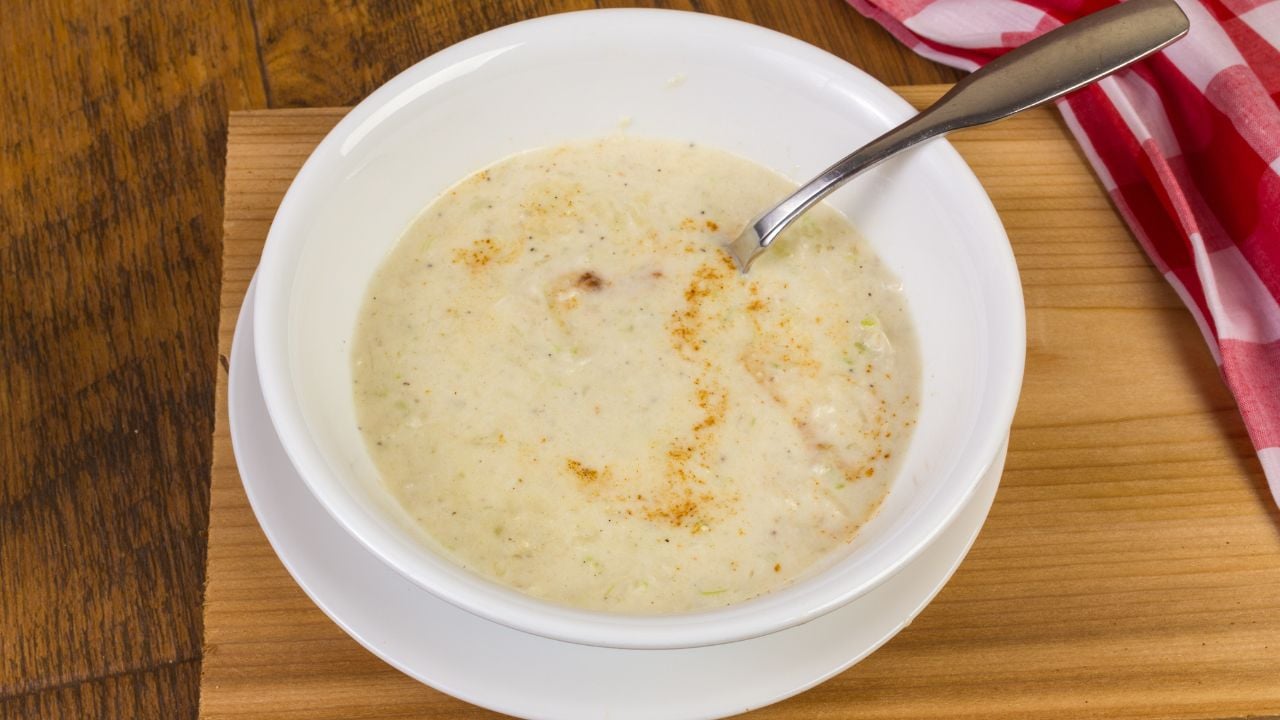
She-crab soup still shows up on nearly every Charleston menu today, which sounds like an odd fit for a forgotten list until you look at who’s making it now.
The recipe traces back to a Scottish potted-crab soup called partan bree, brought over by early settlers, then reworked in Charleston with rice and local blue crab.
Charleston legend ties the dish’s name and rosy color to a 1909 dinner, when President William Howard Taft dined at the home of Mayor R. Goodwyn Rhett and the mayor’s own cook stirred crab roe into the broth.
Historians can’t confirm that detail happened at that exact table, but it’s the version every local still repeats.
What’s better documented is simpler: Home cooks kept making she-crab soup on Sunday afternoons for decades after, long before any restaurant put it on a menu.
Restaurants took it over.
These days, restaurants along the Charleston waterfront do the simmering, not South Carolina kitchens.
Order it on vacation, and you’re eating what used to be a family recipe, made in a restaurant kitchen instead of a home one.
4. Souse Meat
Souse meat, also called hogshead cheese, turned the parts of a hog that nobody wanted to waste into a cold, vinegary, sliceable loaf.
Feet, ears and head meat all went into the same pot, simmered down, seasoned and set in a mold.
The dish depended entirely on hog-killing time, the cold-weather stretch when South Carolina families slaughtered and processed a hog at home, typically sometime between Christmas and February.
Home refrigeration ended that.
So did the rise of industrial meat processing, which moved butchering off the farm and into a plant a family never sees.
South Carolina cooks in Trenton still keep the tradition alive, serving souse meat the old way, with saltines and hot sauce on the side.
They’re the exception now, not the rule.
5. Groundnut Soup
Groundnut soup turned South Carolina’s peanut crop into a supper course, not just a snack.
Sarah Rutledge printed a version in her 1847 cookbook, The Carolina Housewife, blending mashed peanuts with oysters and a little pepper into a soup rich enough to serve as a meal.
Enslaved cooks had been making peanut-based dishes long before that book existed, carrying the crop’s West African roots straight into Lowcountry kitchens.
By the early 1900s, though, South Carolina’s taste for peanuts had shifted.
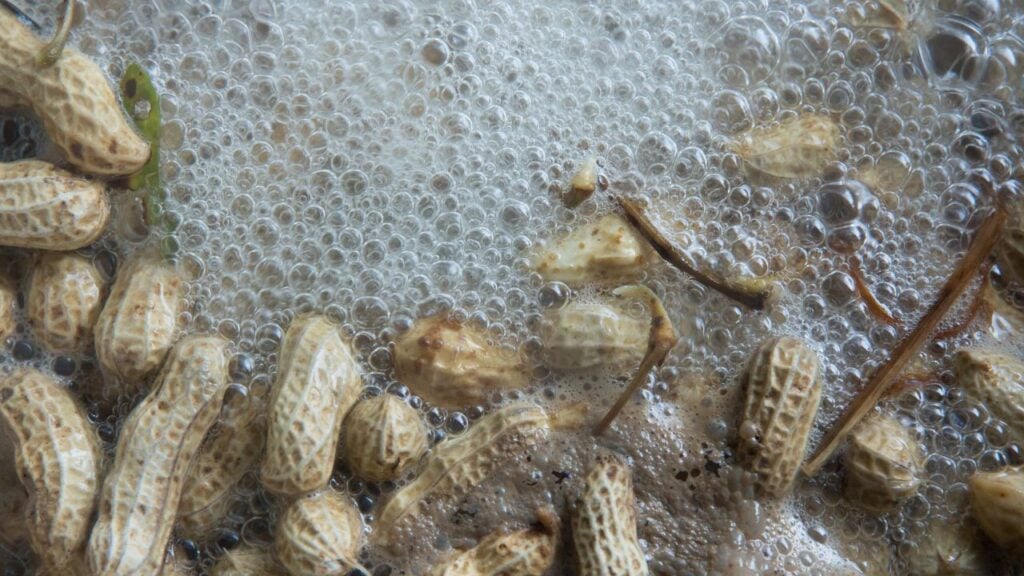
Boiled peanuts, sold hot from roadside stands and church socials, became the state’s favorite way to eat the crop.
The soup itself dropped out of rotation somewhere along the way.
The snack won out.
What “Groundnut” Means
Groundnut is just an old name for the peanut, and the name describes exactly how the plant grows.
Unlike a pecan or a walnut, a peanut’s pod forms and ripens underground on the plant’s roots, not up in a tree.
Some 18th-century Lowcountry households also called it a pindar, a word that traveled to South Carolina with enslaved West Africans, the same population that brought the plant to the Lowcountry in the first place.
6. Chitlins
Chitlins, the cleaned and simmered small intestines of a hog, once showed up on South Carolina supper tables every winter, especially around New Year’s.
The dish traces back to enslaved cooks who followed a West African custom of using every part of an animal, turning a hog part slaveholders threw out into an actual meal.
Cleaning them by hand takes hours, and that alone has pushed many families away from cooking chitlins at home.
Salley, South Carolina still throws its Chitlin’ Strut in the dish’s honor, a festival that’s run since 1966 and once pulled tens of thousands of visitors into a town of a few hundred people.
Even that slipped in 2025.
Town leaders paused the strut that year to rethink how to run it.
It’s a festival built around a dish many families no longer cook at home.
7. Okra Soup
Okra soup used to be the dish a Charleston hostess ladled from a big tureen when family came over for supper.
The recipe stays simple on purpose: Okra, tomatoes, onion and a beef shank simmered together, no roux and no thickener, just a long simmer served over rice.
Food writer Clementine Paddleford got a demonstration of it on a Charleston visit in 1952, proof of how central the soup once was to a proper Lowcountry table.
You can still find it today.
Just not at home.
Church parish hall lunches and soul food spots like Bertha’s Kitchen keep okra soup alive.
A home stove rarely does anymore.
Psst! How much do you know about South Carolina’s food history? Take our quiz and see how many you can get right.
Quiz
South Carolina Food Lore IQ
Answer these questions on South Carolina’s food history and traditions. We bet you can’t get them all right. Prove us wrong?
Despite its name, what does Frogmore Stew, the South Carolina shrimp boil, never include?
8. Crackling Cornbread
Crackling cornbread packed crisp little bits of fried pork skin straight into the batter, turning plain cornbread into something with a crackling bite.
The cracklings came from rendering a hog's fat into lard at home, a chore that produced the crispy leftover bits as a bonus.
Crisco changed that math.
The shortening launched in 1911, and within a generation, lard went from a kitchen staple to an old-fashioned ingredient nobody bothered keeping around.
No rendered lard means no fresh cracklings.
That cornbread now lives on in old cookbooks and county fair contests, rarely on a Tuesday supper.
9. Sweet Potato Pone
Sweet potato pone turned a grated raw sweet potato into a dense, spiced pudding baked low and slow until it set.
Gullah Geechee families along South Carolina's coast passed pone recipes down for generations, each one slightly different from the neighbor's.
Author April McGreger tracked down hundreds of versions of the dish while researching her 2014 cookbook on Southern sweet potatoes, all pulled from old community and church cookbooks.
That's hundreds of recipes preserved on paper, not passed down as a living family tradition anymore.
Sweet potato pie took over the dessert table instead, smoother and more familiar to a modern crowd.
Pie won.
A few South Carolina bakeries now sell sweet potato pone as a specialty item, aimed at shoppers who remember the dish from a family kitchen and can't find it anywhere else.
Ask for it by name at a fall farmers market, and don't be surprised if the vendor lights up at the request.
9 South Carolina Foods That Confuse Anyone Who Didn't Grow up With Them
South Carolina's supper table still runs on dishes that never went anywhere, and many of them have names that confuse anyone who didn't grow up eating them.
Order confidently off a menu in Beaufort or Columbia, and you might still end up guessing what just landed on your plate.
9 South Carolina Foods That Confuse Anyone Who Didn't Grow Up With Them
11 Culture Shocks People Experience When Moving to South Carolina

Food isn't the only thing that catches a newcomer off guard in South Carolina.
An alligator living in the retention pond, a lawyer required at every closing on a house, and a handful of other everyday surprises wait for anyone who moves in without warning.
11 Culture Shocks People Experience When Moving to South Carolina
