
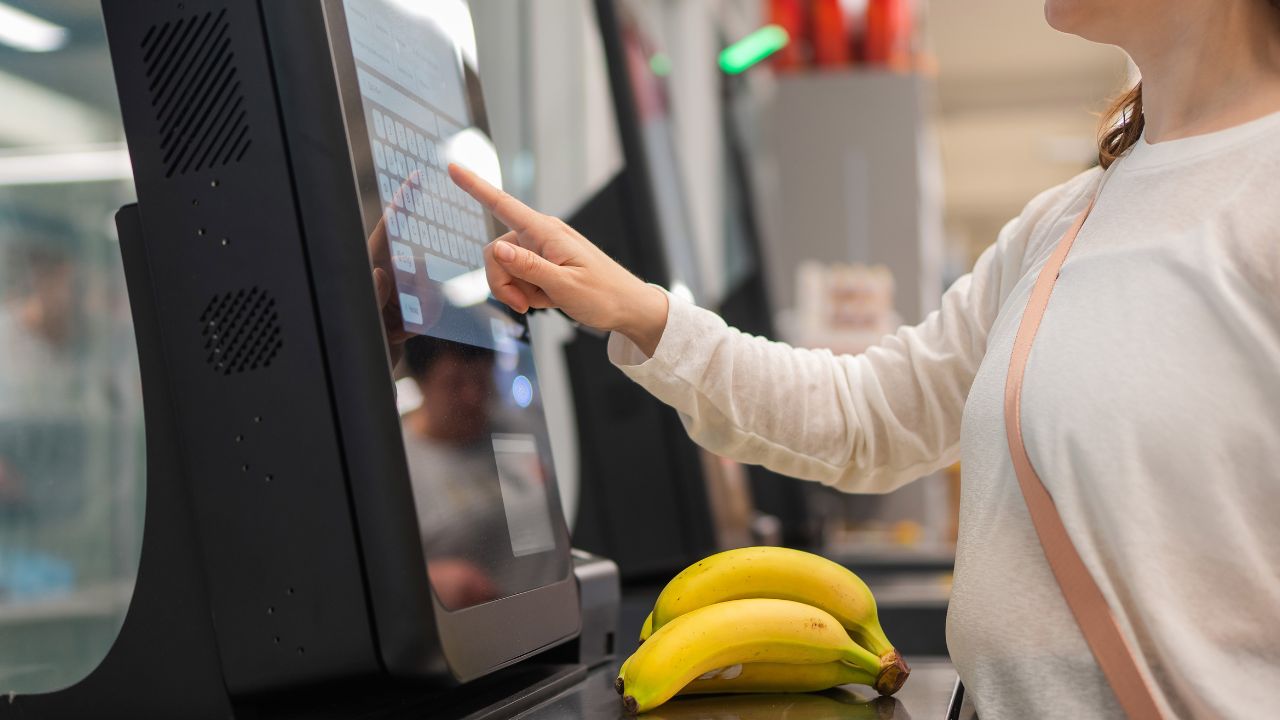
8 Self-Checkout Habits That Get Ohio Shoppers Accused of Stealing

Think you’d never leave Giant Eagle with something you didn’t pay for?
More than a third of self-checkout shoppers already have, by accident, and 61% admit they kept walking instead of going back inside.
A self-checkout kiosk can’t tell the difference between a distracted mistake and an actual attempt to walk off without paying.
These are the everyday self-checkout habits that get Ohio shoppers pulled aside and treated like suspects.
Note: This is general information, not legal advice. Ohio’s shoplifting and store-detention laws are subject to change.
1. Bagging an Item Before the Scanner Beeps
Ohio self-checkout kiosks are built around one rule: Scan first, bag second.
Break that order, and the overhead camera records the mismatch.
Vision software from a company called Everseen already watches more than 140,000 checkout lanes across the U.S., Europe, and Ireland, using artificial intelligence (AI) to log roughly 15 million customer interactions a day between them.
It’s built to catch an item that lands in the bag without a matching scan, even when nobody meant to skip one.
A half-second head start is all it takes.
Reach for the next item before the beep confirms the last one, and the kiosk freezes the transaction until an attendant clears it.
That pause is where a distracted Ohio shopper starts looking like a shoplifter.
That’s not a crime.
2. Not Declaring Your Own Bags
Ohio shoppers who bring their own totes to a self-checkout lane skip a small step that matters more than it looks.
The bagging area sits on a scale.
That scale weighs everything set on it, including an empty canvas bag.
Set your own bag down without hitting the “I have my own bags” option first, and the machine reads the extra ounces as an item that was never scanned.
The screen locks.
An employee has to walk over, clear the phantom weight, and confirm nothing left the store unpaid.
To the shopper standing there, it feels like being accused over a canvas bag.
3. Switching From a Heavy Item to a Light One
Ohio’s self-checkout scales are built to verify weight, and that setup can carry a blind spot around contrast.
Set a case of water on the bagging area, then follow it with something light, like a birthday card or a pack of gum, and the scale often can’t register the small jump.
To the system, no new weight means no new item.
It flags the light item as unscanned, even though the shopper scanned it correctly seconds earlier.
The scale can’t tell a genuine light item from a missed scan.
Big next to small is what trips it.
4. Leaving Something on Your Cart’s Bottom Rack
Ohio grocery carts have a bottom rack built for exactly the kind of bulk item shoppers forget at self-checkout: A bag of mulch, a case of pop, a jug of laundry detergent.
It never crosses the scanner because it never leaves the cart.
Loss-prevention staff know this is one of the most common ways an item leaves a store unpaid, so it’s the first place both a human attendant and an overhead camera check before a shopper reaches the door.
An honest oversight and a deliberate one look identical from that angle.
Nobody can tell the difference.
5. Guessing at a Produce Code
Ohio self-checkout screens ask shoppers to punch in a produce look-up code for anything that doesn’t carry a barcode.
Half the time, the sticker fell off in the bag already.
Guess wrong, or type the same code for every item in a mixed bag of apples and pears, and that repetition stands out more than an honest mistake would.
Loss-prevention software flags a repeated code because that pattern also shows up when a shopper is deliberately under-ringing produce, whether or not that’s what happened this time.
6. Letting Someone Else Bag While You Scan
Ohio families splitting the work at a self-checkout lane, one person scanning and another bagging, can break a sequence the store’s software is built to match: One scan, one bagged item, one set of hands.
Add a second person moving items into bags on their own, and the software can’t confirm that what just landed in the bag is the same thing that was just scanned.
Teamwork, from a camera’s point of view, can look a lot like a second person slipping something past the register.
Two people working one lane can end up treated like two separate shoppers.
7. Re-Scanning the Same Item Several Times
Ohio self-checkout screens sometimes miss a scan the first time.
The natural move is to try again.
If it still doesn’t beep, shoppers often try once more.
Stores track voids and repeat scans the same way they track everything else at the register.
A cluster of voids on one item trips the same exception report built to catch someone deliberately ringing an item up wrong, then correcting it, then doing it again for a discount that was never there.
Loss-prevention staff reviewing that report can’t tell a scuffed barcode from a scam already underway.
Psst! How much do you know about self-checkout and retail loss prevention? Take our quiz and see how many you can get right.
Quiz
Self-Checkout IQ
Answer these questions on self-checkout history and retail loss prevention. We bet you can’t get them all right. Prove us wrong?
In July 1986, the first true self-checkout machines rang up groceries in a store in which city?
8. Stepping Away Before the Screen Clears
Ohio self-checkout users step away from the kiosk mid-transaction more often than they'd guess, usually just to grab a forgotten item from two aisles back.
On camera, that walk looks the same whether the shopper is coming right back or not.
Loss-prevention systems are built to flag a shopper who leaves the lane before the payment screen finishes because that same pause is often how an unpaid walkout starts.
An innocent errand and an unpaid exit start out looking exactly alike.
The shopper who forgot something two aisles back gets treated the same as the one who never meant to pay.
What Ohio Law Lets a Store Do
Ohio self-checkout stops don't happen on a hunch; state law sets firm limits on what a store employee can do next.
Under Ohio's shopkeeper's-privilege statute, a merchant or an employee can detain a shopper only with probable cause, and only in a reasonable manner for a reasonable length of time, inside the store or its immediate vicinity.
They can't search you.
They can't seize your belongings without your consent, and they can't use undue restraint while they sort it out.
The law exists to let a store recover an item or call police, not to hold a shopper indefinitely over a scale error.
When a Self-Checkout Stop Becomes a Charge in Ohio
Ohio self-checkout stops that don't resolve on the spot can turn into a theft charge, and the dollar amount decides how serious it gets.
Under Ohio's theft statute, anything under $1,000 in unpaid merchandise is misdemeanor theft.
Cross that line, and it becomes a felony, starting at the fifth degree for $1,000 to $7,500 and rising from there.
Many self-checkout mix-ups never get close to that number.
It's usually a small number.
How Ohio Adds Up the Dollar Amount
Ohio's theft law counts the value of everything that left the lane unpaid, not just the one item a shopper argues about.
A cart with $40 in unscanned groceries and a $970 gift card rings up as one total, not two separate cases.
First-time offenders in Ohio can often ask a prosecutor for a pretrial diversion program instead of a conviction, and completing it gets the charge dismissed.
Why Ohio Self-Checkout Lanes Keep Getting Twitchier
Ohio self-checkout lanes aren't imagining it: The systems have tightened up.
Intentional under-scanning rose to 27% of self-checkout users in a 2025 survey, up from 15% just two years earlier.
Stores answered by tightening the exact things that trip up honest shoppers.
Of shoppers who'd stolen on purpose, 42% said the bagging-area scale got more sensitive, and 49% pointed to cameras or AI-assisted monitoring near the kiosk.
That crackdown catches innocent shoppers too.
It's collateral damage, mostly.
Fourteen percent of self-checkout shoppers say they've been accused of taking something they never touched, the same survey found.
Another 36% admit they've walked out with an unscanned item by accident at some point, and most say they kept it rather than turning around and going back inside.
Nine percent of self-checkout shoppers say they were accused of stealing and had, in fact, taken something, the same 2025 survey found.
Employee monitoring topped the list of reasons why stealing has gotten harder, with 61% of intentional under-ringers pointing to store staff watching self-checkout lanes more closely than before.
9 Kroger Mistakes Ohio Shoppers Make Every Week

You scan your Kroger Plus card at checkout in Columbus and figure you're receiving every available discount.
That's your first mistake.
9 Kroger Mistakes Ohio Shoppers Make Every Week
10 Things That Surprise First-Time Meijer Shoppers in Ohio

A Meijer run in Ohio asks more of your phone than of your shopping list.
Two apps come into it, and neither one announces itself at the door.
