
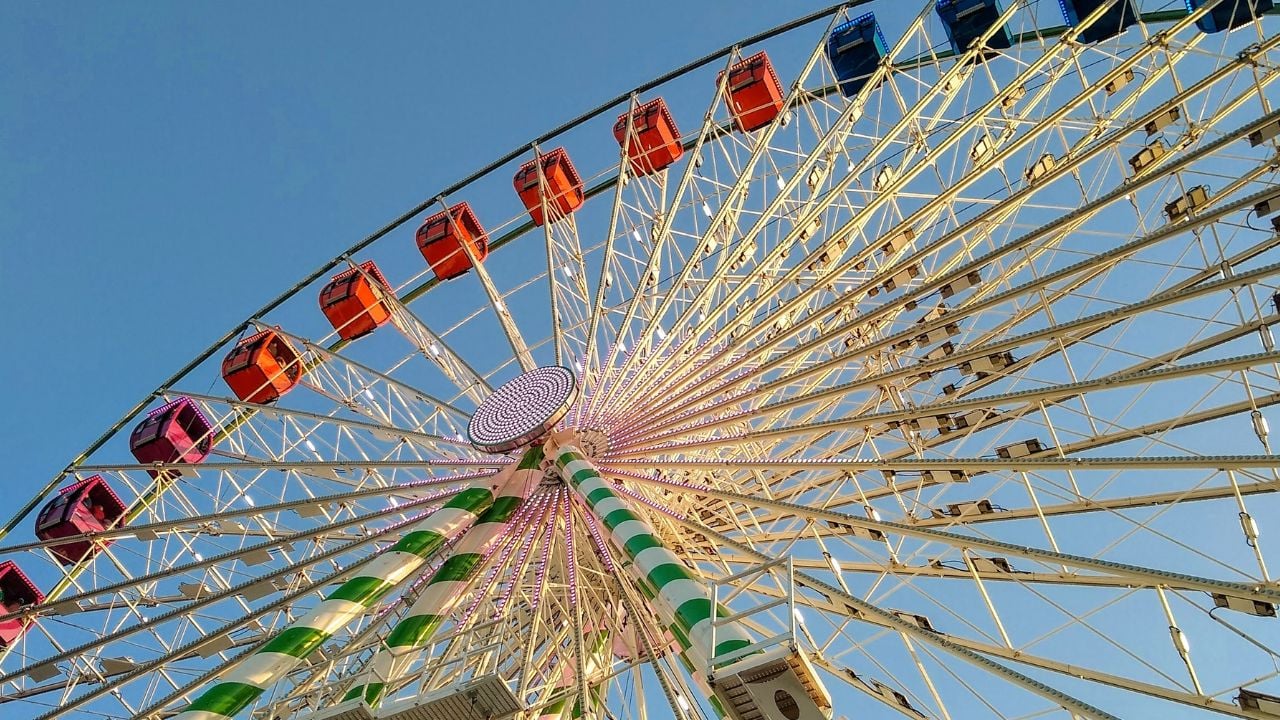
9 Signs You Grew Up in Minnesota, No Matter Where You Live Now

More than 810,000 Minnesotans claim Norwegian ancestry, more than any other state in the country.
That number shapes more than a family tree.
It’s why so many Minnesota kids grow up saying “uff da” before they even know what it means.
These are the signs of a Minnesota upbringing, no matter where you live now.
1. You Say ‘Pop’
Ask for a pop in Minnesota, and nobody blinks.
A dialect survey found the state anchors the Midwest’s “pop” region, where a carbonated drink is never called soda or coke.
Not soda. Not coke.
Just pop.
That word sets in before a kid can spell the label on the can.
It doesn’t reset just because the moving truck crosses into soda territory.
Order a pop at a gas station in Charlotte or Sacramento now, and the same blank stare comes back every time.
It’s the reaction every transplant learns to expect.
2. ‘Uff Da’ Slips Out
Minnesota holds the largest Norwegian-American population of any state, more than 810,000 residents by the state’s count.
That heritage shows up in the language before it shows up anywhere else.
Stub a toe, drop a casserole dish, hear bad news at the grocery store.
“Uff da” comes out.
Kids picked it up from a grandmother, a Sunday school teacher, or a next-door neighbor long before they understood what it meant.
A Scandinavian-inflected phrase like it settles into a kid’s vocabulary the way an accent does, not chosen the way a slang word is.
Decades later and states away, it still beats a grown adult to the punch.
3. Hotdish Is Your Reflex
Walk into a Minnesota church basement, and a hotdish is already on the table.
The dish traces to a 1930 cookbook from Mankato’s Grace Lutheran Church Ladies Aid, the first known printed recipe to use the word.
Ground beef, canned peas, a can of soup, whatever pasta or tater tots were on hand.
Cheap, filling, and easy to carry to a folding table in one dish.
A Minnesota kid grows up watching that casserole show up at every funeral, every new baby, and every church potluck after the parade, until the habit takes hold for good.
So the instinct never leaves.
A can of cream of mushroom soup still tops a Minnesotan’s grocery list before the invitation even arrives.
4. Skates Come Before Bikes
The nickname State of Hockey took hold across Minnesota as outdoor rinks and warming houses spread through nearly every town, a tradition that traces to 1883, when a former ice-polo player named Ed Murphy introduced hockey to St. Paul.
A Minnesota kid laces up in a warming house before kindergarten, wobbles onto an outdoor rink after school in the dark, and skates home on frozen ankles more nights than not.
Training wheels come later.
That order never flips back, even for someone who hasn’t touched ice in twenty years and three states.
Hand them skates at a rink in Phoenix, and their feet still remember the balance a bike never taught them.
5. Minnesota Nice Never Fades
Minnesota raises its kids on a code of politeness distinctive enough to earn its own name, Minnesota Nice, a mix of friendliness, understatement, and a hard aversion to open confrontation that researchers trace partly to the state’s heavy Scandinavian settlement and Lutheran church influence.
A kid raised on it learns to soften a complaint into a question, and to answer “how are you” with “oh, fine” even mid-crisis.
Not rude. Never rude.
Just indirect enough that an actual objection can take three sentences to locate.
Move away for a decade, and the habit still surfaces at book club, in a work meeting, in a text where “that’s an interesting choice” means no.
Minnesota Nice Has a Blunter Nickname
Minnesotans coined a second, less flattering name for the same behavior: Minnesota Ice.
The phrase describes what happens when politeness stays up so long that a Minnesotan stops saying the frustration out loud, and instead lets it leak out as a cold shoulder or silence.
The term Minnesota Nice itself first showed up in print in 1986, decades after the behavior it describes had already settled into the state’s culture.
6. State Fair Traditions Run Deep
No other state fair in the country pulls as big a daily crowd as Minnesota’s.
Food served on a stick built part of that pull, a tradition so overgrown that fair organizers stopped giving an exact count once it passed 80 items.
A Minnesota kid’s idea of a normal lunch was a corn dog, cheese curds, and a Pronto Pup, eaten standing up.
No fork needed.
The fair’s seed art competition, started in 1965, turned that same instinct toward spectacle, with crop artists gluing wild rice and timothy seed into portraits of everyone from Abraham Lincoln to Prince.
That kind of fair sets a bar.
A Minnesotan measures every other state fair against it later, usually unfavorably, whether the comparison is fair or not.
Psst! How much do you know about Minnesota’s culture and history? Flip these cards and see how many you can call right.
7. Shrugging off the Cold
Minnesota still holds the record for the coldest temperature ever recorded east of the Mississippi River, -60°F at Tower on February 2, 1996, a mark tied with North Dakota among non-mountainous states.
Growing up under that kind of winter resets what counts as cold.
School doesn’t close at 10 degrees.
Nobody cancels practice at 5.
A Minnesota kid learns to layer, scrape a windshield left-handed while holding coffee in the right, and walk to the bus stop in air that would shut down a school district somewhere warmer for a week.
That recalibrated sense of cold doesn’t reset just because the thermometer now tops out at a mild 40 in a different state.
8. Heading up North
Minnesota’s Department of Natural Resources counts 11,842 lakes of at least 10 acres, more than the number printed on every license plate in the state.
That many lakes turns “going up north” into an actual weekend plan, not just a saying.
A Minnesota kid grows up packing the car on a Friday afternoon, sleeping in a cabin furnished with somebody’s grandparents’ old couch, and waking up to a dock and a loon call instead of a driveway.
That rhythm sets in early.
Decades later, in an apartment with no lake for four hundred miles, the same kid still feels a Friday-afternoon pull to load a cooler and drive toward water.
9. Fishing Opener Beats Holidays
In Minnesota, fishing weekend outranks many holidays on the calendar.
The Governor’s Fishing Opener has run every year since 1948, except in 2020, when the pandemic pushed it to the following year.
The tradition began at Wahkon on Mille Lacs Lake, and state law now locks the date to two weeks before Memorial Day weekend.
A Minnesota kid’s May calendar bends around that weekend before it bends around almost anything else, walleye tackle out, poles in the truck bed, a Friday-night countdown that beats the wait for the actual last day of school some years.
The governor shows up.
So does much of the state, one boat launch at a time.
That internal clock marks mid-May as fishing weather no matter the actual forecast.
A Minnesotan carries it into whatever state comes next, even a state without a single walleye lake.
7 States That Won’t Touch a Penny of Your Retirement Income in 2026
Alaska pays retirees instead of taxing them, sending every resident a yearly dividend straight from the state’s oil savings.
Not one dollar of a pension, a 401(k) withdrawal, or a Social Security check goes to the state.
Six more states leave retirement income just as alone.
7 States That Won’t Touch a Penny of Your Retirement Income in 2026
