
9 Colorado Foods and Drinks That Confuse Every Out-of-Stater

A newcomer scans a Colorado bar menu, points at “Rocky Mountain oysters,” and asks the bartender what’s in them.
The bartender just grins and says the same thing he tells every tourist: “You’ll want a beer with that.”
These are the Colorado foods and drinks that confuse every out-of-stater, whether they’ve done their homework or not.
1. Slopper
A Colorado slopper starts as an ordinary cheeseburger patty, dropped into a bowl and drowned in green chile.
Pueblo’s Gray’s Coors Tavern gets much of the credit for turning the dish into a local staple, tracing the recipe back to a regular customer in the 1950s who asked the cooks for a burger he could “slop up.”
No top bun. No apologies.
Diners switch from hand to fork the moment the chile hits the plate.
The fries underneath go soft within minutes.
A visitor expecting a burger they can pick up gets a bowl instead, chile soaking through the patty before the first bite lands.
2. Colorado Green Chile
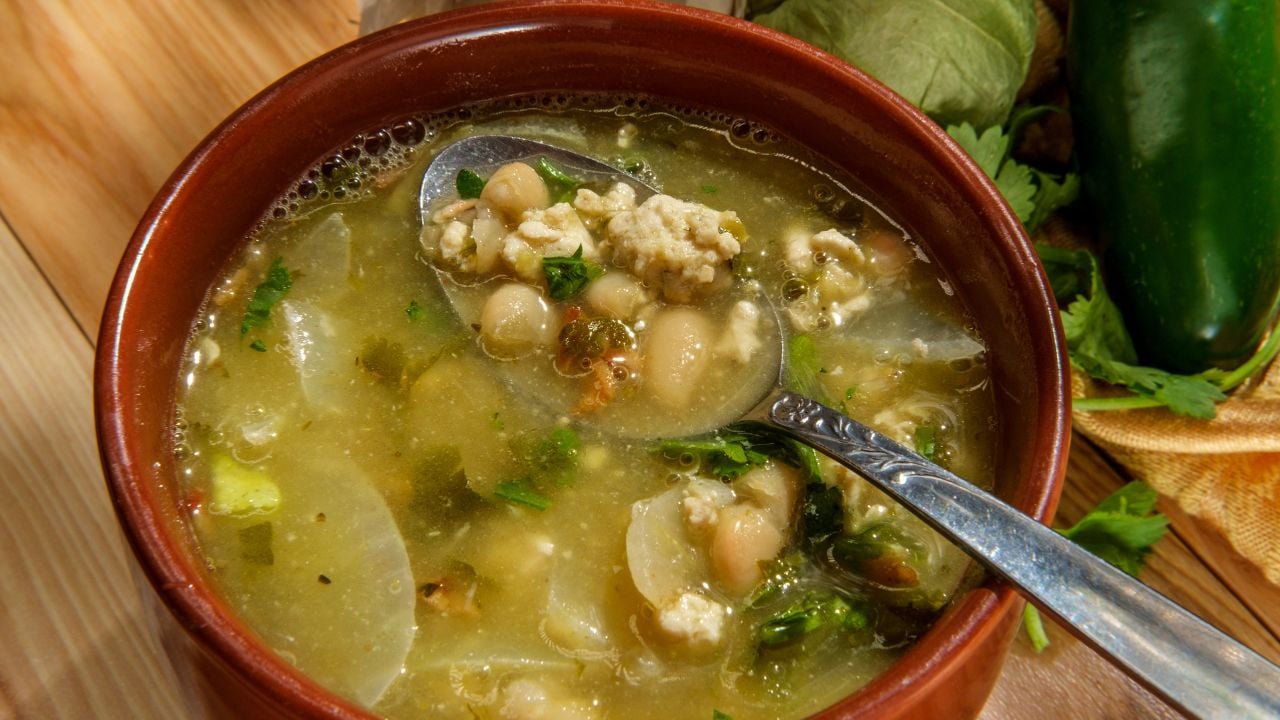
Colorado green chile refers to a roasted, stew-like sauce ladled over eggs, fries, and burritos, not the tomato-and-bean chili con carne found nationwide.
Order “chile” at a Pueblo-area diner and the kitchen sends out a bowl thick with roasted peppers and pork. No beans anywhere in sight.
No beans. Ever.
The Pueblo chile pepper didn’t become its own standalone variety until Colorado State University agriculture professor Michael Bartolo started breeding it in 1992, working from seeds his own uncle had grown for decades.
That took patience.
What “Chile” vs. “Chili” Means in Colorado
Many Colorado menus use “chile” and “chili” to name two different things, though the spelling blurs together on some older menus.
Chile, spelled with an e, is the roasted-pepper sauce Coloradans ladle over eggs, burritos, and fries.
Chili, spelled with an i, is the tomato-and-bean stew with ground beef found in kitchens across the rest of the country.
Colorado’s chile comes in two colors from the same pepper, too: Green picked early in the season, red left on the plant to fully ripen before it’s dried or roasted into sauce.
Ask for it “Christmas style” at a diner near the New Mexico border.
The kitchen splits the plate between both colors instead of making a shopper pick.
3. Rocky Mountain Oysters
Colorado bars and diners serve Rocky Mountain oysters under a seafood name attached to a dish that never sees open water: Breaded, deep-fried bull testicles, sliced thin and served with cocktail sauce.
Nothing went to waste.
Ranchers started serving them out of practicality, not novelty, using the leftovers from castration season every spring instead of throwing them out.
Small-town festivals across Colorado still fry up trays of them every year for crowds who show up on a dare and leave as regulars.
Regulars order a plate without a second thought, the same way they’d order a basket of wings.
4. Palisade Peaches
Palisade peaches grow in a high desert town on Colorado’s Western Slope, where hot days and cool nights sweeten the fruit inside orchards planted as early as 1882.
The color throws people off first.
Out-of-staters skip over the ripest peaches in the bin, convinced the pale ones must still be days from ready.
Wrong call, every time.
A ripe Palisade peach often carries less red blush than the peaches shoppers grew up with back home, since blush depends heavily on the variety, not on ripeness.
Weight and a soft, creamy undercolor tell the true story instead.
5. Sopapillas
Sopapillas turn up at Colorado’s Mexican restaurants as a pillow of fried dough drizzled in honey, and at Denver’s Casa Bonita, they never stop coming.
Nobody has to ask for a refill.
Servers circle the cave-themed dining room with baskets of them included in every ticket, a tradition that survived a 2021 bankruptcy and a $40 million rebuild by South Park creators Trey Parker and Matt Stone.
Free doesn’t mean rare.
A visitor used to paying for dessert one plate at a time keeps waiting for the sopapillas to show up on the check, and it never does.
6. Denver Omelet
A Denver omelet packs ham, bell peppers, onions, and cheese into scrambled eggs on Colorado breakfast menus, a combination that goes by a completely different name once you cross the state line.
Historians trace the dish to Colorado’s mining and railroad boom of the late 1800s, with one theory crediting Chinese railroad cooks who adapted egg foo young into a portable filling for labor camps.
The name never traveled.
Order a “Denver” in many other states and the server hears “Western” instead.
A Colorado diner lists “Denver omelet” without a second thought, while that same order raises eyebrows anywhere outside the Rockies.
7. Mountain Pie Pizza
Colorado’s mountain pie pizza piles onto a braided, honey-brushed crust built to hold toppings like a casserole dish, a style Beau Jo’s created after Chip Bair bought the Idaho Springs pizzeria in 1973.
The honey isn’t a topping: Beau Jo’s serves it on the side for dipping the crust once the slice is gone, the same way other restaurants pass out ranch or garlic butter.
Pizza, then dessert.
Sold by the pound instead of by the slice, a single mountain pie feeds a table of four and leaves an out-of-stater staring at a honey bottle sitting next to their pizza.
8. Coors Banquet
Coors Banquet has poured out of Golden, Colorado since 1873, and out-of-staters usually assume its “Colorado Kool-Aid” nickname is about scarcity.
It isn’t.
Texas drinkers coined the phrase generations ago to needle Coors as thin and watery, the same joke behind calling a weak drink Kool-Aid instead of beer.
The “Banquet” part of the name has a straighter history: Miners started calling their after-work drinks “banquets” in Golden.
Coors made it the beer’s official name in 1937.
Travelers used to smuggle it home in suitcases anyway, since Coors wasn’t sold east of the Mississippi for decades.
Colorado bars still pour it as the default order, no matter how many craft taps sit next to it on the same wall.
9. Bison Burgers
Bison burgers show up on Colorado menus labeled “buffalo burgers,” even though the meat inside has nothing to do with a true buffalo.
True buffalo live in Africa and Asia.
American bison are a different species entirely, more closely related to cattle.
Colorado runs some of the country’s biggest bison ranches, including one east of Denver spanning more than 8,000 acres.
Wrong animal, right burger.
Many Colorado butchers and diners just call it “buffalo” anyway, taxonomy aside.
Colorado’s Beer Boom by the Numbers
Colorado runs more than 450 breweries within its borders, a count that ranks fourth in the country behind only California, New York, and Pennsylvania.
That’s not a coincidence.
Colorado also produced close to 18 million barrels of beer in 2024, more than any other state, according to federal tax data.
Beer built an industry.
Colorado’s breweries now employ roughly 63,000 people and generate $12.7 billion in economic activity for the state each year, according to the Colorado Brewers Guild.
Psst! How much do you know about Colorado’s food and drink history? Take our quiz and see how many you can get right.
Quiz
Colorado Food IQ
Answer these questions on Colorado food and drink history. We bet you can’t get them all right. Prove us wrong?
Which candy got its start as a Golden, Colorado ice cream shop before winter weather pushed the owners into hard candy instead?
10 Things Coloradans Say That Baffle Everyone Else

A cousin visiting from Ohio catches maybe half of what a Coloradan says about their weekend plans, and nobody thinks that's unusual.
Coloradans pull words from ski runs, drought summers, and mining camps that closed a century ago without ever noticing they're doing it.
