
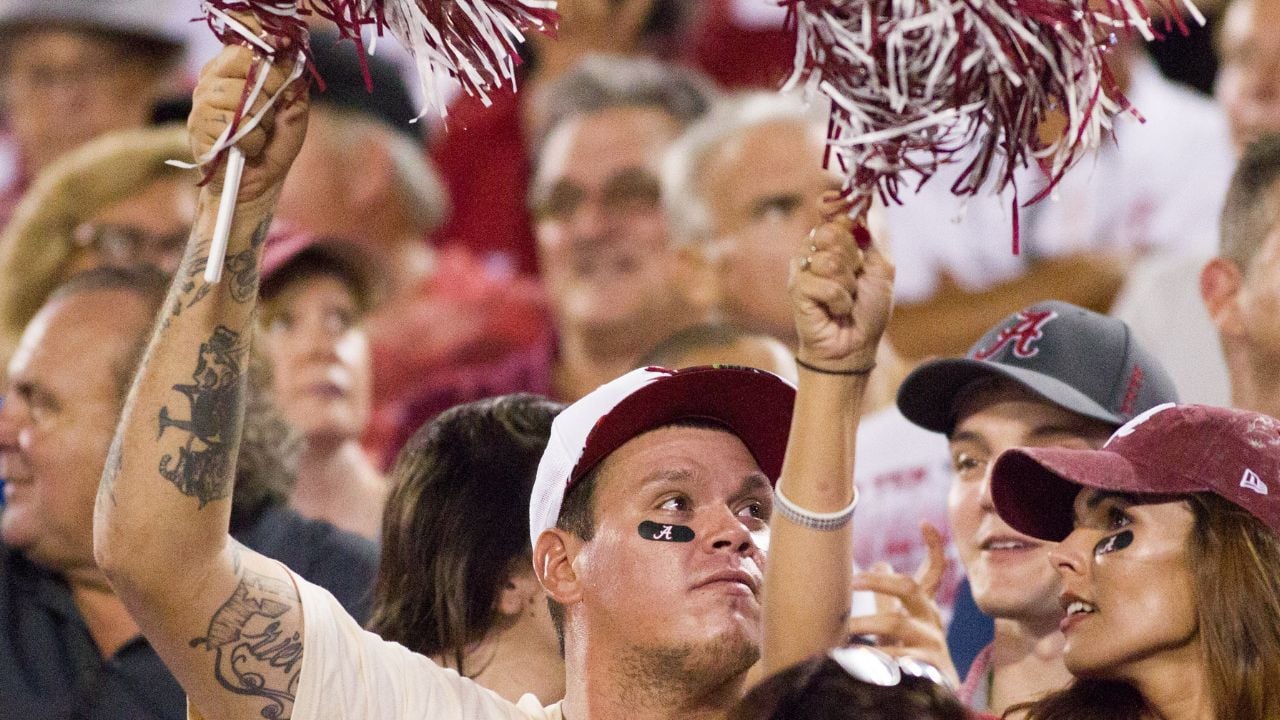
9 Things That Change in Alabama the Weekend College Football Comes Back

Alabama’s home football games are worth about $23 million apiece to Tuscaloosa’s economy, according to the University of Alabama’s research.
On the season’s first Saturday, the whole state changes.
These are the things that change around Alabama the weekend college football comes back.
1. Hotel Rooms Near Campus Book Solid
Alabama’s season opener doesn’t need to be a marquee matchup to sell out every bed in Tuscaloosa.
The Hampton Inn Tuscaloosa, the Courtyard Tuscaloosa, and Hotel Capstone routinely go from wide open to down to their last rooms the moment the season schedule comes out, even for an opener against an unranked opponent.
The Courtyard’s front desk has reported every home-game-weekend room booked solid within days of the schedule dropping ahead of a past season.
Tuscaloosa’s tight hotel supply makes it a pattern that tends to repeat whenever a new schedule comes out.
Not one bargain.
Fans who wait until the week of the game usually end up in Northport, Cottondale, or Birmingham, driving in for a 7 a.m. parking spot instead of walking out of a downtown lobby.
2. Grocery Store Aisles Empty Out
Grocery store aisles across Alabama start feeling the season opener days before anyone tailgates.
At Piggly Wiggly locations around Tuscaloosa, cashiers watch carts fill with charcoal, ribs, chicken, and case after case of cold drinks the Thursday and Friday before kickoff.
Feeding a group of ten to fifteen people for one tailgate has topped $200 in past tailgating cost breakdowns, food alone.
Shelves empty fast.
Multiply that by every tent on the Quad, every parking lot cookout, and every living room watch party, and a single Saturday clears out a lot of shelf space.
Even the 24-hour Waffle House on University Boulevard starts posting a wait before the sun comes up, another register ringing up game-day money before the sun’s fully out.
What One Saturday Is Worth to Alabama
Alabama’s home football games move money across the whole state, not just traffic.
The University of Alabama’s own research puts the seven home games’ impact at $235 million statewide in a single academic year.
In Tuscaloosa alone, those seven Saturdays account for $160.1 million in local economic impact.
Split evenly, that’s roughly $23 million in local spending every time the gates open at Bryant-Denny, this Saturday against East Carolina included.
3. The Quad Turns Into a Campground
The University of Alabama’s campus lawns look nothing like themselves on the season’s first home weekend.
Free tailgating space on the west side of the Quad opens first-come, first-served, and setup can start as early as 8 a.m. Friday, a full day before anyone snaps a chin strap.
Recreational vehicles get their own campus lots starting at 6 p.m. Friday, and every RV has to be gone by noon Sunday.
The lawn disappears.
Tents, grills, and folding chairs stake out every inch of grass like real estate.
By Saturday morning, a stretch of open grass that sat empty all summer looks more like a small town than a college quad.
4. Campus Roads Close by 7 A.M.
The University of Alabama shuts down its own streets before many Saturday risers have even poured their coffee, and this Saturday marks the first time the barricades go up all season.
The Southeastern Conference and the ABC television network slotted this opener into the 11 a.m. window, and the University of Alabama closes core campus roads to regular traffic four hours before any kickoff, whatever time it lands.
That puts barricades up by 7 a.m.
No exceptions.
Only vehicles carrying a Gameday permit get past the road blocks, and the core of campus stays sealed off until roughly two and a half hours after the final whistle.
A Tuesday commute through campus and a Saturday one aren’t the same drive.
5. Breakfast Spots Fill Up Before Dawn
Alabama’s early kickoff turns ordinary Saturday diners into the first stop of the day instead of the last.
Rama Jama’s, the tiny memorabilia-packed diner across from Bryant-Denny, and the Waysider, a cramped breakfast counter near campus, both draw lines that stretch out the door before an 11 a.m. game.
On a normal Saturday, both places serve a steady trickle of regulars.
Not this Saturday.
Fans fuel up on eggs and coffee before they ever reach the Quad because there’s no time for a sit-down lunch once the barricades close the streets around them.
Psst! How much do you know about Alabama college football history? Take our quiz and see how many you can get right.
Quiz
Alabama Football IQ
Answer these questions on Alabama college football history. We bet you can’t get them all right. Prove us wrong?
A newspaper writer coined Alabama’s ‘Crimson Tide’ nickname after the team battled Auburn to a tie in 1907. What made the field so memorable?
6. Pregame Rituals Move Up to Dawn
Pregame traditions at Alabama run on a fixed clock, not the calendar.
The Walk of Champions, where players walk through a crowd of fans into the north end zone, always happens 2.5 hours before kickoff, and the Elephant Stomp pep rally at Gorgas Library always happens one hour before kickoff.
For an 11 a.m. kickoff, that pushes the Walk of Champions to 8:30 a.m. and the Elephant Stomp to 10 a.m.
The sun's barely up.
Traditions that usually happen in the afternoon sun now happen while the dew is still on the grass.
Fans who show up expecting a lazy pregame stroll get a sprint instead.
7. A Rideshare Zone Appears at Presidential Park
The University of Alabama doesn't let Uber and Lyft drivers anywhere near the stadium on a normal day because there's no reason to.
On football Saturdays, the University of Alabama's own Gameday office opens one pickup and drop-off point at Presidential Park, a block off University Boulevard, that exists for exactly one purpose.
Every other entrance to campus stays blocked to rideshare cars without a permit.
One gate in.
Drivers who would normally drop fans right at the door now leave them a few blocks out, funneled through the same corner as everyone else calling a ride home.
8. University Boulevard Goes Pedestrian-Only
Tuscaloosa and the University of Alabama close a stretch of University Boulevard to cars for several hours after every home game, from the stadium down to Reed Street.
The Strip, as locals call that stretch, fills with foot traffic as the postgame crowd spills out of the stadium and into the bars.
Police roll out roadblocks and hold the street for pedestrians only.
Cars wait it out.
Once the crowd thins and the bars start closing, the barricades come down and University Boulevard goes back to being a normal road again.
9. Bars Across Alabama Fill With Screens for a Kickoff Auburn Isn't Hosting
Sports bars across Alabama switch on extra screens for kickoff weekend, and this year one of those kickoffs has no home campus to watch it from.
Auburn opens its season against Baylor at Mercedes-Benz Stadium in Atlanta, part of the Aflac Kickoff Game, instead of at Jordan-Hare Stadium.
There are no campus road closures, no Quad tailgates, and no line at Toomer's Corner before the first snap.
Not in Auburn.
Auburn's campus looks like any other late-summer Saturday, while thousands of Tigers fans instead pack Interstate 85 toward Georgia.
Bars in Auburn fill up anyway because Alabama isn't the only program whose season opens this Saturday, just the only one still playing at home.
Auburn's own tailgate rush waits one more week, until Southern Miss visits Jordan-Hare Stadium on September 12 for the Tigers' actual home opener.
That kickoff is set for the evening, either 6:30 or 6:45 p.m. Central, a different clock than the late-morning start Alabama just used against East Carolina.
9 Alabama Small Towns That Outshine Every Big-City Attraction Nearby
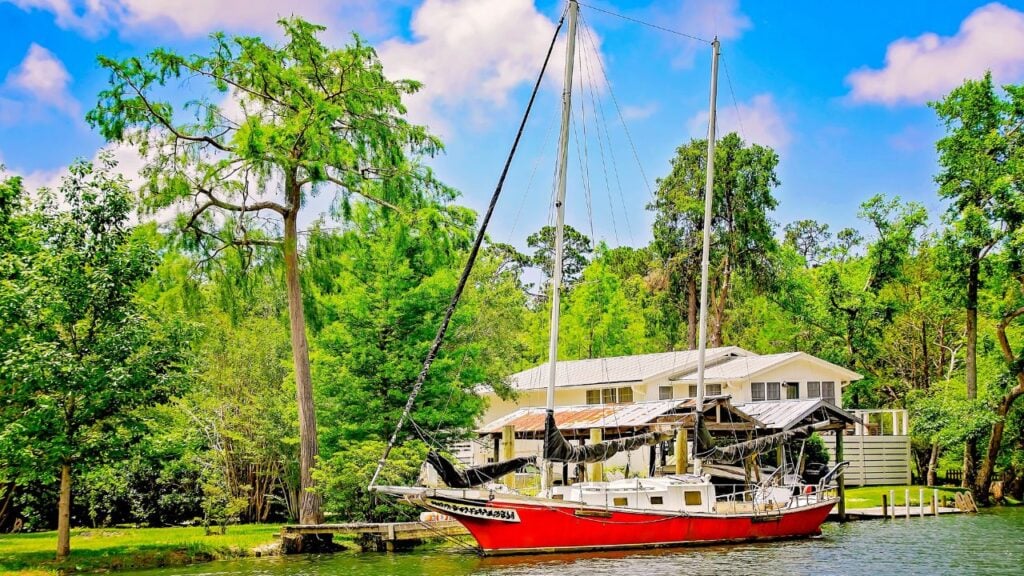
A meteorite once crashed through a roof in Sylacauga and hit a napping woman named Ann Hodges, the only documented case in history of a person getting struck by a rock from outer space.
Birmingham, an hour up the road, has never had a story like it, and neither have many of the cities Alabama's small towns keep upstaging.
9 Alabama Small Towns That Outshine Every Big-City Attraction Nearby
7 Arguments Florida and Alabama Will Never Settle
A surveyor drove a stone into the ground back in 1799 to settle, for good, exactly where Alabama ends and Florida begins.
It didn't work. Alabama and Florida have kept arguing about that line, and plenty else, ever since.
