
8 Small-Town Texas Traditions That Baffle Everyone Who Moves In

Eighty-two percent of Texas fire departments run mostly or fully on volunteers, according to a 2025 review by state lawmakers.
That kind of unpaid effort shows up all over small-town Texas life.
Few people bother explaining any of it to whoever just moved in.
These are the small-town Texas traditions that baffle everyone who moves in.
1. County-Line Beer Run
The county-line beer run still kicks off small-town Texas parties.
It means a quick drive across an invisible line on the map before anyone touches a grill.
Ask why everyone just left to buy a six-pack, and the answer is always the store two exits over that carries what the host’s own town doesn’t.
Texas leaves that question up to a vote in each county, city, or precinct.
Only three counties in Texas, Borden, Kent, and Roberts, still ban alcohol sales outright.
Throckmorton County dropped off that list in 2024 after voters there said yes to beer and wine.
Nobody warns you.
A newcomer planning a first cookout learns that the hard way.
That patchwork touches 191 of Texas’ 254 counties, all of them only “partially wet.”
Drive past a gas station selling ice-cold Shiner one minute.
Cross that same invisible line five minutes later, and the newcomer’s host is suddenly explaining why the next station down the road sells none at all.
The Beer Run’s Unwritten Texas Map
The beer run in small-town Texas runs on local knowledge, not a road sign.
A Texas wet-or-dry vote can happen precinct by precinct, so status can change block by block within the same town.
Longtime residents already know which store sells what.
A newcomer usually finds out only after driving to the wrong one.
2. Sale of Champions
Small-town Texas county fairs turn into six-figure auctions once the show ring empties out.
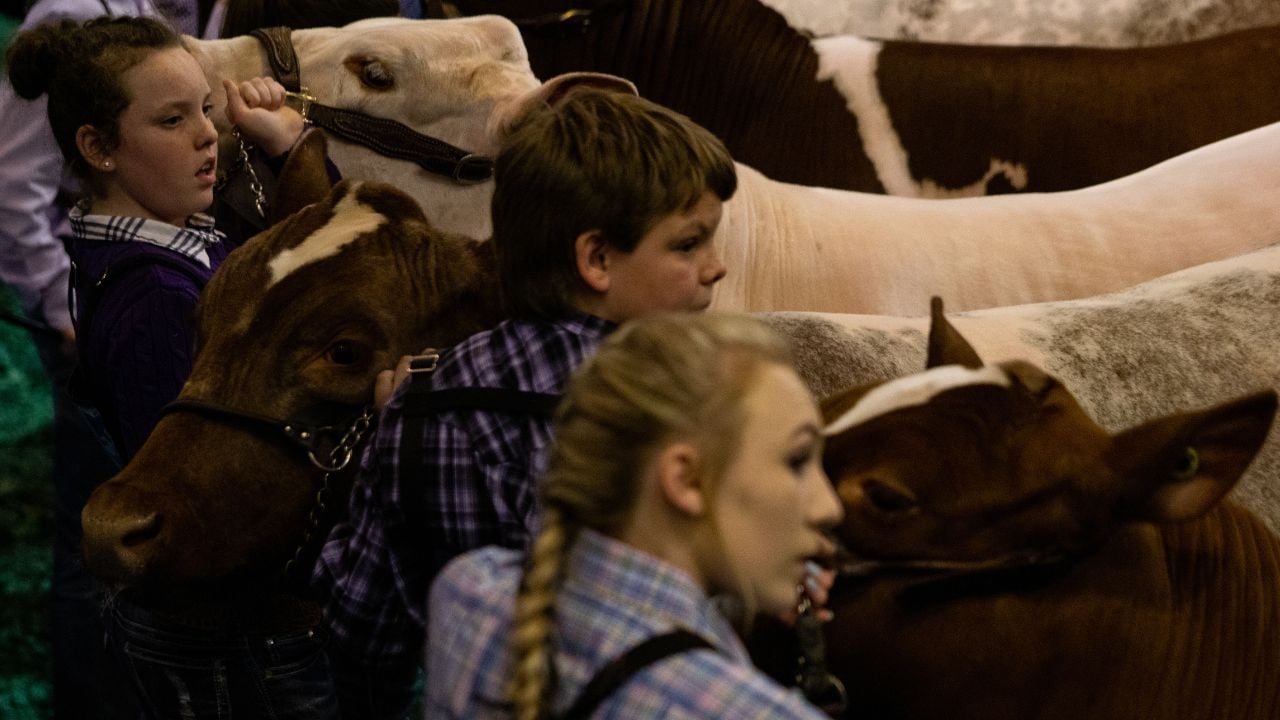
Freestone County’s Sale of Champions brought in a record $718,250 for local 4-H and Future Farmers of America (FFA) kids in one year.
Every dollar came from a neighbor who showed up just to bid on a kid’s animal.
Few county auctions anywhere touch that number.
Many buyers pay full price, then let the kid keep the animal instead of trailering it home.
The check was the point.
Grown men in pressed jeans bid thousands of dollars on a single hog, then shake the exhibitor’s hand and walk off without loading a single animal into a trailer.
3. First Monday Trade Days
Canton’s monthly First Monday Trade Days trace back to the 1850s.
Circuit judges Oran Roberts and Bennett Martin rode into town on the first Monday of each month to hold court.
Locals turned the crowd into a market day.
State law once forced every stray horse picked up on the open range to be auctioned off on that same Monday.
The court sessions stopped.
The trading never did.
Smaller Texas towns nearby still time their own markets, garage sales, and swap meets around Canton’s calendar.
Pick the wrong weekend to run errands.
Every parking lot within three counties fills up, the closest motels book solid a month out, and a newcomer who just moved in gets no warning at all.
4. Giving Directions by the Square
Directions in small-town Texas still run by the courthouse square, not a street address.
Ask a local how to find the diner, and the answer is almost always some version of “on the square” or “just off the square,” never a house number.
Businesses count on that same foot traffic circling the square.
A shop that faces away from it can sit half-empty even with a prime street address one block over.
Texas built many of these small towns around a single point, the county courthouse.
Nearly half of the state’s 254 courthouses went up between 1880 and 1919, according to the Bullock Texas State History Museum.
Many county seats still arrange their whole business district in a ring around that same building.
A map app steers a newcomer hunting for “Main Street” in circles.
There isn’t one.
Every diner, bank, and law office in town faces a square instead.
A newcomer’s own phone map usually drops a pin a block from wherever the locals mean, so the meeting never quite lines up on the first try.
5. Noon Whistle
Noon still comes with a siren in a few small Texas towns.
Helotes, just outside San Antonio, still tests a daily noon siren.
Small towns that kept the habit often inherited it from an older signal, a horn or siren that once summoned volunteer firefighters long before it settled into marking lunchtime.
Nobody panics.
Longtime residents don’t even look up from what they’re doing.
A newcomer’s first noon in town usually ends with a phone in hand, ready to dial 911 over a siren that’s just telling the whole town it’s midday.
6. Volunteer Fire Department Suppers
A volunteer fire department in small-town Texas often pays for its trucks with chicken and cake instead of tax dollars.
The Snook Volunteer Fire Department in Burleson County pulls about 90 percent of its annual budget from one barbecue-and-cake fundraiser.
Volunteers cook more than 700 half chickens while the local youth group bakes kolaches to sell alongside them.
That’s the expectation.
A newcomer expecting the fire department’s budget to show up as a county line item is baffled to learn the funding plan is a $15 plate nobody asked them to buy.
The same crew that shows up for a grease fire or a car wreck runs on whatever the town hands over one plate at a time.
7. Cemetery Decoration Day
Rural Texas families still return to the same church cemetery every spring for Decoration Day.
Traditionally held the Saturday before the first Sunday in May, the day brings relatives back from hours away.
They clean family plots, set out fresh flowers, and share a potluck lunch afterward.
It isn’t a funeral.
Think reunion, not wake.
Newcomers who live next door to one of these small church cemeteries watch it sit empty nearly all year, then fill with cars and a folding-table buffet on one Saturday every spring, with no warning on the town calendar.
8. Crop Festivals
Two small Texas towns turn their biggest weekend of the year over to a single crop.
Luling has run its Watermelon Thump since 1954, complete with a seed-spitting contest and a competition to judge a melon’s ripeness by its thump alone.
Poteet has celebrated its own strawberry harvest with a festival since 1948.
Neither town apologizes for it.
A newcomer stopping by city hall on festival weekend finds the doors locked, with the whole town relocated to the football stadium for the day instead.
Total strangers hand over a free slice of watermelon or a carton of strawberries before asking a newcomer’s name, let alone where they’re from.
The high school football stadium parking lot turns into a carnival midway for the weekend.
The band plays between watermelon-eating heats.
Psst! How much do you know about the backstories behind small-town Texas? Take our quiz and see how many you can get right.
Quiz
Small-Town Texas History IQ
Answer these questions on the backstories behind small-town Texas landmarks and legends. We bet you can’t get them all right. Prove us wrong?
Before he towered over the State Fair of Texas, Big Tex started out in 1949 as a giant statue of what, built to pull Christmas shoppers into a small Texas town?
Luling times its whole weekend around the last full weekend of June.
Poteet claims April instead, so a newcomer chasing both festivals ends up marking two calendars, not one.
10 Small-Town Texas Diners Worth the Detour
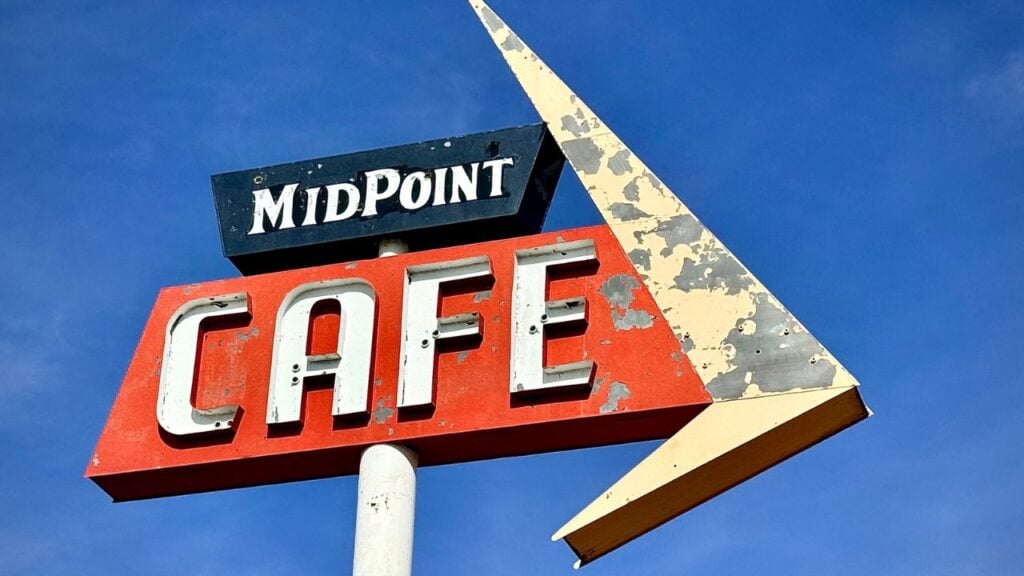
A standout meal in small-town Texas rarely turns up in Austin, Dallas, or Houston.
It's waiting in a town many people have never heard of, at a counter where the cook's been standing since the Carter administration.
10 Small-Town Texas Diners Worth the Detour
9 Texas Dumpster Diving Laws That Could Turn a Free Find Into Legal Trouble

Nothing in the Texas Penal Code says a word about dumpster diving, and that's exactly the trap.
Four state statutes and a stack of city ordinances can still put a free find on the wrong side of the law.
9 Texas Dumpster Diving Laws That Could Turn a Free Find Into Legal Trouble
