
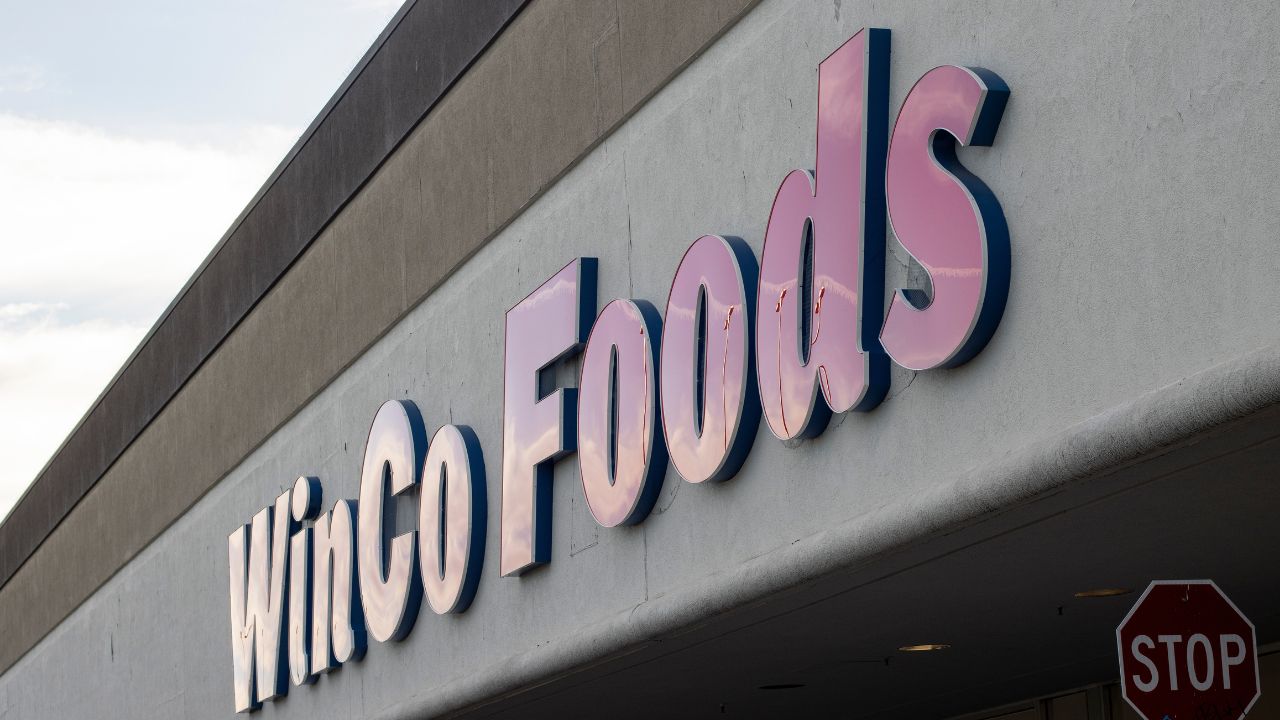
8 WinCo Savings Arizonans Over 60 Keep Missing

Costco charges Arizona members $65 a year just to walk through the door. Sam’s Club charges $60.
Many Arizona shoppers assume any store selling groceries at warehouse-club prices must charge something similar just to shop there.
Several things about shopping at WinCo say otherwise.
These are the WinCo savings Arizonans over 60 miss.
1. No Warehouse-Club Membership Fee
No membership card has ever been required at a WinCo register in Arizona.
Costco now asks $65 a year.
Sam’s Club raised its fee to $60 in 2026.
Many retirees already carry one of those cards out of habit, assuming any store built around warehouse-club prices must charge the same way to walk in.
WinCo never has.
The shelf price is the only number that changes here.
No card comes out at the door, and no renewal notice shows up every spring.
2. Coins Cash in at Full Value
A Coinstar kiosk sits at the customer service counter in many WinCo stores across Arizona.
Coinstar’s machines are known for keeping up to 15.9% of every jar fed into them, plus a flat 99-cent fee, no matter which store hosts the kiosk.
That’s a steep cut on money already earned.
Coinstar itself waives that cut down to zero for anyone who picks a gift-card payout instead of cash.
Not a cent lost.
At WinCo’s kiosk, that no-fee option comes back as a WinCo eGift card, so the coins still turn into groceries.
A jar somebody’s been dropping quarters into for years finally counts for what’s inside it.
What a WinCo Shopper’s $40 Jar of Coins Loses Elsewhere
A WinCo shopper who skips the eGift option pays Coinstar’s standard fee just like anyone else, and the math behind that fee tells a bigger story.
A jar totaling $40 in coins loses up to $7.35 at a regular Coinstar kiosk, between the 15.9% cut and the 99-cent fee.
That same $40 jar scans for the full $40 when it’s cashed out as a WinCo eGift card instead, Coinstar’s own no-fee option, available right at the WinCo counter.
3. No Loyalty App or Card Needed
WinCo never locks a lower price behind a login.
Fry’s Food Stores, Arizona’s largest grocery chain at more than a quarter of the Phoenix market, runs its steepest weekly markdowns through an app and a free rewards card it calls the VIP card instead.
Kroger, which owns Fry’s, has acknowledged that many older shoppers who don’t use a smartphone account miss those digital-only deals.
Its official fix is to honor the app price by hand at the customer service desk for anyone who asks, a workaround many Fry’s regulars over 60 have never been told exists.
At WinCo, there’s no app to open and no desk to visit first.
No asking required.
The shelf price already is the sale price.
4. Deepest Cuts Sit at the Wall of Values
WinCo stacks its steepest markdowns on one display just inside the front doors, a spot the company calls the Wall of Values.
Manufacturer discounts and closeout pricing rotate through there, along with pallet displays between produce and the bulk bins and the ends of every aisle.
None of it comes with a mailed flyer.
WinCo skips weekly ad mailers on purpose, to keep that advertising cost off the shelf price instead.
Nothing tips it off.
A retiree working the same short list every week can wheel a cart right past the best markdown in the building without ever knowing it’s there.
The deals there rotate week to week, with nothing but the shelf tag to announce them.
5. Sale Prices Never Require Buying More Than Needed
WinCo’s green-tag sale prices apply to a single item, not a full cart.
The company states plainly that no rewards card and no minimum purchase unlock the discount.
Buy just one, and the sale price still rings up.
That’s a different rule than the warehouse clubs down the road, where the lowest per-unit price usually means buying the twelve-pack instead of the two a smaller household needs.
A retiree buying for one or two doesn’t have to stock a pantry shelf just to unlock WinCo’s price.
One can, same price.
The green tag works the same whether the cart holds one can or twenty.
Psst! How much do you know about WinCo’s story and Arizona’s grocery scene? Take our quiz and see how many you can get right.
Quiz
WinCo Foods IQ
Answer these questions on WinCo’s history and Arizona’s grocery scene. We bet you can’t get them all right. Prove us wrong?
Before its 1998 rebrand to WinCo Foods, what was the chain called?
6. Its Own Distribution Center Steadies the Price Tag
Its own distribution center in west Phoenix ships to every WinCo store in Arizona, a 900,000-square-foot warehouse that opened in 2014.
The building moves roughly 500,000 cases a week to stores across Arizona, southern Nevada, and southern California.
Trucks load a short haul away from the shelf instead of crossing several state lines first.
Fewer stops, fewer markups.
That's a shorter, steadier supply chain than a grocer trucking product in from an out-of-state hub.
It's one less place for a price to jump between the warehouse and the register.
Prices that hold steady are easier to plan a fixed budget around than prices that are merely low once and swing later.
7. Money Orders Undercut the Fee Next Door
WinCo sells money orders and Western Union transfers right at the customer service counter, for what the company calls a minimal fee.
Fry's, just down the road, charges around 80 cents per money order, or 69 cents only for shoppers who carry its free VIP rewards card.
WinCo's fee doesn't change based on who's standing at the counter.
A shopper paying rent or a utility bill without online banking can handle it during the same trip that fills the cart, instead of driving to a second counter across town.
That saves a stop.
Western Union transfers work the same way at that same counter, so sending money to family doesn't mean a separate trip either.
8. Its Store Brand Comes With a Direct Guarantee
Its own label sits on hundreds of pantry staples at WinCo, from milk to bread to canned goods.
The company says those products have to meet the same standards as the top-tier manufacturers that make the name brands sitting right next to them on the shelf.
The price is lower anyway.
WinCo backs the label directly: Bring back anything that disappoints, and the company says it will make it right.
Swapping the weekly regulars is where the savings add up fastest, not swapping everything at once.
Electric Carts Are Free, but Limited
Free electric carts wait near the entrance or the customer service desk at WinCo stores, for shoppers who have trouble covering a full store on foot.
The company keeps an average of three at each location.
There's no fee.
They're first come, first served, so a busy Saturday can mean waiting for one to come free, or planning an earlier trip instead.
Nine Stores, Mostly in the Valley
Nine WinCo stores now serve Arizona, a footprint that's grown one location at a time since the first two opened in 2012.
Most sit in the Phoenix metro: Phoenix, Glendale, Surprise, Chandler, Mesa, and two locations in Gilbert, plus a newer store in Goodyear and one southeast of the city in San Tan Valley.
There's nothing yet in Tucson, Flagstaff, or Yuma.
That's changing, slowly.
WinCo was one of only three grocery chains to grow its share of the Phoenix market this past year, alongside Fry's and Aldi.
It opened new stores to get there, including the newest locations in Goodyear and San Tan Valley.
9 Things That Confuse First-Time Visitors to Arizona

Cactus, sunshine, and not much else is the Arizona many tourists picture before they land.
The state spends their whole trip proving that picture wrong.
From the price at the pump to the size of a "small" iced tea, these are the everyday Arizona details that catch first-timers completely off guard.
9 Things That Confuse First-Time Visitors to Arizona
14 Things Arizonans Say That Baffle Everyone Else

A tourist eases a rental car around the orange barricade blocking a flooded wash outside Tucson.
The local behind them barely slows down.
Arizonans have a whole vocabulary for moments like that one.
Outsiders rarely know what any of it means.

I use the electric cart as I am disabled. I notice at the 59th and Bell location you
have to give your driver’s license to cust service in order get the cart. It’s okay, but I have to transfer my groceries to a regular cart, in order to go to my car. It I have ice cream, it will melt before I get home because of the delay. Last time there was no cust service for about 10 to 15 minutes to return the cart and get my drivers license. There has to be some other was to handle this.