
8 Things North Carolina Small Towns Still Do That the Rest of the Country Gave Up On

A bull named Old Buck still crashes a village dance on Hatteras Island every January 6th.
Rodanthe wouldn’t have it any other way.
These are some of the things small towns in North Carolina do that the rest of the country has long since stopped.
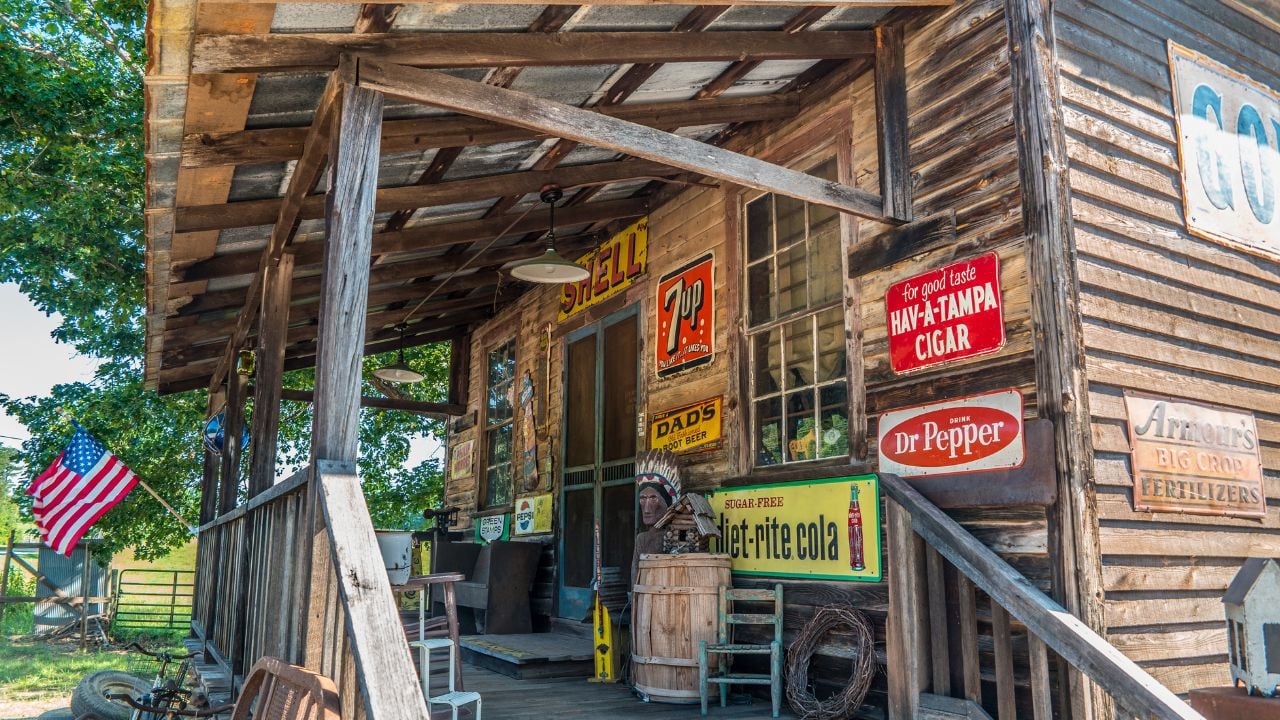
1. A Country Store’s Potbelly Stove
Mast General Store has sold penny candy out of the same Valle Crucis crossroads since 1883, potbelly stove included.
The store opened that year in this unincorporated Watauga County crossroads, and the same building is now listed on the National Register of Historic Places.
A potbelly stove still heats the wood floors on cold mornings.
Wooden barrels line the aisles, stacked with 500 varieties of old-fashioned candy, from candy cigarettes to Mary Janes.
Big-box stores gave up the barrel and the stove decades ago.
Valle Crucis kept both.
2. A Screen Built for Headlights
The Moon-Glo Drive-In opened in Henderson in 1949, a Vance County spot built for a few hundred cars at a time.
Henderson still packs that same field with cars aimed at a single screen every weekend the weather allows.
It’s the Raleigh Road Outdoor Theatre now, and the theater says it’s the oldest of the six drive-ins still operating in North Carolina.
The country had more than 4,063 drive-ins by 1958.
Roughly 283 were left nationwide in 2024, according to the trade group that tracks them.
Henderson never turned it off.
The Math Behind America’s Vanishing Drive-Ins
Henderson’s Raleigh Road Outdoor Theatre is one of roughly 283 drive-ins still running in the entire country as of 2024.
The nation had more than 4,000 running in 1958, so roughly one in every fourteen has survived to today.
3. A Parade Built for Mules
Benson still throws a parade for mules every September, built around an animal that used to work almost every farm in the state.
Nowell Smith Jr. started Mule Days in 1949 with livestock dealer Willis McLamb and a group of local merchants, to recognize area farmers and the mules that worked their fields; the Benson Area Chamber of Commerce has run the event for decades since.
The first celebration counted more than 300 mules pulling floats down Main Street.
The 2026 festival marks the 77th year, and Benson’s own population of about 4,000 swells to roughly 30,000 visitors for the weekend.
Mules still pull the parade, with horses and buggies close behind, right down the middle of downtown.
American farms counted nearly 6 million mules in 1925, most of them in the South and most of them plowing.
By 2007, only 28,000 were left, most farms having traded them for tractors decades earlier.
Benson kept throwing the parade.
4. A Ramp King and Queen
Waynesville crowns a ramp king and queen every spring, a contest built around a wild onion relative many Americans have never tasted.
The tradition traces back to the 1930s, when mountain families gathered each spring to cook the pungent wild onion relatives called ramps.
American Legion Post 47 picked up the event after World War II and never let it go.
The 2026 gathering is the 96th annual Ramp Convention, held the first Sunday in May.
There’s a ramp-eating contest, live music, and food booths, all built around a plant that grows wild and slow.
A single ramp patch can take decades to recover once it’s overharvested, and conservationists have been sounding that alarm for years.
Part of the Great Smoky Mountains National Park sits inside Haywood County itself, and the park banned ramp picking there entirely in 2002.
Waynesville hasn’t missed a year.
5. A Ruritan Chicken Mull
Bear Grass still cooks chicken mull in a wash pot over an open fire, the same way its Ruritan Club has for decades.
The recipe is simple by design: Parboiled chicken, broth, crackers, and eggs, seasoned with as much black and red pepper as anyone dares.
It’s a Depression-era recipe, built to feed a crowd for pennies a plate.
Bear Grass has held its Chicken Mull Festival every fall since 2014, selling bowls to raise money for local causes.
Many small towns traded the wash pot for a caterer’s chafing dish long ago.
Bear Grass kept the pot.
6. Gospel on a Mountain Meadow
Since 1924, Grandfather Mountain has filled MacRae Meadows with gospel singers every June.
Singing on the Mountain started as a small gathering of mountain families trading hymns at the base of the peak.
It’s grown into a free, all-day festival near Linville, but the gates still open to anyone willing to make the drive.
The 2026 gathering returns June 28, more than a century after it began.
Community hymn singings like this one have thinned out across the South since the 1970s.
Mississippi’s own shape-note gospel conventions, historians there note, have shrunk from three-day gatherings to one, and some have stopped altogether.
The meadow packs out again.
7. Beeswax Candles on Christmas Eve
Bethania’s Moravian congregation has handed out beeswax candles at its Christmas Eve service since 1762.
The town itself, founded in 1759 by Moravian settlers, is a National Historic Landmark District today.
Church members roll the candles by hand and tie a red paper collar around each candle to catch the dripping wax.
The whole congregation lights them together during the service, and the sanctuary goes gold.
The Moravian Church counts just over 20,000 members in North Carolina, a small enough denomination that the candlelight tradition never spread much beyond the towns its settlers founded.
Bethania still lights every candle.
8. Waiting up for Old Buck
Rodanthe still waits up for Old Buck every January 6th, a custom that dates to the village’s colonial-era settlers.
January 6th marks Old Christmas, the date the English kept as Christmas Day before Britain changed calendars in the mid-1700s.
Villagers gather at the Rodanthe Community Building to roast oysters and dance while they wait.
Then Old Buck arrives, a costumed bull figure who crashes through the crowd before disappearing back into the dark.
Many villages up and down the coast switched over to the new calendar date and never looked back.
Rodanthe kept the old date.
Psst! How much do you know about small-town North Carolina’s history? Take our quiz and see how many you can get right.
Quiz
North Carolina Hometown IQ
Answer these questions on North Carolina’s small-town firsts and legends. We bet you can’t get them all right. Prove us wrong?
Which small North Carolina town claims the invention of Pepsi-Cola, first named at a pharmacy soda fountain there in 1898?
8 North Carolina Mountain Towns That Get Overrun Every Fall
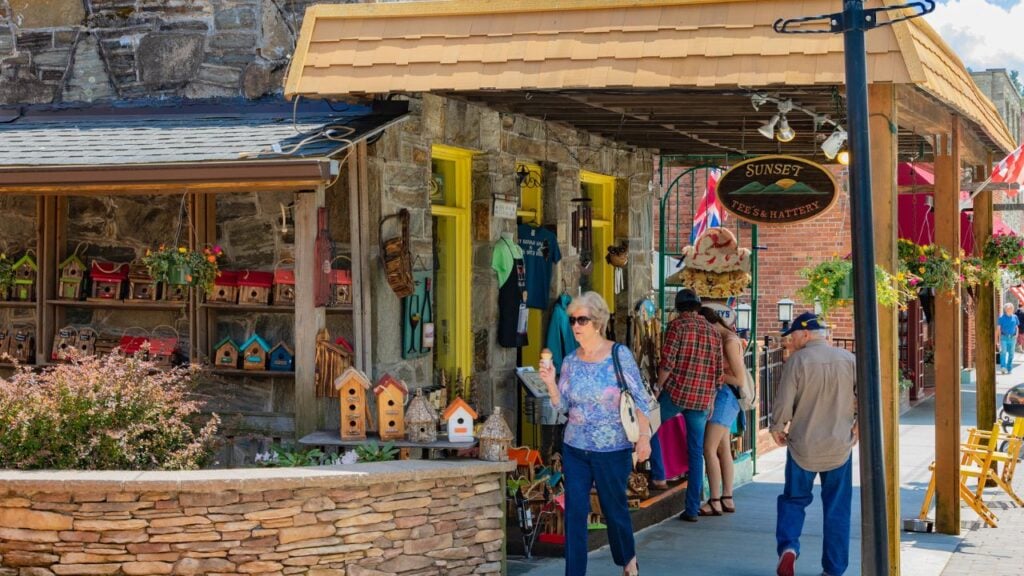
Great Smoky Mountains National Park logged more than 11.5 million recreational visits in 2025, more than any other national park in the country, and a lot of that traffic spills across the state line every fall.
Small mountain towns take on that traffic on top of their own festivals, weddings, and homecoming weekends, and a handful of spots take the brunt of it every October.
8 North Carolina Mountain Towns That Get Overrun Every Fall
8 Arguments North Carolina and South Carolina Will Never Settle
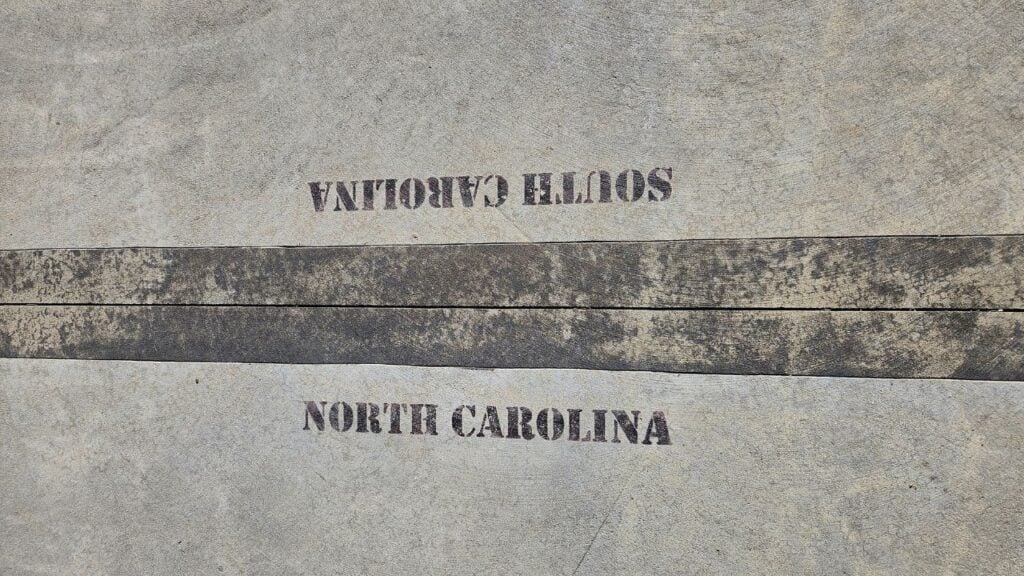
North Carolina and South Carolina have been arguing about where one state ends and the other begins since before either one was officially a state.
Surveyors first drew the line in 1735 with little more than a compass and rope, and it's needed fixing more than once since.
8 Arguments North Carolina and South Carolina Will Never Settle
