
5 Alabama Roadside Signs That Mean Something Only Locals Understand

Alabama lawmakers wrote “Heart of Dixie” into the state’s license plates in 1951.
The phrase has appeared on every standard-issue plate since 1954.
More than seventy years later, nobody driving through Alabama needs the phrase explained. But not every sign in the state comes with that kind of built-in decoder.
These are the Alabama roadside signs that make perfect sense to the people who live there and next to nothing to everybody else.
1. County-Line Package Store Sign
Twenty-three of Alabama’s 67 counties are still legally dry, according to the state’s Alabama Alcoholic Beverage Control Board.
A hand-lettered or neon sign reading “Package Store” or “Cold Beer” marks the exact spot where the county line lets alcohol sales start again.
Locals don’t blink.
Clay County, an hour east of Birmingham, held that dry status countywide until March 1, 2016, when voters in Ashland and Lineville, its two largest towns, chose to allow alcohol sales inside those city limits.
The rest of the county stayed dry, so the package store signs in Clay County now sit at the edge of Ashland or Lineville instead of scattered along a rural county line.
Every dry county in the state runs on the same rule: A “Package Store” sign is the only thing that says alcohol sales are legal on that side of the line.
What “Dry” Means in Alabama
Alabama’s dry counties aren’t dry all the way through.
Bibb County, for example, stays dry countywide but allows alcohol sales inside a handful of its own incorporated cities, including Brent, Centreville, West Blocton and Woodstock, under the state’s local-option system.
2. Natural Bridge “Free State of Winston” Marker
A stone historical marker stands just off County Road 3500 near Natural Bridge, about a third of a mile north of U.S. 278, and it’s the reason locals call Winston County “The Free State of Winston.”
The marker explains why.
In 1862, the county’s representatives opposed secession and voted to stay neutral, and Confederate loyalists branded the holdouts “Torries” for it, according to the marker’s inscription.
Winston County’s own government still leans into the name today.
Its official website welcomes visitors to “The Free State of Winston,” and the phrase turns up on local business signs across the county too.
A visitor who’s never heard the story sees the name on a Winston County sign and assumes it’s a typo or a slogan someone invented for tourism.
It’s neither. Christopher Sheats, a 22-year-old schoolteacher from the county, was the delegate who refused to sign Alabama’s secession ordinance in 1861, and the marker at Natural Bridge still tells his county’s side of that vote.
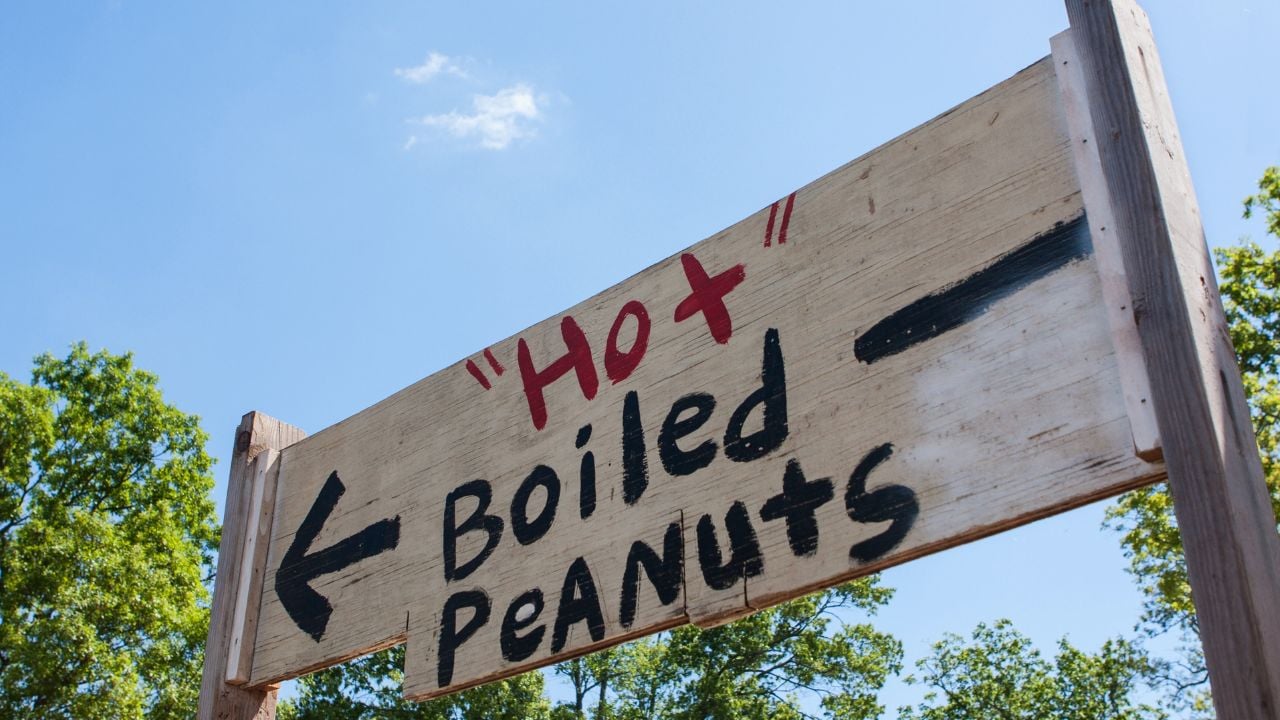
3. Boiled Peanuts Marker
Dothan’s boiled peanut signs are famous enough that Alabama put up an actual historical marker for them.
Not a festival banner.
Not a novelty statue.
An actual historical marker.
A blue-and-gold plaque went up on the Troy University campus in Dothan in 2023, funded through a national program called Hungry for History that recognizes food dishes with deep local roots.
Boiled peanuts, according to the marker, have been sold in Dothan’s summer heat since at least 1907.
To a local driver, a hand-painted “P-Nuts” sign outside a gas station means one thing: Pull over, they’re fresh today.
A first-time visitor from somewhere without peanut stands might squint at the same sign and keep driving, unsure what it’s even selling.
That’s a hundred and sixteen years between the first hand-painted stand and the state finally putting up a sign to explain it.
Psst! How much do you know about Alabama’s history? Take our quiz and see how many you can get right.
Quiz
Alabama History IQ
Answer nine questions on Alabama’s symbols, statehood, and landmarks. We bet you can’t get them all right. Prove us wrong?
Alabama’s nickname, the “Yellowhammer State,” traces back to what?
4. Sign for Slapout
Alabama's road signs get funnier the farther a driver gets from the interstate, and Elmore County's town-limit sign for "Slapout" stops out-of-state traffic cold.
Local legend, retold for generations, traces the name to an old country store whose owner kept telling customers he was slap out of whatever they'd come for, until the name outlived the store.
Frog Eye and Burnt Corn, both a short drive from Slapout, carry their own backstories on their own signs.
A tourist who pulls over to photograph the Slapout sign usually assumes it's a joke.
It's an actual town.
Local drivers pass the sign without slowing down because they already know the story behind it.
5. I-65 Flip Signs
Interstate 65 in south Alabama carries road signs that spend much of the year facing the wrong direction, bolted in backward on purpose.
Not a mix-up.
The Alabama Department of Transportation pre-positions them that way at some locations so crews can flip them fast when the state activates contraflow.
That turns both sides of I-65 northbound across more than 20 exits between Mobile and Montgomery.
Alabama last activated those signs during Hurricane Dennis in 2005, and crews still run a two-day rehearsal every year to stay ready.
A local on the Gulf Coast clocks exactly what a backward-facing sign post means.
Someone just passing through on I-65 usually never notices, right up until the year they do.
Behind Alabama's Marker Signs
Alabama's roadside historical markers, including the markers honoring Winston County and boiled peanuts, don't come from a state budget at all.
No state money at all.
The Alabama Historical Commission has run the marker program since 1975, and the program itself doesn't cover the cost of a single sign.
Whoever wants a marker, a family, a civic club, a college, pays for it out of pocket, and every marker gets cast by the same Ohio company, Sewah Studios.
So the next roadside marker a driver reads in Alabama likely exists because a local group decided the story was worth paying for, not because the state government did.
6 Secrets Waffle House Employees Wish Alabama Regulars Knew
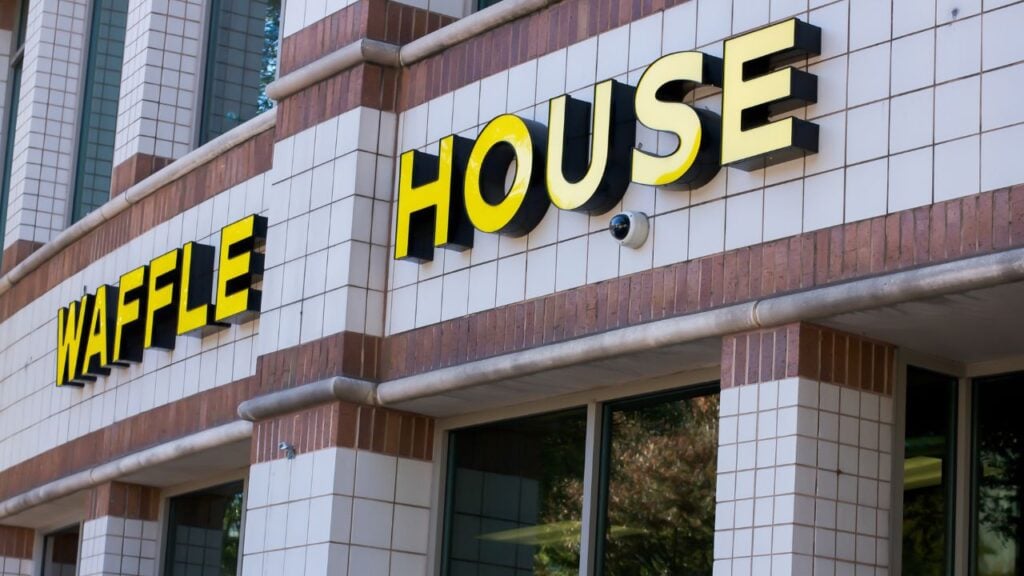
A Waffle House regular in Alabama slides into a booth off I-65 outside Birmingham, orders the usual, and has coffee poured before saying a word.
He's sure he has the place figured out after all these years, and it turns out he's not entirely right.
6 Secrets Waffle House Employees Wish Alabama Regulars Knew
9 Alabama Small Towns That Outshine Every Big-City Attraction Nearby
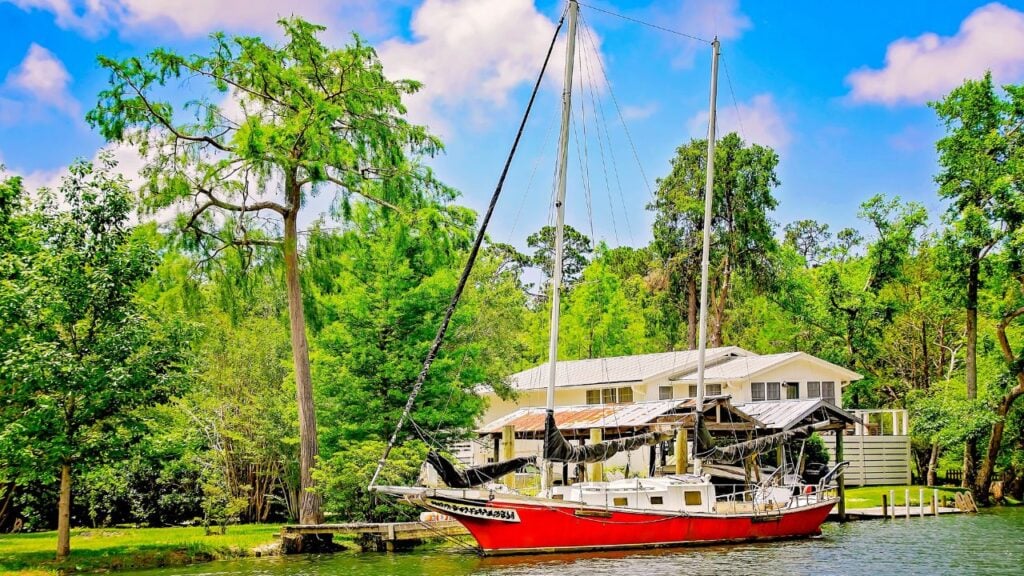
On November 30, 1954, a rock from outer space crashed through a roof in Sylacauga, Alabama, and struck a napping woman named Ann Hodges.
It's still the only documented case in history of a meteorite hitting a person, and Sylacauga isn't the only small Alabama town with a story like it.
9 Alabama Small Towns That Outshine Every Big-City Attraction Nearby
