
6 Arguments South Carolina and Georgia Will Never Settle

Think South Carolina and Georgia settled their shared border a century ago?
The Supreme Court has had to step in more than once, over the exact same stretch of river.
These are the arguments South Carolina and Georgia still haven’t let go of.
1. Who Grows the Most Peaches
Georgia has marketed itself as the Peach State for generations, but South Carolina keeps growing more of the actual fruit.
South Carolina ranks second in the country for peach production, trailing only California, with Georgia sitting third.
Ross Williams, president of Titan Farms in Ridge Spring, put it bluntly to the Aiken Standard: His farm alone grows more peaches than the entire state of Georgia.
That’s one farm.
Georgia isn’t backing down from the brand.
When South Carolina’s agriculture office started pushing its harvest numbers a few years back, Georgia’s commissioner fired back that Georgia peaches remain the benchmark every other grower measures against.
The two states’ agriculture departments then ran competing social media campaigns daring shoppers to taste-test the difference for themselves.
Neither state has revived the campaign since.
Georgians keep the nickname on their license plates.
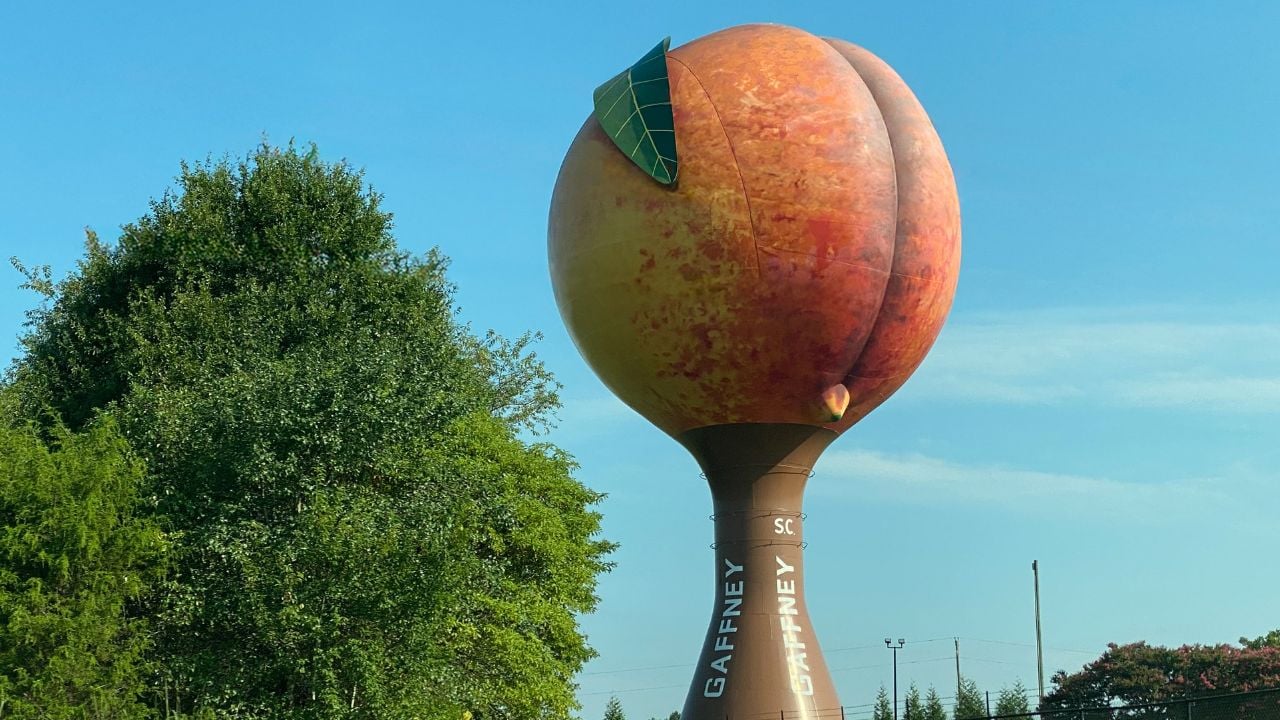
South Carolinians keep the harvest, plus a giant peach-shaped water tower off I-85 in Gaffney that nobody driving past can miss.
Why South Carolina’s Peach Numbers Don’t Quite Add Up
South Carolina’s own agriculture department has claimed its harvest runs three times the size of Georgia’s, but that figure counts truck shipments leaving the state, not the crop harvested.
The U.S. Department of Agriculture tracks harvested tonnage instead. By that count, South Carolina’s peach crop runs closer to double Georgia’s in a typical year, not triple.
2. The Sweet Onion Feud
Georgia locked up the name Vidalia decades ago, and South Carolina has been growing around it ever since.
The Vidalia Onion Act legally restricts that name to a stretch of about 20 Georgia counties.
A South Carolina farmer can grow the exact same yellow Granex onion, in similar sandy soil, roughly 100 miles up the road, and still isn’t allowed to call it a Vidalia.
South Carolina growers sell theirs as Palmetto Sweets or South Carolina Sweets instead.
Kent Scott, South Carolina’s largest sweet onion grower, doesn’t hedge about the taste difference.
He told the Post and Courier that, comparing an apple to an apple, the South Carolina crop was as good as or better than any Vidalia they’d had that year.
National Onion Labs, an independent testing outfit based in Georgia itself, rated the South Carolina crop extra sweet on the same pungency scale Vidalias are judged against.
Georgia isn’t ceding the sweetness argument just because the lab that tested it happens to sit inside its own borders.
Georgia’s tourism and agriculture marketing still leans hard on Vidalia’s reputation as the sweetest onion grown anywhere.
South Carolina disagrees.
South Carolina growers keep pointing at the lab results instead.
Taste isn’t something a courtroom or a trademark office can settle.
3. Bulldogs Against Gamecocks Every Fall
South Carolina and Georgia have been playing football against each other since 1894, and Georgia still holds the edge.
Georgia leads the all-time series 55-19-2, a gap South Carolina fans don’t love bringing up.
They bring it up anyway.
Games weren’t played every year until South Carolina joined the Southeastern Conference (SEC) in 1992, and the two schools have met annually nearly every season since.
Former South Carolina coach Steve Spurrier spent his entire decade in Columbia chasing that gap, going 5-6 against Georgia from 2005 to 2015.
The fanbases still track it that closely.
Augusta hosts a charity tailgate called the Border Bash every year the two teams meet, right on the ground between them.
A scheduling shuffle kept the teams apart in 2024 and 2025.
They’re back on the calendar this November, with Georgia traveling to Columbia to play at Williams-Brice Stadium.
Gamecock fans have circled it since the schedule dropped.
4. Port Rivalry Nobody Settles
South Carolina and Georgia are both betting big money on the same stretch of coastline, and neither side wants to fall behind.
The Port of Charleston finished a $580 million dredging project in 2022 that gave South Carolina a 52-foot channel, the deepest on the East Coast.
Georgia answered with a dredge of its own that same year, a $973 million project that deepened the Savannah River channel to 47 feet.
Four years later, Savannah is already studying another expansion.
Georgia’s port still wins on raw volume.
The Port of Savannah handled nearly 5.7 million shipping containers in 2025, its second-busiest year ever, while South Carolina’s ports handled about 2.6 million.
South Carolina counters that its channel can float bigger ships than Georgia’s can, at least for now.
Nobody’s declared a winner.
Psst! How much do you know about South Carolina and Georgia? Take our quiz and see how many you can get right.
5. Sales Tax Argument Neither Side Wins
South Carolina and Georgia charge shoppers differently at the register, and neither state calls it the losing deal.
South Carolina just wrapped its 26th annual Tax Free Weekend, three days in August when the state drops its entire sales tax on school supplies, clothing, computers, and even bedding.
No price cap applies.
A South Carolina shopper can buy a laptop, a mattress, and a winter coat in the same weekend and pay no 6 percent state sales tax on any of it.
Georgia’s Department of Revenue lists no matching event this year, or any recent one.
Georgia’s counter runs quieter, spread across all 365 days instead of three.
Georgia’s state sales tax sits at 4 percent, a third lower than South Carolina’s rate, on every purchase, all year long.
A South Carolina shopper banks the biggest single savings of the year in one weekend.
A Georgia shopper gives up less at the register on every trip they make, all year.
Neither state’s tax office is in a hurry to concede the other one has the better deal.
6. Fireworks Just Across the Line
Georgia keeps a tighter grip on fireworks than South Carolina does, and shoppers feel it every summer.
Georgia requires buyers to be at least 18 to purchase or set off consumer fireworks.
Georgia also limits legal use to 10 a.m. through 11:59 p.m. most days, with later cutoffs allowed around the Fourth of July, Memorial Day, Labor Day, and New Year’s.
Nothing can legally go off within 100 yards of a hospital, a nursing home, or a gas station storing more than 500 gallons of fuel.
South Carolina’s fireworks law skips almost all of that.
South Carolina sets no minimum age to buy ordinary consumer fireworks.
Its only 18-and-up rule covers dynamite and similarly powerful explosives, an entirely different category from the fireworks sold at retail stands.
The state also sets no statewide curfew and no statewide distance buffer for ordinary fireworks use.
Georgia banned consumer fireworks almost entirely until 2015, which is why stores selling them clustered on the South Carolina side of the river in the first place.
Georgia licensed its own retail stores after that, and some shoppers started buying closer to home.
Not everyone stayed home.
Georgia’s rulebook, longer than South Carolina’s on nearly every count, still sends buyers looking for fewer rules across the river.
South Carolina’s fewer restrictions keep it the easier place to buy, curfew or no curfew.
Who Owns the River Islands
South Carolina and Georgia argued over the Savannah River border long before either one was a state, and the U.S. Supreme Court has had to settle it twice.
An 1787 agreement set the boundary at the middle of the river and gave Georgia every island that existed at the time.
The 1922 ruling confirmed it.
Rivers move, though, and new islands kept forming that the old agreement never accounted for.
In 1977, a Georgia officer confronted a South Carolina shrimp boat captain over exactly that gray area.
The standoff made national news.
South Carolina finally got its turn in 1990.
The Supreme Court awarded it roughly 3,000 acres of new land and about 7,000 acres of water that had formed since surveyors drew that original 1787 line.
That’s two Supreme Court rulings, 68 years apart, over the same stretch of river.
The border those rulings drew is the one South Carolina and Georgia still use today.
It took a shrimp boat standoff and two trips to the country’s highest court to get there.
8 Arguments North Carolina and South Carolina Will Never Settle
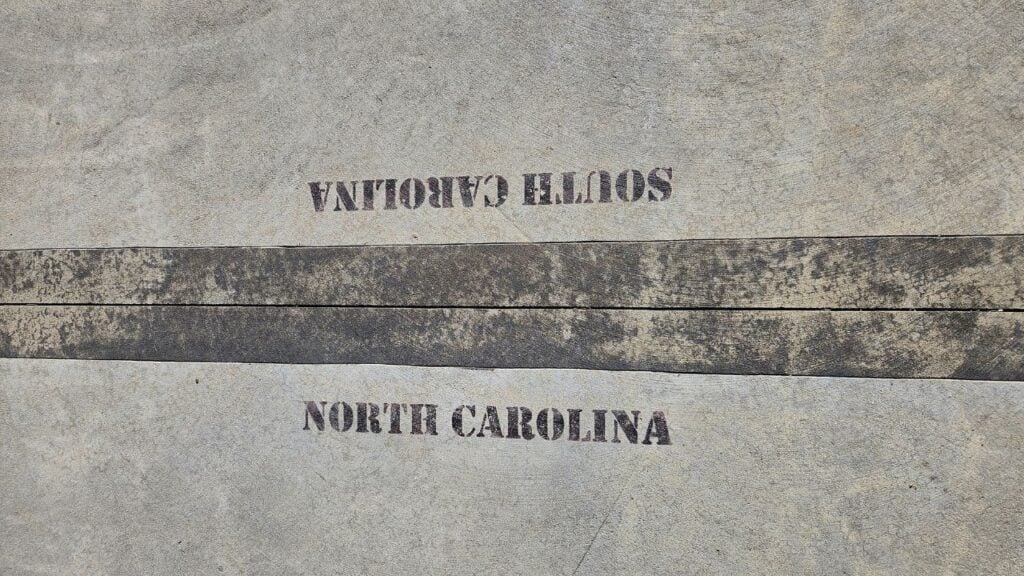
South Carolina picks fights with more than one neighbor.
Surveyors first drew the North Carolina line in 1735 with little more than a compass and a rope, and it’s needed fixing more than once since.
8 Arguments North Carolina and South Carolina Will Never Settle
9 Bojangles Habits That Instantly Mark a South Carolina Regular
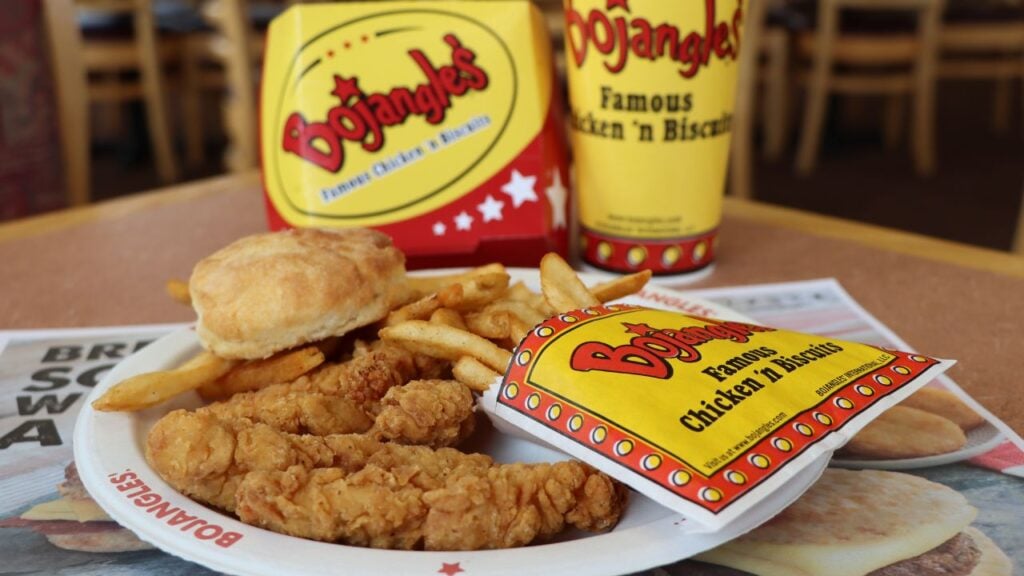
Ever hear a South Carolina Bojangles regular call the place by its full name?
Regulars shorten it to “Bo’s,” and a cashier can usually spot a first-timer by the pronunciation alone.
9 Bojangles Habits That Instantly Mark a South Carolina Regular
