
5 Home Insurance Discounts Alabama’s Coastal Homeowners Don’t Always Apply For

Alabama lets a homeowner deduct up to $3,000 off their state income tax bill for storm-hardening a home, separate from whatever discount their insurer applies for that same work.
A handful of coastal insurance discounts can sit alongside it, and many homeowners never file for more than a single discount.
These are the home insurance discounts Alabama’s coastal homeowners qualify for and don’t always apply for.
Note: This is general information, not insurance or tax advice. Coverage, credit amounts, and tax rules are subject to change, so check the specifics with an insurer, agent, or tax preparer.
1. Your FORTIFIED Wind Discount
Every admitted insurer in Alabama has to cut a homeowner’s wind premium once a home earns a FORTIFIED designation.
It’s cut, not offered.
The Insurance Institute for Business & Home Safety (IBHS) certifies every home that earns the designation, and the discount grows with the level of work done.
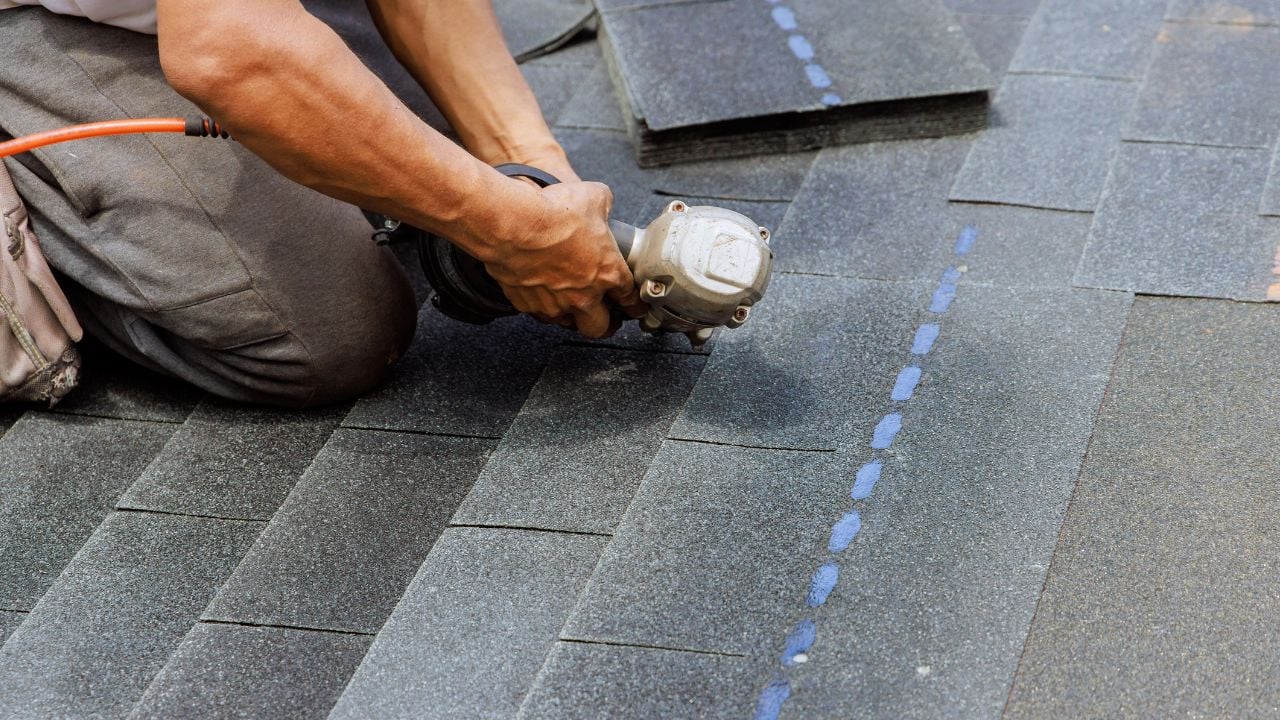
A FORTIFIED Roof, the entry tier that seals the roof deck and upgrades how it’s fastened, earns 25% to 35% off the wind premium.
FORTIFIED Silver adds bracing for gable ends and impact-rated protection on every window, door and skylight, and it’s worth 35% to 45%.
FORTIFIED Gold requires a continuous load path from roof to foundation and tops out between 45% and 55%.
That adds up fast.
Getting there means hiring a certified FORTIFIED evaluator before any work starts, since the designation only counts once an IBHS-certified inspector signs off on it.
The FORTIFIED Discount Only Touches Wind
The FORTIFIED discount applies to the wind portion of a policy, not the whole bill.
Say a coastal policy runs $6,000 a year, and $4,000 of that covers wind.
A Gold home’s 55% cut applies only to that $4,000 slice, so it saves around $2,200, not $3,300.
Fire, theft and liability coverage still price out separately.
2. Your Building Code Discount
Coastal Alabama homeowners insured through the Alabama Insurance Underwriting Association (AIUA), the state’s wind pool for Mobile and Baldwin counties, can also qualify for a building code discount tied to their community’s building code grade.
AIUA applies the discount automatically on an existing policy, once a home’s construction date lines up with the community’s grading records.
That coverage doesn’t travel.
A homeowner who switches to a different insurer, or who writes a brand-new coastal policy for the first time, has to supply that same proof: The community’s code grade and the home’s build date. A new insurer’s file doesn’t inherit it from the prior insurer’s file.
Skip that step at renewal time, and a discount a homeowner has claimed for years can disappear from the bill.
3. Your 2006 Building Code Discount
Alabama’s wind pool, AIUA, offers a second, smaller discount for coastal Alabama homes engineered and built to the 2006 International Residential Code (IRC) or later, separate from the full FORTIFIED discount.
A licensed architect or engineer has to sign off on it.
No shortcuts there.
The homeowner submits a completed IRC certification form, attesting the home was designed and constructed to that code, before AIUA applies anything.
Only one wind mitigation discount applies per home, so the 2006 code discount mostly helps a newer coastal home that hasn’t gone through a full FORTIFIED evaluation yet.
It’s still money many newer homeowners never claim.
4. Your Flood Rating Discount
Baldwin County homeowners can get a flood insurance discount through the Federal Emergency Management Agency’s (FEMA) Community Rating System (CRS), which the county has voluntarily participated in since 1994.
The county’s floodplain management work has cut flood insurance premiums 10% in the county’s flood-prone areas, and 5% everywhere else.
That credit only rides on a National Flood Insurance Program (NFIP) policy.
Not a private policy.
A private flood policy doesn’t carry the CRS credit, no matter how similar the coverage looks on paper.
Homeowners who already have private flood coverage have to actively apply for a new NFIP-backed policy through a participating carrier to pick up the credit, since private insurers don’t have to pass the county’s rating along.
Buy a private flood policy years ago and never revisit it, and the CRS credit is usually the first thing missing from the bill.
5. Your Elevation Certificate Credit
An elevation certificate documents exactly how high a coastal home’s lowest floor sits above its base flood elevation, and flood insurers use that number to set the rate.
A home built well above the required height can rate a lot lower than the flood zone alone would indicate.
Proving it takes paperwork.
Getting there takes an application, just not to an insurer first.
A licensed surveyor or engineer has to prepare and sign the elevation certificate, and a homeowner has to pay for that survey and then submit the finished certificate to their insurer before any rate changes.
It isn’t automatically pulled from a county building permit file just because the home has a permit on record.
Homeowners who bought an older coastal home, or a home built before local rules required an elevation certificate, often carry a flood rate based on the zone alone.
They never pay for the survey that would tell them whether their actual elevation earns a lower rate.
Psst! How much do you know about Alabama’s coastal insurance world beyond these five discounts? Take our quiz and see how many you can get right.
Quiz
Alabama Coastal Insurance IQ
Answer these questions on Alabama’s coastal insurance history and hurricane-resistant building rules. We bet you can’t get them all right. Prove us wrong?
What hurricane led Alabama’s insurance industry to form the state’s coastal “Beach Pool” in the early 1970s?
Strengthen Alabama Homes' Retrofit Funding
The Strengthen Alabama Homes program is a division of the Alabama Department of Insurance, and it pays up to $10,000 toward the retrofit a coastal home needs to reach FORTIFIED status.
There's no income limit.
Any owner-occupied, single-family home in Mobile or Baldwin County can apply, and the grant covers 100% of the mitigation cost up to that $10,000 cap.
The program isn't limited to the coast anymore, either.
Strengthen Alabama Homes expanded eligibility to Jefferson, Tuscaloosa and Escambia counties in November 2025, though Mobile and Baldwin County still carry the coastal wind risk the program was built around.
The catch is timing.
Applications open on a set quarterly schedule, and the state stops accepting new applications the moment that quarter's funding runs out.
The grant schedule lists each county's next opening date and time, and coastal homeowners who wait for a slow news day to look into it usually find the quarter already closed.
The FORTIFIED Roof Endorsement, Not a Discount
A FORTIFIED Roof endorsement isn't a discount at all, even though Alabama requires insurers to offer it alongside the coastal savings above.
It's a separate piece of coverage that pays toward upgrading a roof to FORTIFIED standards at the exact moment a covered claim would replace it anyway.
Homeowners have to add it before the storm.
Not after.
The endorsement, created under Act 2019-240, costs extra on the front end, and many carriers price it as a small add-on to the annual premium.
It only pays out once a covered loss forces a full roof replacement, and it covers the gap between a standard roof and a FORTIFIED roof.
Skip the endorsement, and a homeowner rebuilding after a hurricane pays that upgrade cost out of pocket, on top of the deductible.
Admitted Carriers Bound to Honor It
Alabama's FORTIFIED discount law only binds admitted carriers, the insurers licensed and rate-regulated by the state.
Surplus carriers are different.
Coastal Alabama has leaned harder on surplus lines coverage as some national insurers pulled back from wind risk, and a surplus carrier isn't legally required to give the FORTIFIED discount even when a home carries the certificate.
Whether a policy sits with an admitted or a surplus carrier isn't always obvious from the declarations page, and that distinction decides whether the FORTIFIED discount applies at all.
A homeowner who switches from a surplus policy to an admitted carrier after certifying their roof can pick up a discount they were never getting before.
The Accompanying Tax Deduction
Alabama also lets homeowners deduct part of the same retrofit cost from their state gross income under Ala. Code § 40-18-15.5, separate from anything an insurer pays out.
The deduction covers the lesser of 50% of the retrofit cost or $3,000.
It applies to work done to resist wind or flood damage, the same category of upgrades that unlock the FORTIFIED insurance discount.
Spend $6,000 retrofitting a roof, and the deduction caps at $3,000, not the full 50%.
Spend $4,000, and the deduction lands at exactly half, $2,000.
Do the math first.
Few homeowners realize the insurance discount and the tax deduction come from two completely different pieces of paperwork.
The deduction isn't automatic on a tax return. A homeowner has to obtain certification from the Alabama Residential and Energy Codes Board confirming the retrofit met the required wind or flood standard, and keep that certification on file.
The Alabama Department of Revenue can ask to see it before honoring the deduction, and a homeowner who can't produce it loses the write-off entirely.
9 Purchases That Make Less Sense for Alabamians After Age 65
Alabama caps how much of a retirement account withdrawal escapes state tax once a resident turns 65, and it's a smaller number than many people guess.
One oversized purchase, timed wrong, can erase the whole break in a single year.
9 Purchases That Make Less Sense for Alabamians After Age 65
9 Alabama Small Towns That Outshine Every Big-City Attraction Nearby
A rock from outer space once crashed through a roof in Sylacauga, Alabama, and struck a napping woman, the only documented meteorite strike on a person in recorded history.
Birmingham, an hour up the road, has never had a story like it.
9 Alabama Small Towns That Outshine Every Big-City Attraction Nearby
