

10 Kansas Phrases That Leave Out-of-Staters Completely Lost

A visitor pulls into a gas station in Manhattan, Kansas and asks the clerk why her town calls itself something that isn’t even Manhattan.
She just laughs.
Every local has heard the question hundreds of times, and none of them care to explain it to strangers anymore.
These are the Kansas phrases that leave out-of-staters completely lost.
1. Rock Chalk, Jayhawk
“Rock Chalk, Jayhawk” began in 1886, when a University of Kansas (KU) chemistry professor named E.H.S. Bailey and his colleagues dreamed it up on a train ride home from a conference.
Three years later, an English professor swapped the original “rah, rah” for “Rock Chalk,” a nod to the chalky limestone under the university’s own Mount Oread.
KU’s own histories say Theodore Roosevelt once called it the greatest college cheer ever devised, though no record of him saying it survives.
Say it outside a KU crowd, though, and many people just stare.
It’s not a cheer.
It’s a password.
2. EMAW
Kansas State University fans shorten their rallying cry, Every Man a Wildcat (EMAW), down to four letters.
Just four letters.
They post it, chant it, and never once explain themselves.
The phrase traces back to a banner that hung over the press box at Ahearn Field House for years, with “1963” painted at the end of its lettering.
K-State baseball players stole that banner overnight in 1971 and cut it into souvenirs.
Ask a Wildcat what EMAW stands for, and expect a shrug before an answer.
3. Jayhawker
Kansans call themselves Jayhawkers, and it isn’t just a nickname for KU basketball fans, even though out-of-staters always guess that first.
The word predates the university by decades.
Free-state militia fighters in the Kansas Territory took the name for themselves in the 1850s.
The border fights with Missouri got bloody enough to earn the whole territory a nickname: Bleeding Kansas.
KU borrowed “Jayhawk” for its mascot decades later, and Kansans borrowed “Jayhawker” right back for themselves.
Most native Kansans skip “Kansan” altogether.
They reach for “Jayhawker” first.
Every single time.
4. Little Apple
Manhattan, Kansas started out as a town called Boston in 1855.
Stranded steamboat passengers demanded a new name before they’d agree to settle there.
They got “Manhattan,” a nod to the New York financiers backing the town.
The nickname “the Little Apple” came over a century later, in 1977, when the Chamber of Commerce picked it as a wink at New York City’s own nickname.
One state, two Manhattans.
A gas station clerk in Kansas hears “Manhattan” and needs a second before answering.
Which one?
5. ICT
Wichita’s airport in Kansas uses a three-letter code, ICT, printed on every boarding pass that leaves the gate, and residents adopted it as their own nickname for the whole city.
Federal rules once blocked airport codes from starting with “W,” so early planners built the code around the middle of the city’s name instead.
Locals kept using it long after the original reason behind the letters faded from memory.
Three letters, one city.
It shows up on T-shirts, coffee mugs, and city branding around Wichita today.
Say “ICT” to a first-time visitor, and they’ll picture a boarding pass, not a nickname for a whole city.
6. Ark City
Arkansas City, Kansas goes by “Ark City” to everyone who lives there, mostly because the full name trips up so many visitors.
Kansans pronounce Arkansas with a hard S, the same way they say the state’s own name.
Newcomers reflexively drop that S and try “Arkansaw” instead.
Locals correct them on the spot, every time.
The nickname isn’t just shorter.
It’s a shortcut around a fight nobody wants to have twice in one conversation.
Why Kansas and Arkansas Sound So Different
Kansas and Arkansas both come from Native American tribal names that reached English through early French explorers.
Kansas took its name from the Kansa people, and English-speaking settlers kept the hard “s” sound at the end.
Arkansas took its name from the Quapaw, whose Algonquin name reached French ears as “Akansa,” and French speakers tend to drop a word’s final consonant sound.
In 1881, two Arkansas senators couldn’t even agree on how to say their own state’s name out loud, so state lawmakers stepped in and made “Arkansaw” official.
7. Dillons
Dillons is the only name Kroger uses for its grocery stores in Kansas, and none of its dozens of locations carries a “Kroger” sign.
Kroger runs the same company under other regional names elsewhere, Gerbes in parts of Missouri and Baker’s in Nebraska, so the naming isn’t an accident.
Dillons is headquartered in Hutchinson and has stayed the state’s dominant grocery banner for generations.
No Kroger sign, anywhere.
Tell a visitor to meet you “at Dillons,” and they won’t realize they’re standing in a Kroger.
8. Burn Season
Kansas’s own health department flips on something it calls the Kansas smoke modeling tool every March 1, weeks before ranchers across the Flint Hills start setting fire to thousands of acres of tallgrass prairie on purpose.
The controlled burns clear out invasive trees and brush, so new grass comes in thick enough to feed cattle all summer.
Kansas’s health department uses the tool to predict where the smoke will drift and posts air-quality advisories through the spring under that name, a system built for Kansas rangeland even though the Flint Hills themselves stretch into Oklahoma too.
A driver passing through who’s never heard the phrase can mistake a normal spring week for a wildfire.
Not this time.
Kansans call it burn season, check the advisory, and keep driving.
9. Turkey Red
Kansans tell a well-worn story about Turkey Red wheat: That Mennonite immigrants carried the seed across the ocean from Russia and planted it in Kansas in 1874.
Kansas’s own historical society calls that version family lore, and some experts consider it more myth than settled fact, since Turkey Red wasn’t even the typical wheat variety Mennonite farmers grew back in Russia.
Whatever its true origin, the hardy winter wheat variety spread fast once it took hold, surviving the state’s brutal winters in a way the wheat Kansas farmers had been planting couldn’t.
Kansas leads the nation in wheat production today, out-producing every other state according to U.S. Department of Agriculture (USDA) data.
Central Kansas still says the name out loud: The Mennonite Heritage and Agricultural Museum in Goessel runs an entire building it calls the Turkey Red Wheat Palace, and locals send visitors there to see the immigrant seed trunks firsthand.
Mention “Turkey Red” outside a farm town, and many people guess it’s a paint color or a Thanksgiving side dish.
It’s neither.
It’s the wheat that built the state.
10. Kansas City
Kansas has its own Kansas City, and it isn’t Kansas City, Missouri, the side many out-of-staters picture first.
Kansas City, Missouri was chartered in 1850 and named for the nearby Kansas River, about a decade before Kansas even became a state.
Kansas City, Kansas came together in 1886, when the governor merged five smaller towns, Wyandotte, Armstrong, Armourdale, Riverview, and the original “old” Kansas City, into one city and gave it the same name anyway.
The two cities now share a metro area of close to 2 million people, split by a state line that’s easy to miss on the ground.
One name, two states.
Ask a Kansan where they’re from, and “Kansas City” might mean either side of it.
Psst! How much do you know about Kansas history? Take our quiz and see if you can ace it.
Quiz
Kansas Pride Quiz
Answer these questions on Kansas history and firsts. We bet you can’t get them all right. Prove us wrong?
Which record-setting aviator was born in Atchison, Kansas, in 1897?
The Fair
The Fair means exactly one event to many Kansans: The Kansas State Fair, running September 11 through 20 this year in Hutchinson.
It's been the state's biggest gathering since 1913, drawing people from every corner of Kansas for livestock shows, a midway, and grandstand concerts.
Capital F.
More than 300,000 people pass through the fairgrounds over the ten days, making it the single biggest gathering the state holds all year.
Inside the fair's dairy building, a sculptor carves an 800-pound butter display from scratch every year, and crews melt it down afterward to reuse the butter the next time around.
10 Things That Only Make Sense to People Who Grew Up in Kansas

Kansas hands its kids a stack of facts and habits that stop making sense the moment they cross the state line.
Four counties in Kansas even run their clocks an hour behind the rest of the state, and many Kansas kids could tell you exactly which counties.
10 Things That Only Make Sense to People Who Grew Up in Kansas
9 Cracker Barrel Traditions That Have Disappeared
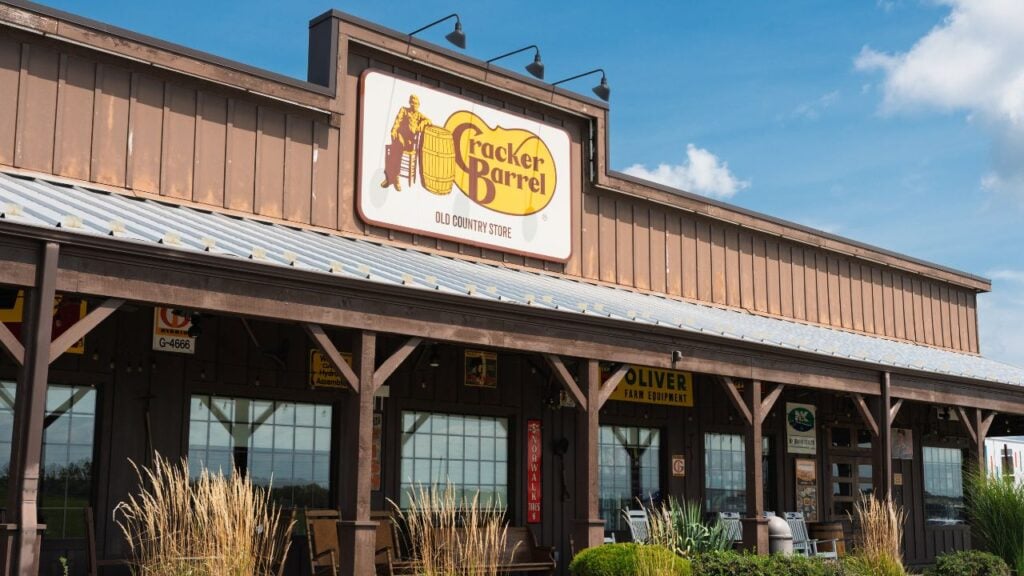
Cracker Barrel's stock dropped by $94 million in a single trading day in August 2025, right after the company swapped its old logo for a slimmer redesign.
The company put the old logo back within days, but other Cracker Barrel traditions have vanished without ever coming back.
