
5 Household Items Ohio Thrift Stores Struggle to Sell

Not everything that gets donated to an Ohio thrift store is a hot seller.
Some items sit on shelves for weeks. Others get marked down until they’re barely worth the space they’re taking up.
Certain items never even make it to the sales floor.
These are the household items Ohio thrift stores struggle to sell. Take note before your next donation.
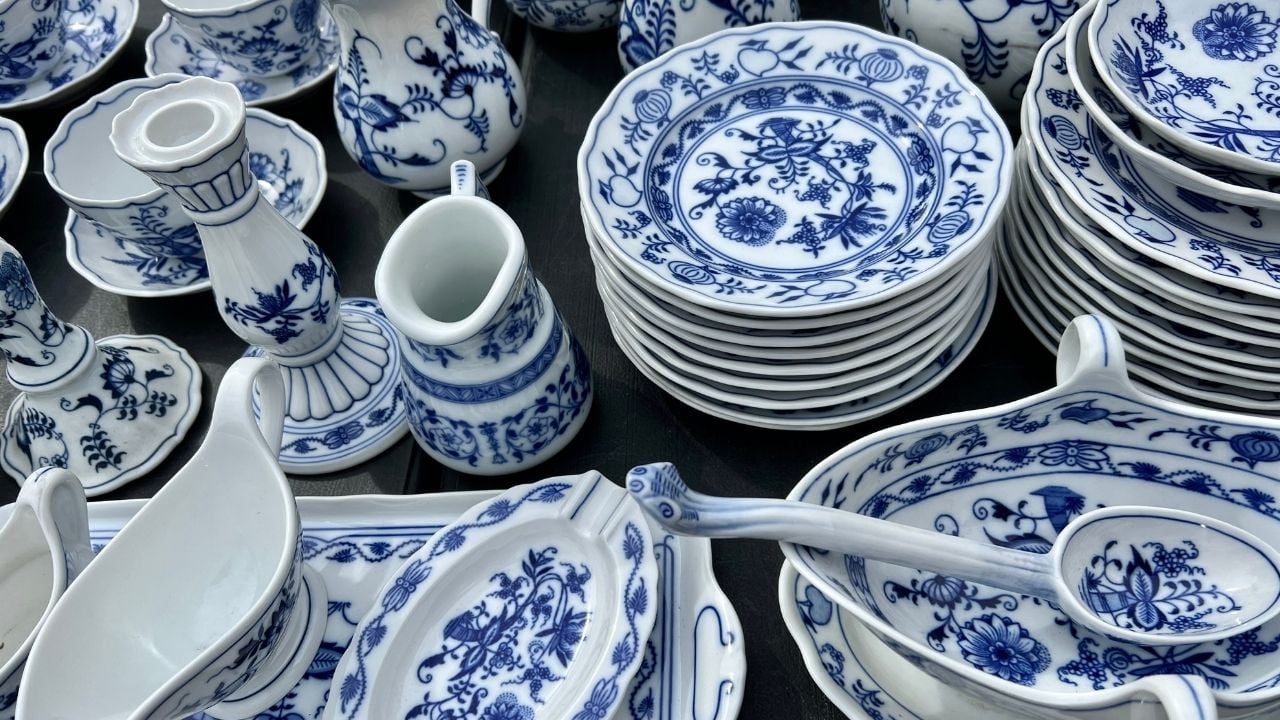
1. Formal China and Dinnerware
Goodwill Columbus accepts household items for resale alongside clothing and furniture, and a boxed set of formal china fits right into that general mix beside everyday plates.
The names on the backstamp, Lenox, Noritake, Franciscan, used to mean something at a wedding registry.
Younger households keep smaller kitchens now, and hand-washable, stackable everyday dishes have mostly replaced the china cabinet as the thing every new household needs.
Nobody’s rushing to fill a hutch with gold-rimmed plates that can’t go in the dishwasher.
Not this decade.
A full 12-place setting takes up an entire shelf at an Ohio thrift store, and it can sit there for months before anyone even picks up a saucer to check the price.
2. Framed Art and Mass-Produced Prints
Framed art rarely sells fast at an Ohio thrift store. Goodwill Columbus’s general donation policy covers household goods without singling out what’s hanging on a wall.
That’s the problem.
The mall galleries of the 1990s and 2000s sold Thomas Kinkade cottages and hotel-lobby seascapes by the thousands, and a lot of that inventory eventually lands on a thrift store wall.
Ohio thrift stores end up drowning in mass-produced reproductions and amateur hobby paintings, and only the rare signed or numbered piece finds a buyer.
An unsigned print in a dollar-store frame doesn’t beat that math.
It just takes up wall space next to the register until repeated markdowns finally sell it.
3. Old Computers and Printers
Ohio thrift stores take in old computers and printers through Goodwill Columbus’s general electronics donations, and printers are the tougher of the two to sell.
Nobody wants to gamble a few dollars on a printer with no way to test the ink cartridges.
Staff don’t have time to plug in and print a test page on every unit that comes through the door.
Computers struggle for a different reason.
Many never make it to a price tag at all.
The Solid Waste Authority of Central Ohio named Goodwill Columbus a preferred e-waste organizer for Franklin County in 2022, running community collection drives instead of selling the machines.
An older desktop tower is a likelier candidate for one of those drives than the sales floor.
Not built to sell.
Where a Donated Computer Ends Up Instead of an Ohio Thrift Store Shelf
Goodwill Columbus doesn’t just set aside old electronics for the trash.
Its e-waste collection drives with the Solid Waste Authority of Central Ohio have diverted more than a million pounds of electronics from landfills in a single year, according to Goodwill.
A machine that never sells still keeps its metals and circuit boards out of a landfill.
It just never gets a price tag first.
4. Flat-Screen TVs and Monitors
Volunteers of America Ohio and Indiana will take a flat-screen TV or monitor, spelling it out by name on its own donation guidelines.
A five-year-old flat screen doesn’t compete well against a brand-new set.
It comes with streaming apps built in, a sharper picture, an extra port for a newer game console.
Big-box retailers sell a brand-new basic set for less than a used TV would cost to haul home in a truck.
So a secondhand TV without smart features sits behind glass at an Ohio thrift store, right next to the electronics counter.
Staff mark it down again and again until someone finally needs a screen for a garage or a dorm room.
Eventually, someone does.
5. Books and Encyclopedia Sets
At an Ohio thrift store, books go through the same donation line as everything else, no sorting by subject or condition at the door.
At its outlet store, books sell for 59 cents a pound, the lowest per-pound price of anything the outlet carries.
Clothing runs $2.29 a pound at the same outlet.
That gap is the story.
An Encyclopedia Britannica set once cost a family a small fortune on a payment plan, and now it’s outdated the moment a new volume prints, let alone decades later.
Paperback book club picks and hardcover bestsellers from a decade ago land on Ohio donation shelves by the boxful, far outpacing how many an average shopper wants to carry home.
Psst! How much do you know about the secondhand economy? Take our quiz and see how many you can get right.
Quiz
Secondhand Economy IQ
Answer these questions on thrift store history and the resale economy. We bet you can’t get them all right. Prove us wrong?
What year did Rev. Edgar Helms start collecting used goods door to door in Boston, the effort that grew into Goodwill Industries?
One Building for Unsold Merchandise
Unsold merchandise at Goodwill Columbus doesn't sit on a regular store's shelf indefinitely.
Goodwill Columbus ships everything that doesn't sell at one of its neighborhood locations to a single outlet store on Brice Road, where it lands in giant blue bins sorted loosely by category.
Shoppers dig through the bins themselves, gloves optional.
Staff tag and price furniture too large for a bin on its own, and it stands on the open outlet floor until someone with a truck decides it's worth the trip.
A mismatched china set with a hairline crack can wait there for weeks.
Whatever still hasn't moved by closing time doesn't go back to a store shelf.
Across the wider Goodwill network, workers pull torn fabric, cracked plastic, and anything past its last markdown and sell it off in bulk to salvage buyers instead.
That's the last stop for a chain that started with a bag dropped off at a donation door.
Full circle.
A dresser missing a drawer pull still gets a price tag and a spot on the open outlet floor, right next to a nightstand with all its hardware.
A salvage buyer takes the whole pallet of what's left standing at closing time, drawer pull or not, for pennies on the dollar.
9 Things That Change the Second You Cross From Ohio Into Kentucky
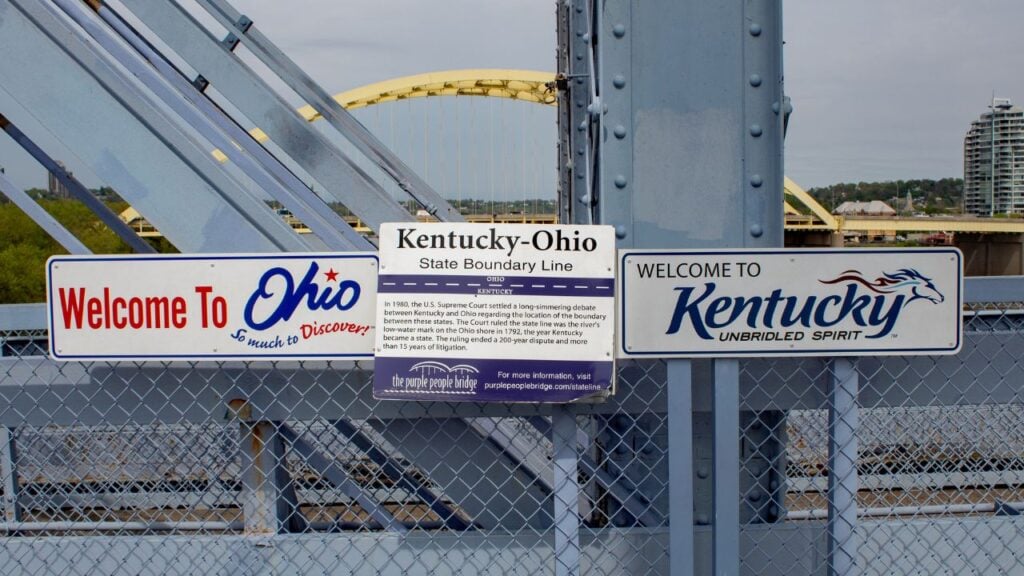
A drive across the Roebling Suspension Bridge from Cincinnati lands a driver in Covington, Kentucky, and almost nothing about the crossing looks different at first glance.
Then the tax on the receipt changes, the price at the pump moves, and what's legal in the glovebox isn't the same anymore.
9 Things That Change the Second You Cross From Ohio Into Kentucky
9 Texas Roadhouse Mistakes Ohio Diners Make Without Realizing
Texas Roadhouse pulled in $5.5 billion in systemwide sales last year, enough to pass Olive Garden as the country's biggest casual-dining chain.
Ohio regulars helped build that number, slip-ups included.
9 Texas Roadhouse Mistakes Ohio Diners Make Without Realizing
